Wireshark Display Filters Tutorial
Aprenda a utilizar filtros de exibição no Wireshark para analisar eficientemente o tráfego de rede e identificar pacotes específicos em capturas de dados.

Install Tensorflow Object Detection From Scratch in 5 Steps - Python Deep Learning
Step-by-step guide to installing TensorFlow Object Detection API, covering Python, Visual Studio, CUDA, CUDNN, Protoc, and API setup for deep learning projects.
Build a Face Mask Detector with Watson and Python
Learn to create a face mask detector using Watson Visual Recognition, Python, and OpenCV. Capture images, visualize detections, and train custom object detection models in this hands-on tutorial.
Wireshark Display & Capture Filters
Learn to use Wireshark's display and capture filters to identify malicious network traffic. Master techniques for filtering and analyzing network protocols to enhance your cybersecurity skills and network troubleshooting abilities.
Getting Started with Machine Learning - What is Machine Learning
Comprehensive introduction to machine learning, covering data manipulation, visualization, exploratory analysis, and model building using Python libraries and the Diabetes dataset.
Machine Learning Basics - Machine Learning for Beginners
Comprehensive introduction to machine learning basics, covering key concepts, data manipulation, visualization, and model building using Python libraries and real-world datasets.
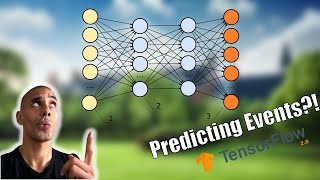
AI Learns What to Do Next Using TensorFlow and Python
Learn to predict future events using TensorFlow and Python. Build LSTM models, preprocess data, and generate next best actions for practical applications like sales progression.
Topic Modelling with BERTopic - Applied NLP Tutorial
Learn topic modeling with BERTopic, extract insights from Kaggle notebooks, and create interactive visualizations. Master applied NLP techniques using transformers and c-TF-IDF for interpretable, dense topic clusters.
Understanding SHAP Summary Plot - Interpretable Machine Learning - Day 19
Explore SHAP and Shapley values for interpretable machine learning, focusing on summary plots and dependence plots to enhance model explainability and insights.
Partial Dependence Plots in Machine Learning Explainability - Day 17 of Kaggle's 30 Days of ML
Explore Partial Dependence Plots for interpretable machine learning. Learn to visualize, build, and interpret PDPs, including 2D plots, to enhance model explainability and insights.
Scikit-Learn Pipeline and Cross-Validation - Day 13 of 30 Days of ML
Learn advanced machine learning techniques with Scikit-Learn, focusing on pipelines for organized code and cross-validation for improved model performance evaluation. Part of a 30-day ML challenge.
Kaggle 30 Days of ML - Day 12 - Missing Values and Categorical Variables
Explore missing values and categorical variables in machine learning, learning practical approaches to handle data imperfections and enhance model performance.
Unsupervised Learning for Stellar Spectra with Deep Normalizing Flows - Jo Ciuca
Explore unsupervised machine learning techniques for analyzing stellar spectra using deep normalizing flows, with applications in galaxy evolution and big data astronomy.
Machine Learning with Python - Python for Data Science and Machine Learning
Comprehensive tutorial on NumPy, Pandas, and data visualization tools for Python-based machine learning, covering array operations, data manipulation, and creating statistical graphics.
Supervised Machine Learning Tutorial - Logistic Regression - Naive Bayes Classifier
Explore logistic regression and Naive Bayes classifiers for supervised machine learning. Learn their advantages, applications, and implementation in classification tasks for data-driven decision making.

Getting Started with IoT
Comprehensive introduction to IoT fundamentals, covering evolution, architecture, and applications. Explores microcontrollers like Arduino and Raspberry Pi, with real-world examples and Q&A session.
PyTorch DataLoader Source Code Debugging - Batch Building and Normalization
Debugging session exploring PyTorch DataLoader's inner workings, focusing on data normalization, batch building, and parameter impacts. Insights into efficient data handling for deep learning projects.
PyTorch Dataset Normalization Using torchvision.transforms.Normalize()
Learn to normalize datasets in PyTorch using torchvision.transforms.Normalize(). Explore feature scaling, standardization, and color channel normalization. Understand the impact on neural network training.
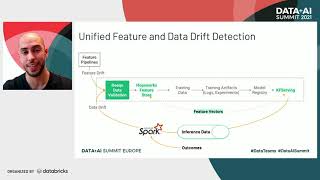
KFServing - Model Monitoring with Apache Spark and Feature Store
Explore an open-source platform for scalable model serving and monitoring using KFServing, Hopsworks Feature Store, and Spark Streaming. Learn continuous data drift detection and see a live demonstration.
Democratizing Data Quality Through a Centralized Platform at Zillow
Explore Zillow's centralized platform for data quality, enabling stakeholders to define expectations, perform validations, and monitor data health across complex organizations.
Data Discovery at Databricks with Amundsen - Improving Productivity and Trust
Explore how Databricks leverages Amundsen for efficient data discovery, improving productivity by surfacing relevant datasets, SQL dashboards, and metadata programmatically.