Introduction of BDT and Neural Networks for Classification in High Energy Physics - Lecture 2
Explore Boosted Decision Trees and Neural Networks for particle classification in High Energy Physics, enhancing data analysis techniques for groundbreaking discoveries.
Deepsets, Graph Neural Networks, and Transformers in Machine Learning - Lecture 7
Explore advanced machine learning techniques for high energy physics, including Deepsets, Graph Neural Networks, and Transformers, to analyze complex particle physics data.
Differentiable Programming for End-to-end Optimization of Experiments - Lecture 6
Explore differentiable programming for optimizing experiments in high-energy physics, focusing on end-to-end solutions and advanced machine learning techniques.
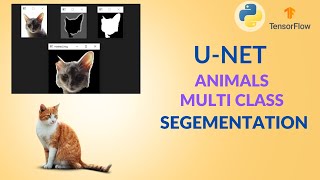
Creating an Animal Segmentation Model with U-Net and TensorFlow Keras
Learn to implement and train a U-Net model for animal segmentation using TensorFlow/Keras. Covers data preprocessing, model architecture, training, and evaluation with practical code examples.
Neural Simulation-based Inference - Lecture 2
Explore advanced neural simulation-based inference techniques for high energy physics, focusing on applications in data analysis and new physics discovery at particle colliders.

Hiring AI Agents - Implementing GPT-4 for Content Creation and Analysis
Explore how AI agents can revolutionize media management by analyzing data, generating ideas, and creating summaries. Learn about system prompts, real-time testing, and future plans for AI integration.
Supervised Learning Projects Tutorial - Machine Learning Tutorial
Hands-on tutorial exploring supervised learning projects, including COVID-19 prediction, Pokémon analysis, and credit card fraud detection. Covers data gathering, visualization, and practical implementation of machine learning algorithms.
Feature Engineering Importance - Practical Application for Feature Engineering
Explore feature engineering techniques for data analysis and classification, including practical application to supermarket sales data. Learn to select, manipulate, and transform features for improved model performance.
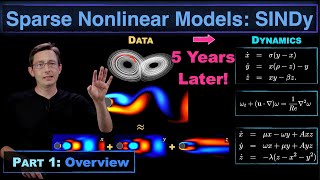
Sparse Identification of Nonlinear Dynamics - Sparse Machine Learning Models 5 Years Later
Explore advancements in SINDy algorithm for discovering dynamical systems models from data, including challenges and applications in nonlinear systems and PDEs.
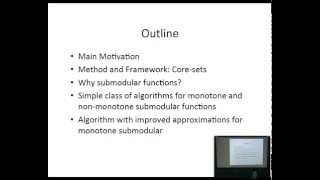
Randomized Composable Core-Sets for Submodular Maximization
Explores randomized composable core-sets for distributed submodular and diversity maximization, presenting improved algorithms and analysis techniques for big data optimization problems.
Implementing Intersectionality in Algorithmic Fairness - Keynote Panel I
Exploring approaches to implement intersectionality in algorithmic fairness, addressing hidden biases and unique experiences at the intersection of identities to promote equitable AI systems.
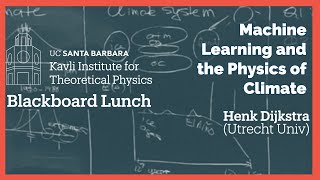
Machine Learning and the Physics of Climate - Henk Dijkstra
Explore the intersection of machine learning and climate physics, uncovering innovative approaches to understanding and predicting complex climate systems and their behavior.
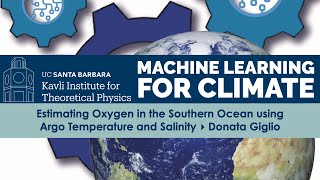
Estimating Oxygen in the Southern Ocean Using Argo Temperature and Salinity - Donata Giglio
Explore innovative techniques for estimating oxygen levels in the Southern Ocean using Argo float data. Learn how temperature and salinity measurements contribute to understanding ocean biogeochemistry and climate change impacts.
Using AI to Facilitate Environmental Justice - The Need for Ethical & Responsible AI
Explores the application of AI in environmental justice, emphasizing ethical considerations and responsible practices for weather and climate research. Discusses potential impacts and challenges in this emerging field.
Deep Learning and Energy Models for Fine Dead Wood Segmentation - Jacquelyn Shelton
Explore deep learning and energy models for fine dead wood segmentation in climate research, focusing on carbon cycle implications and advanced image analysis techniques.
Deep Learning for Subseasonal Global Precipitation Prediction - Maria Molina
Explore deep learning techniques for predicting global precipitation patterns on a subseasonal timescale, advancing climate science through innovative machine learning approaches.
Representation Learning and Custom Loss Functions for Atmospheric Data - Christian Lessig
Explores representation learning and custom loss functions for atmospheric data analysis, advancing climate science through machine learning techniques to extract insights from complex Earth system observations.
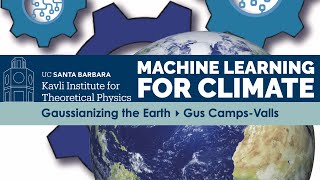
Gaussianizing the Earth - Gus Camps-Valls
Exploring Earth system dynamics through machine learning and big data analysis, focusing on multi-scale processes and causal inference to advance climate science and inform future predictions.

Getting Started with Machine Learning - Machine Learning Tutorial for Beginners
Learn to build a machine learning model for diabetes prediction using data manipulation, visualization, and exploratory analysis with Python libraries like pandas, NumPy, Matplotlib, and scikit-learn.
Build a Movie Recommendation System Using Machine Learning
Learn to create a movie recommendation system using machine learning techniques. Explore data-driven approaches to personalize film suggestions based on user preferences and viewing history.

Reinforcement Learning for Gaming - Full Python Course
Comprehensive guide to applying reinforcement learning in gaming using Python and Stable Baselines 3, covering Mario, Doom, Street Fighter, and Chrome Dino with practical missions and best practices.