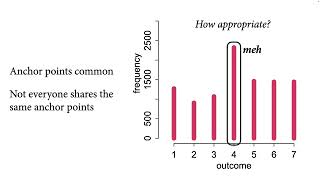
Statistical Rethinking 2023 - Ordered Categories
Explore statistical rethinking with ordered categories, ethical considerations, and advanced modeling techniques. Gain insights into participation bias, Dirichlet distributions, and practical applications in data analysis.
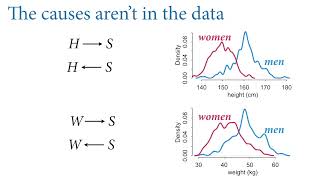
Statistical Rethinking 2023 - Categories & Curves
Explore statistical concepts like categories, posterior contrasts, and curves in this comprehensive lecture. Learn advanced techniques for data analysis and modeling using Bayesian methods.

Statistical Rethinking 2023 - Geocentric Models
Explore geocentric models in statistical thinking, covering Gaussian distributions, workflows, generative models, and analysis techniques for improved statistical reasoning.

Statistical Rethinking 2023 - The Garden of Forking Data
Explore Bayesian statistics through the "Garden of Forking Data" metaphor. Learn about generative models, probability, testing, and posterior distributions for improved statistical reasoning and prediction.

Statistical Rethinking 2022 - Measurement Error
Explore measurement error in statistical analysis, covering topics like income recall, divorce rates, misclassification, and floating point issues. Gain insights into modeling and addressing data inaccuracies.

Statistical Rethinking 2022 - Correlated Varying Effects
Explore advanced statistical concepts including varying effects, correlations, and non-centered coding. Learn to analyze complex data structures and improve model interpretability in this comprehensive lecture.

Statistical Rethinking 2022 - Multilevel Models
Explore multilevel models through coffee golems, tadpoles, and predators. Learn regularization techniques and statistical concepts for advanced data analysis.

Statistical Rethinking 2022 - Counts & Confounds
Explore statistical rethinking with focus on counts and confounds. Learn about confounded admissions, sensitivity analysis, proxies, factors, and Poisson GLMs in this comprehensive lecture.

Statistical Rethinking 2022 - Elemental Confounds
Explore key concepts in statistical analysis: forks, pipes, colliders, and unobserved confounds. Learn to identify and address elemental confounds for more robust research designs.
Bayesian Statistics Without Frequentist Language
Explore Bayesian statistics from a fresh perspective, focusing on its core concepts and applications without relying on traditional frequentist terminology.
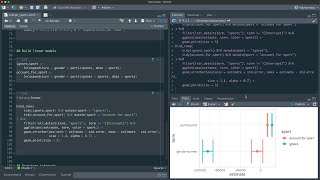
Handling Coefficients for Modeling Collegiate Sports Expenditures
Explore collegiate sports expenditures using linear modeling and tidymodels, focusing on handling coefficients and intervals for insightful analysis of financial patterns.
Kernel Methods for Causal Inference
Explore kernel ridge regression for causal inference, covering dose responses, treatment effects, and extensions to various settings. Learn about consistency, efficiency, and robustness in estimation.
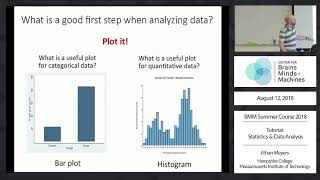
Statistics and Data Analysis
Learn essential statistics and data analysis concepts, including distributions, visualization techniques, correlation, regression, and hypothesis testing, to enhance your data interpretation skills.

Self-Study Computational Neuroscience - Coding, Textbooks, Math
Comprehensive guide to starting computational neuroscience: programming languages, coding practice, textbooks, math resources, project ideas, and datasets for self-study and skill development.
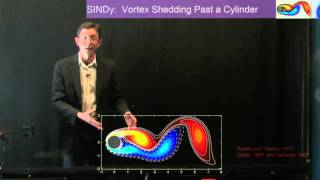
Sparse Identification of Nonlinear Dynamics - SINDy
Explore a novel algorithm combining machine learning and sparse regression to identify nonlinear differential equations from measurement data, with applications in dynamical systems.
Statistics Tutorial with Python - Fundamentals and Data Analysis
Learn Python-based statistics: data types, visualization, measures of central tendency, dispersion, and relationships between variables. Gain practical skills for data analysis.
Statistics Tutorial - T Distribution and Hypothesis Testing
Learn to calculate and interpret T distributions, use T tables, understand degrees of freedom, and perform hypothesis testing with independent and dependent samples in this comprehensive statistics tutorial.
Statistics Tutorial 4: Z Scores and Confidence Intervals
Explore probability, normal distributions, sample error, Central Limit Theorem, Z scores, and confidence intervals with Python code examples for practical application.
Statistics Tutorial - Standard Deviation and Coefficient Variation
Learn to calculate standard deviation and coefficient variation using Python, with real-world examples and in-depth explanations of statistical concepts.
Statistics Tutorial - Real World Example with Python
Explore real-world data analysis using Python to maximize profits for a computer company. Learn to parse data, create functions, and gain insights for targeted marketing and product strategies.
Basic Statistics Examples
Learn basic statistics through practical examples with Michael Penn in less than an hour. Randolph College Math and Science.