Explainable AI for Climate Science - Opening the Black Box to Reveal Planet Earth
Discover how explainable AI techniques can revolutionize climate science research, from weather prediction to understanding human impacts on Earth's systems through advanced machine learning applications.
Applying AI/ML Methodologies to Categorize Storage Workloads
Discover how AI/ML techniques analyze and synthesize complex storage workloads, enabling efficient testing and validation of enterprise storage systems through automated workload categorization and reproduction.
Building Machine Learning Systems for the Era of Data-Centric AI
Explore the evolution of ML systems beyond model training, focusing on data quality, trustworthiness, and regulatory compliance through systematic data debugging and cleaning approaches.
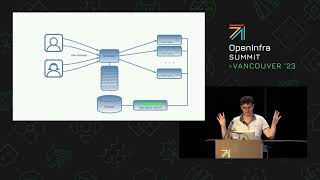
Building a Research Platform with Armada on OpenStack and Kubernetes
Discover how to build a high-throughput research platform combining OpenStack and Kubernetes for managing quantitative research workflows, featuring Armada for efficient job scheduling across multiple clusters.
Data as the Programming Interface - The Future of AI Development
Explore how data-centric approaches revolutionize AI development, focusing on specialized evaluation, fine-grained analysis, and scalable solutions for capturing human feedback in enterprise systems.
From Psychohistory to Curious Machines - AI-Powered Strategic Foresight
Explore how AI-powered foresight and strategic prediction evolve from Asimov's psychohistory concept to modern applications in trend forecasting and early adopter identification through Nextatlas.
TacticAI - An AI Assistant for Football Tactics Analysis
Discover how TacticAI, developed with Liverpool FC, revolutionizes football strategy by analyzing dynamic game factors and helping teams optimize their tactical decisions in real-time.
Leveraging Large Language Models for ETL, Analytics, and Modern Data Stack
Discover how Large Language Models revolutionize data workflows, from ETL processes to analytics automation, with practical insights on implementation challenges and production deployment strategies.
Machine Learning Techniques for Omics Data Analysis
Explore machine learning applications in Next Generation Sequencing data analysis, focusing on key techniques for processing biological data from cells, tissues, and organisms.
Data Science with GPT-4 Code Interpreter: From Problem to Visualization - A Complete Project Demo
Explore how GPT-4's Code Interpreter automates data science workflows, from cleaning 5000+ EU project descriptions to implementing clustering algorithms and 3D visualizations.
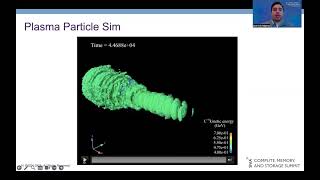
Streamlining Scientific Workflows - Computational Storage Strategies for HPC
Discover how computational storage strategies enhance scientific workflows in HPC environments, optimizing data processing for large-scale simulations and improving efficiency across I/O layers.
Realistic Synthetic Data Generation at Scale - Modeling Production Data Without Exposure
Discover how to generate large-scale synthetic test data that mirrors production patterns without exposing sensitive information, using modeling techniques for directory trees, files, and various data characteristics.

AI Strategy Optimization Using Monte Carlo Tree Search - From Theory to Implementation
Explore Monte Carlo Tree Search algorithms and their application in AI decision-making, from basic principles to practical implementations in healthcare and financial forecasting.
Coresets for Machine Learning - Tensor Factorization and Bregman Clustering
Explore advanced techniques for data summarization through coresets, focusing on tensor factorization and Bregman clustering, with applications in efficient machine learning algorithms for massive datasets.
Prometheus Data Analysis and Event Notifications for Progressive Delivery
Learn to leverage Prometheus and Argo Rollouts for progressive delivery in Kubernetes, including data analysis and real-time event notifications across multiple channels.

Alerting and Anomaly Detection - Best Friends Forever?
Explore the relationship between alerting and anomaly detection in monitoring systems, discussing their strengths, limitations, and optimal integration for effective system management.
Cloud Native Machine Learning - Automated Anomaly Detection
Explore automated anomaly detection techniques for machine learning, enhancing your ability to identify and respond to data irregularities in cloud-native environments.

Prometheus Sparse High-Resolution Histograms in Action
Explore Prometheus sparse high-resolution histograms: instrumentation, ingestion, storage, querying, and visualization. Learn about precise quantile estimations and high-resolution heatmaps with real-world benchmarks.

What is Tech Insights? Understanding and Implementing Backstage Features
Explore tech insights in Backstage: track engineering standards, visualize data, and extend functionality. Learn to manage tech health and drive company standards with practical examples.
Scaling Open Source ML: How Wolt Uses Kubernetes to Deliver Great Food to Millions
Discover how Wolt leverages Kubernetes and open-source frameworks to scale machine learning operations, addressing challenges in forecasting, recommendations, and delivery time predictions for millions of users.

Machine Learning - Lecture 10
Explore advanced machine learning concepts, focusing on deep learning techniques and neural network architectures for complex data analysis and pattern recognition.