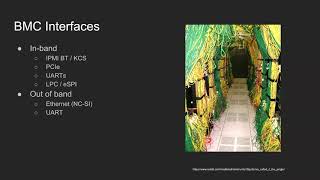
Service Processor Privilege Isolation and Getting Caught with Your Pants Down
Explore service processor vulnerabilities in servers, focusing on BMC security flaws and hardware-based attack methods for gaining persistent control of management systems.

Kernel Security Is Cool Again
Explore recent developments in Linux kernel security, including hardening efforts, new access controls, and infrastructure changes. Learn about integrity, TPMs, and future trends in this field.
Stepping Up the Game Against Web Trackers
Techniques to minimize web browsing footprint and combat tracking, including browser preferences, privacy plugins, and network tools for a more secure online experience.

The Delightful User Experience of Security
Exploring how computer security can enhance usability, create user-friendly models, and maintain a positive experience while addressing new challenges in software development.
Deep Learning, Not Deep Creepy
Explore deep learning applications, privacy implications, and Mozilla's efforts to create empowering machine learning systems while ensuring user privacy.

Firmware Security - Why It Matters and How You Can Have It
Explore firmware security's importance, vulnerabilities, and mitigation strategies. Learn about attack surfaces, System Management Mode, and ways to enhance protection in various computing environments.

FileSender - Sharing Large Files Across Research Facilities
Explore FileSender, a browser-based solution for securely sharing large files across organizations. Learn about its features, implementation, and future development prospects.
Democratising Higher Education with OERs and FOSS
Explore how open educational resources and free software democratize higher education, focusing on the Open Education Resource Foundation's innovative approach and technology stack.
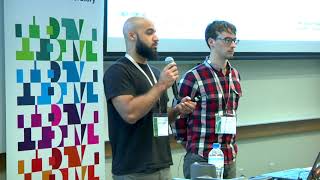
The Dark Side of the ForSSHe
Explore the world of OpenSSH backdoors, their analysis, and prevention methods. Learn about advanced malware techniques and how to protect Linux servers from sophisticated attacks.

Hardware Hacking 101 - There Is Plenty of Room at the Bottom
Live demonstration of hacking an SD card's embedded processor, turning it into a covert mini-computer. Explores hardware capabilities, security breaches, and potential applications in network penetration and automation scenarios.
Right to Not Broadcast
Explores the need for device connectivity control in an interconnected world, emphasizing privacy, security, and the right to protect personal data from unauthorized broadcasting.
MR Security - Learning from IoT's Mistakes
Explore privacy and security challenges in virtual and augmented reality, drawing lessons from IoT to build robust systems against potential abuse in immersive technologies.

Web Security
Explore 20 years of web cryptography evolution, current transitions in TLS, cipher suites, HTTP security headers, and the move towards encrypted-by-default web.

The Kernel Report
Comprehensive overview of Linux kernel development, covering recent updates, challenges, and future directions. Explores hardware vulnerabilities, stable kernels, testing initiatives, and mobile Linux progress.
Security Vulnerability Mitigations
Explore security vulnerability mitigations, from classic buffer overflows to modern ROP attacks. Learn about OpenBSD's innovative defenses and their adoption across platforms.
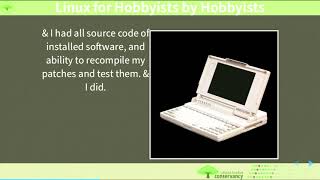
Preventing the IoT Dystopia with Copyleft
Exploring the challenges of IoT devices, GPL violations, and the importance of user rights in software modification. Discusses strategies to protect freedoms in the evolving landscape of interconnected devices.

Does Making the Kernel Harder Make Making the Kernel Harder?
Exploring the impact of Linux Kernel Hardening Project on vulnerability reduction, exploit difficulty, and development challenges. Analyzes subtle security benefits and associated costs.

Writing Viruses for Fun, Not Profit
Explore virus creation techniques, including self-replication and obfuscation, to understand system vulnerabilities and improve application security. Live PHP virus demos included.
Making C Less Dangerous in the Linux Kernel
Exploring strategies to enhance C safety in the Linux kernel, including removing Variable Length Arrays, enforcing stack variable initialization, and implementing Control Flow Integrity measures.
Samba 2020 - Why Are We Still in the 1980s for Authentication
Explore the evolution and future of network authentication, from 1980s technology to modern cloud-based solutions, with insights on Samba's role and potential developments.
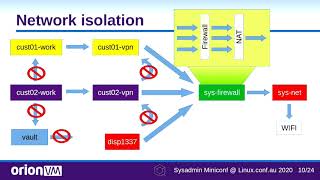
Using a Cloud to Manage a Cloud
QubesOS overview and its application in OrionVM's sysadmin, highlighting benefits, challenges, and potential improvements in managing cloud infrastructure through hypervisor-backed containers.