
Enterprise Security with Spring Authorization Server 1.0
Explore building a customizable OAuth Authorization Server using Spring Authorization Server. Learn best practices, extension points, and enterprise-ready features for secure authentication and authorization.
Securing the Service to Service Call Chain - Patterns and Protocols
Explore key patterns and technologies for securing service-to-service communication, including API Gateways, Service Mesh, SPIFFE, mTLS, JWT, and OpenID Connect, with Spring-based demos and practical implementations.
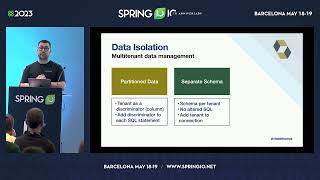
Multitenant Mystery - Only Rockers in the Building
Explore multitenancy in Spring Boot through a detective mystery. Learn to implement data isolation, security, and observability using Java, Hibernate, and Keycloak for modern SaaS applications.
Investigating Windows Subsystem for Linux - WSL Endpoints
Explore forensic artifacts and investigation techniques for compromised Windows Subsystem for Linux (WSL) endpoints, covering attacker techniques and architectural changes relevant to digital forensics professionals.
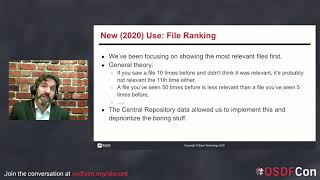
Using Past Data to Determine Relevance in Autopsy
Explore Autopsy's File Discovery UI and Central Repository for efficient digital forensics. Learn how past data analysis enhances file prioritization and streamlines investigations.
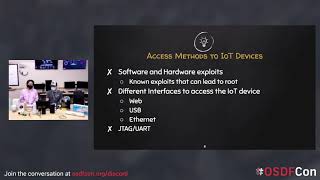
Linux Forensics for IoT - Hello World
Exploring Linux forensics techniques for IoT devices, from smart homes to security systems. Showcases research on applying digital investigation methods to various IoT platforms running Linux operating systems.
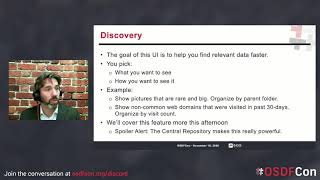
Autopsy's Year in Review - OSDFCon
Comprehensive overview of Autopsy's latest features, including new interfaces and analysis modules, highlighting advancements in digital forensics and incident response capabilities.
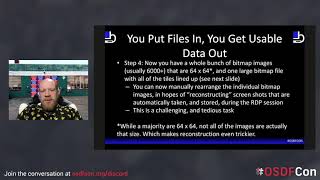
Putting Together the RDPiece
Explore RDP Bitmap Cache forensics for ransomware investigations. Learn to extract, analyze, and reconstruct crucial evidence often overlooked in digital forensics and incident response.
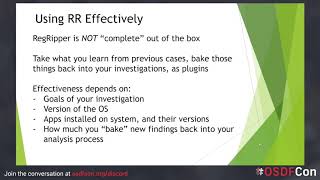
Effectively Using RegRipper 3.0
Explore efficient techniques for utilizing RegRipper 3.0 in digital forensics and incident response, presented by experienced DFIR professional Harlan Carvey at OSDFCon 2020.
Targeted Automation for Malware Analysis
Explore targeted automation techniques for efficient malware analysis using open-source tools, enhancing threat intelligence and collaboration within organizations.
Identify Malware on Compromised Files and URLs Using the PolySwarm Autopsy Plugin
Discover efficient malware detection using PolySwarm's Autopsy plugin. Learn to identify threats with hash lookups and file scans, leveraging 50+ specialized engines for enhanced cybersecurity.
Computer Autopsies - Use Free Forensic Software
Explore computer forensics using Autopsy software, covering evidence collection, analysis, and custom plugin development. Learn practical skills for solving real-world digital investigation cases.

Where Have UAL Been?
Explore Microsoft's User Access Logs on Windows Servers, including authentication details, record retention, and parsing tools. Learn how these logs can be utilized in digital forensics and incident response.
I Know What Your AD Did Last Summer - Talks About Active Directory
Explore Active Directory security, lateral movement, and privilege escalation techniques. Learn forensic approaches for investigating AD incidents using open-source tools, with insights for both red and blue teams.
Incident Recorder
Demonstration of an open-source automation tool for Security Incident recorders, designed to track and document incidents efficiently for forensic and legal purposes.
ARTHIR - ATT&CK Remote Threat Hunting Incident Response Windows Tool
Modular framework for remote threat hunting and incident response on Windows systems, mapping capabilities to MITRE ATT&CK Framework. Improves on Kansa with expanded functionality and community collaboration.

Leaving No Stone Unturned
Explore memory forensics techniques for digital investigations, covering attack methodologies and analysis steps. Learn to uncover hidden evidence in volatile memory samples for more comprehensive case insights.
A Golden Ticket to the Cloud
Explore cloud security threats, including the Golden SAML attack, and learn detection strategies using open-source tools to protect against unauthorized access in cloud environments.
Velociraptor - Dig Deeper
Explore Velociraptor's powerful VQL for efficient DFIR hunting at scale. Learn to perform on-endpoint analysis, create custom detections, and implement real-time monitoring rules for rapid incident response.
Two Faces to the Same Linux - GUI Environments
Explore Linux desktop forensics in GNOME and KDE environments, comparing user activity artifacts and investigation techniques for digital forensics professionals.
Log Parser as a Forensic Tool
Explore Log Parser as a forensic tool for incident response, combining MS and open-source tools to collect and analyze system data, logs, and registry information efficiently.