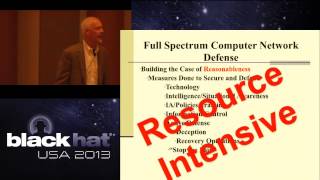
Legal Aspects of Full Spectrum Computer Network - Active Defense
Explores legal implications of active cyber defense, covering technology, information control, and controversial practices. Emphasizes importance of collaboration between security professionals and legal counsel.

A Practical Attack Against MDM Solutions
Unveiling spyphone attacks: A proof-of-concept technique bypassing mobile malware detection and MDM features, demonstrating vulnerabilities in mobile security and surveillance risks.
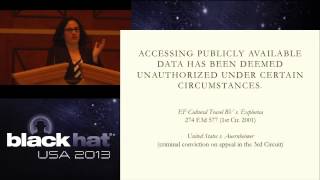
What Security Researchers Need to Know About Anti-Hacking Law
Explore legal risks for security researchers under the Computer Fraud and Abuse Act, including key cases, implications, and strategies to avoid legal trouble in cybersecurity work.
Detecting Bugs Using Decompilation and Data Flow Analysis
Explore Bugwise, a free online service for detecting software bugs through decompilation and data flow analysis, showcasing its success in finding vulnerabilities in Debian Linux.

Lessons from Surviving a 300Gbps Denial of Service Attack
Insights from a record-breaking DDoS attack: strategies, vulnerabilities, and defensive measures for safeguarding networks against evolving cyber threats.

Is That a Government in Your Network or Are You Just Happy to See Me?
Explore techniques for identifying and defending against long-term network intrusions by foreign intelligence agencies, with insights on open-source tools for detecting impersonation attacks.

Hunting the Shadows - In Depth Analysis of Escalated APT Attacks
In-depth analysis of APT attacks targeting Taiwan, showcasing automated detection systems, forensic techniques, and insights into attacker operations. Includes release of collaborative APT classification platform.
New Optimization and Obfuscation Techniques
Advanced SQL injection techniques for bypassing firewalls and intrusion detection systems, including optimization methods and the Leapfrog framework for testing security measures.
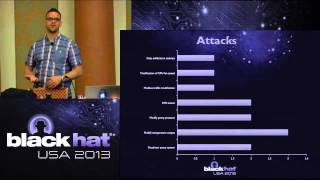
The SCADA That Didn't Cry Wolf - Who's Really Attacking Your ICS Devices
Profiling and analyzing real-world attacks on industrial control systems, revealing surprising findings about attacker tactics, origins, and motivations in ICS security.
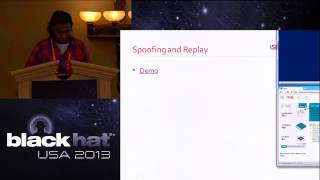
Untwining Twine
Explore the analysis and exploitation of Twine, a consumer IoT device, through reverse engineering, traffic capture, and firmware analysis. Learn techniques for understanding embedded systems.
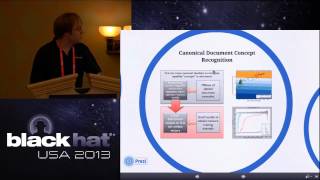
CrowdSource - Crowd Trained Machine Learning Model for Malware Capability Detection
Innovative machine learning tool for automated malware capability detection, trained on web technical documents. Provides probabilistic and traceable output for rapid reverse engineering of active malware variants.

Teridian SoC Exploitation - Harvard Architecture Smart Grid Systems
Exploitation techniques for Teridian 8051-based SoCs in smart grid systems, covering architecture, security barriers, and methods to gain code execution and firmware access.
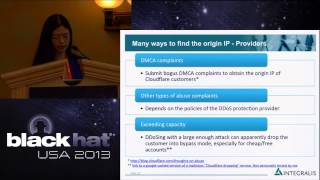
Denying Service to DDOS Protection Services
Explore vulnerabilities in cloud-based DDoS protection services and learn techniques to bypass and unmask protected websites using the "No Cloud Allowed" tool.
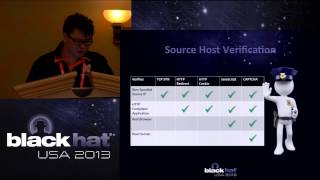
Universal DDoS Mitigation Bypass
Explores weaknesses in DDoS mitigation techniques, demonstrating bypass methods for various protection layers. Introduces a PoC tool for near-perfect mitigation evasion, highlighting vulnerabilities in current defense strategies.
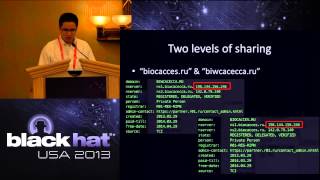
New Trends in FastFlux Networks
Explores new trends in fast-flux networks, including slower change rates, shared resources, multi-level structures, and similarities with benign applications. Proposes novel detection approaches based on these findings.

BinaryPig - Scalable Malware Analytics in Hadoop
Scalable malware analytics framework using Hadoop for processing large volumes of malware samples. Enables efficient feature extraction, machine learning, and data exploration for security researchers.
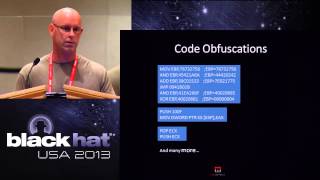
Virtual Deobfuscator - A DARPA Cyber Fast Track Funded Effort
Innovative tool for automated reverse engineering of virtualization obfuscators, requiring minimal manual effort and recreating near-original instructions without extensive bytecode analysis.
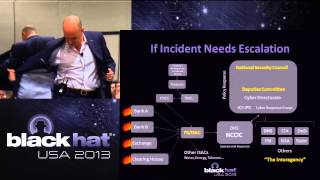
Above My Pay Grade - Cyber Response at the National Level
Explore national-level cyber incident response, from individual banks to presidential decisions, examining the flow of information and decision-making in major cybersecurity crises.
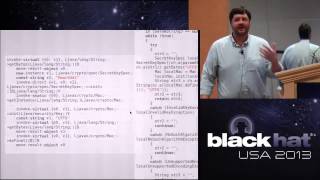
Abusing Web APIs Through Scripted Android Applications
Exploiting Android app vulnerabilities to abuse web APIs, using JRuby for scripting and Burp Suite for testing. Demonstrates attacks bypassing security measures and exposes potential weaknesses in mobile app ecosystems.
Dissecting CSRF Attacks & Countermeasures
Explore CSRF attacks, current countermeasures, and a proposed header-based policy for improved web security. Learn detection techniques and a new concept called Storage Origin Security for simplified protection.
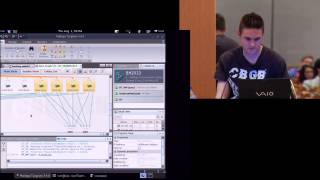
Maltego Tungsten as a Collaborative Attack Platform
Explore real-time collaborative intelligence gathering and attack integration using Maltego Tungsten. Learn to leverage shared graphs for effective team-based penetration testing and target profiling.