
Protecting the Protector - Hardening Machine Learning Defenses Against Adversarial Attacks
Strategies for enhancing machine learning model resilience against tampering, comparing cloud and client-based models, and exploring defense techniques for endpoint protection systems.
Unpacking the Packed Unpacker - Reverse Engineering an Android Anti-Analysis Native Library
Gain tools and techniques to expose hidden Android malware through reverse engineering of anti-analysis native libraries, enhancing your ability to combat mobile threats.

Automating Exploit Generation for Arbitrary Types of Kernel Vulnerabilities
Explore automated exploit generation techniques for kernel vulnerabilities, reducing development time from thousands of hours to minutes and enhancing cybersecurity practices.
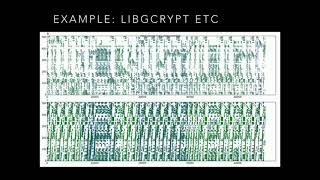
TLBleed - When Protecting Your CPU Caches is Not Enough
Explore TLBleed, a novel side-channel attack leaking information from Translation Lookaside Buffers, demonstrating vulnerabilities beyond CPU caches and challenging current security measures.
Windows Offender - Reverse Engineering Windows Defender's Antivirus Emulator
Dive into the internals of Windows Defender's antivirus emulator, exploring its binary analysis techniques for potentially malicious PE files. Gain unique insights into reverse engineering antivirus systems.
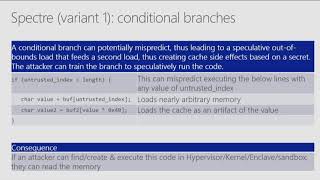
Wrangling with the Ghost - An Inside Story of Mitigating Speculative Execution Side Channel Vulnerabilities
Explore Microsoft's approach to mitigating speculative execution vulnerabilities, including research, collaboration, and industry-wide efforts. Learn about Spectre, Meltdown, and strategies for robust security measures.
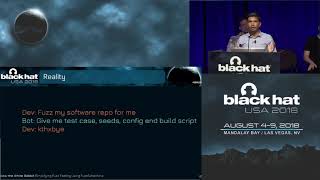
Follow the White Rabbit - Simplifying Fuzz Testing Using FuzzExMachina
Explore FuzzExMachina, a framework for efficient fuzz testing. Learn how it uncovered 11 crashes and 6 exploitable vulnerabilities in Arch Linux packages, simplifying security analysis.
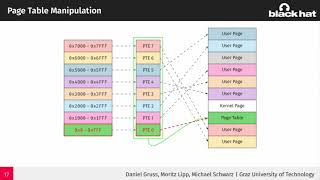
Another Flip in the Row
Explore the Rowhammer bug in DRAM modules, its security implications, exploitation techniques, and potential mitigations in this comprehensive overview of hardware vulnerabilities.
Playback - A TLS 1.3 Story
Explore TLS 1.3's 0-RTT feature, its risks, and real-world replay attacks. Learn about potential solutions and mitigation controls for secure deployment of TLS 1.3-supported software.

It's a PHP Unserialization Vulnerability Jim, but Not as We Know It
Explore PHP unserialization vulnerabilities, including RCE exploits in popular web applications. Learn attack methodologies, file formats, and defense strategies.
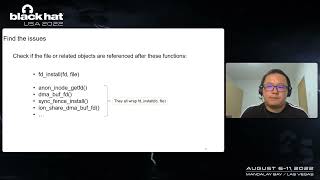
Devils Are in the File Descriptors - It Is Time To Catch Them All
Explore vulnerabilities in Linux kernel file descriptor operations, focusing on high-risk scenarios in exporting and importing, and learn to identify and address these security concerns.
ELF Section Docking - Revisiting Stageless Payload Delivery
Explore advanced techniques for embedding and loading static payloads in Linux malware, focusing on ELF binary construction and section manipulation to enhance payload survival and evasion.
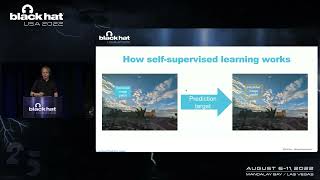
How Supercomputer-Scale Neural Network Models Apply to Defensive Cybersecurity Problems
Explore how large-scale neural networks revolutionize cybersecurity, enabling custom explanations of attacker behavior and improved threat detection with limited data. Learn to leverage public models like GPT-3 for security applications.
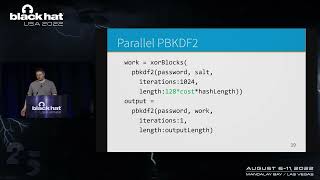
Demystifying Key Stretching and PAKEs
Explore key stretching and PAKEs: their history, best practices, and applications in encrypted cloud services. Learn to create toy algorithms and understand their importance in cybersecurity.
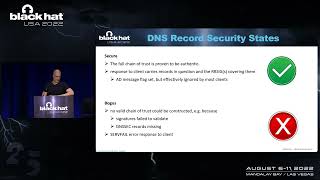
DNSSEC Downgrade Attacks
Explore DNSSEC vulnerabilities and cryptographic agility risks, revealing how adversaries can manipulate DNS responses to compromise security and prevent DNSSEC validation.
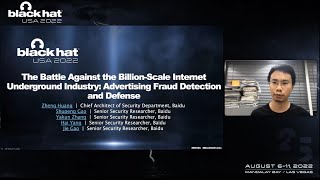
The Battle Against the Billion-Scale Internet Underground Industry - Advertising Fraud Detection
Explore the escalating war between internet advertising fraud and anti-fraud efforts. Analyze typical underground industry gangs and their evolving tactics in this high-stakes technological confrontation.
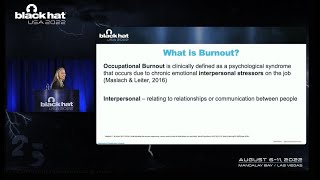
Trying to Be Everything to Everyone - Let’s Talk About Burnout
Explore burnout in computer security, its causes, and mitigation strategies. Learn to set boundaries, manage anxiety, and maintain passion in a high-stress industry facing significant workforce shortages.
From Hackathon to Hacked - Web3's Security Journey
Explore Web3 and blockchain security challenges, examining the risks of emerging tech, high-stakes environments, and immutable transactions. Learn about current vulnerabilities and potential solutions.

Dive Into Apple IO80211Family Vol. 2
Explore Apple's Wi-Fi kernel extensions, uncovering new vulnerabilities and attack surfaces in the ever-evolving landscape of iOS security. Gain insights into the ongoing cat-and-mouse game of bug fixes and emerging threats.
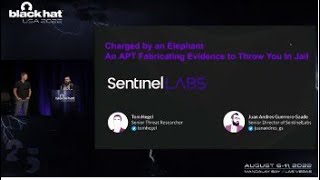
Charged by an Elephant - An APT Fabricating Evidence to Throw You in Jail
Explore ModifiedElephant's decade-long operation, incriminating activists through planted evidence. Uncover the concerning ties to commercial surveillance and multiple regional threat actors targeting victims.
Fault-Injection Detection Circuits - Design, Calibration, Validation and Tuning
Explores Intel's tunable replica circuit for detecting fault-injection attacks in processors, focusing on design, implementation, and effectiveness in preventing timing failures and unauthorized code execution.