
Setting Up CUDA, CUDNN, Keras, and TensorFlow on Windows 11 for GPU Deep Learning
Comprehensive guide for setting up GPU-accelerated deep learning environment on Windows 11, covering CUDA, CUDNN, Keras, and TensorFlow installation with step-by-step instructions.
Training a GAN on Your Own Images - StyleGAN2 ADA PyTorch
Learn to install and use NVIDIA StyleGAN2 ADA for PyTorch on Windows 10, including setup, training, and image generation with new Ampere GPUs. Step-by-step guide for both beginners and advanced users.
TensorFlow 2.0 GPU, Keras, and Python 3.7 Installation Guide for Windows 10 - 2020 Update
Comprehensive guide for setting up TensorFlow 2.0 with GPU support on Windows 10, covering installation of necessary drivers, CUDA, cuDNN, and Anaconda environment configuration.

OpenGL and CUDA-Based Tessellation
Explore advanced tessellation techniques using CUDA to overcome OpenGL limitations, enabling higher-order surfaces, custom UV coordinates, and trimming curves for improved visual quality in graphics rendering.

How to Install XFormers and Run Stable Diffusion Faster on 4GB RAM
Optimize Stable Diffusion performance with XFormers: Learn to install and implement this efficiency-boosting library, achieving 1.5x faster processing on 4GB RAM systems.
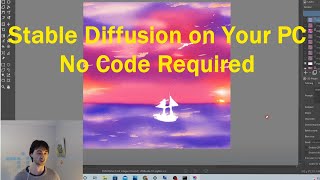
How to Run Stable Diffusion on Your Computer Without Writing a Single Line of Code - Using Krita
Learn to run stable diffusion in Krita without coding. Step-by-step guide covers installation, setup, and basic image generation using this powerful AI art tool on your local machine.
GPT-4 Coding Skills: Real-time Voice Changer and Small Neural Network
Explore GPT-4o's coding capabilities through practical tests, including a real-time voice changer and small neural network implementation. Gain insights into AI's potential for software development.

Hugging Face Accelerate: Making Device-Agnostic ML Training and Inference Easy at Scale
Learn to simplify ML model training and inference across devices using Hugging Face Accelerate. Explore its low-level interface, hardware compatibility, and scalable deployment features.

FLUX LoRA Training Tutorial: From Zero to Hero with Kohya SS GUI - 8GB GPU, Windows
Comprehensive guide to FLUX LoRA training using Kohya SS GUI, covering installation, configuration, dataset preparation, training process, and image generation with practical tips for optimal results.
Software Engineering and Computer Science with the Wolfram Compiler
Explore software engineering practices and compiler techniques using the Wolfram Compiler, gaining insights into its internal organization and innovative approaches.
Develop ML Interactive GPU-Workflows with Visual Studio Code, Docker and Dockerhub
Learn to streamline GPU-enabled ML workflows using Visual Studio Code, Docker, and Dockerhub. Overcome CUDA errors and version conflicts while developing in containers with seamless GPU integration.
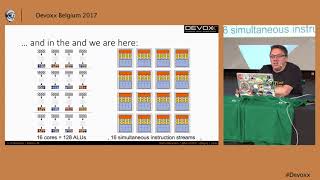
Java on the GPU - Where Are We Now?
Explore GPU utilization in Java, covering OpenGL, CUDA, and OpenCL for massive computations. Learn advantages and drawbacks of GPU computing in desktop and cloud environments.
Mnemosyne - A Distributed Bitmapped Indexing Layer for Big Data
Explore building a distributed indexing layer for big data, covering design principles, data ingestion, storage, modeling, and in-memory computing techniques for scalable, real-time querying.
TC-GNN - Bridging Sparse GNN Computation and Dense Tensor Cores on GPUs
Innovative framework accelerating graph neural networks using GPU Tensor Core Units, reconciling sparse GNN computation with dense TCUs for improved performance in graph-based machine learning.
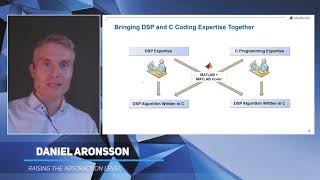
Raising the Abstraction Level
Explore how high-level MATLAB code can be converted to efficient C++ or CUDA, integrating hand-coded sources and using modern tools for bug detection and runtime error prevention.
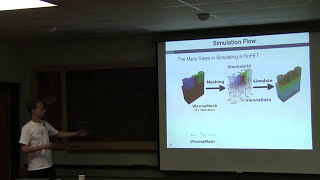
A Discussion of Selected Vienna-Libraries for Computational Science
Explore Vienna-Libraries for computational science: ViennaCL, ViennaGrid, ViennaData, ViennaMath, and ViennaFEM. Learn how C++ can better meet scientific computing needs.
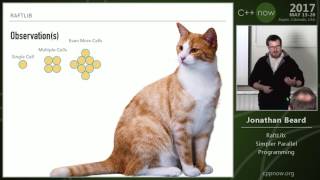
RaftLib - Simpler Parallel Programming
Explore RaftLib, a C++ library simplifying parallel programming for heterogeneous multicore processors. Learn to write efficient code for complex hardware without extensive low-level knowledge.
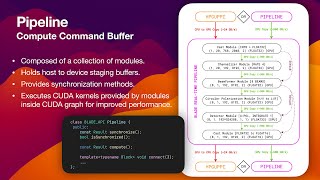
BLADE - The Allen Telescope Array CUDA-Accelerated Real-Time DSP Library
Explore GPU-accelerated real-time DSP for radio astronomy, focusing on BLADE software's innovative techniques for processing massive data streams from the Allen Telescope Array.
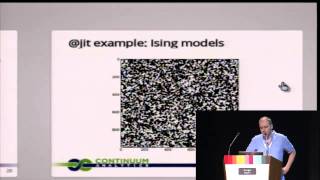
Numba - A JIT Compiler for Fast Numerical Code
Explore Numba, a JIT compiler for Python that accelerates numerical algorithms beyond Numpy capabilities, with CPU and GPU support. Learn its use cases, performance expectations, and inner workings.
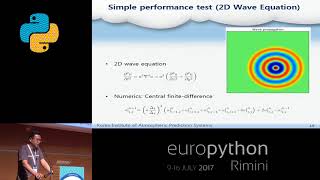
GPU Acceleration of a Global Atmospheric Model Using Python Based Multi-Platform
Explore GPU acceleration for global atmospheric models using PyMIP, a Python module integrating C, Fortran, CUDA, and OpenCL. Learn about performance improvements and multi-platform compatibility for weather forecasting and climate prediction.
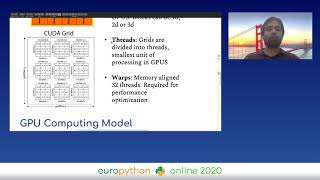
Writing Extensions and Bindings for GPU Made Easy
Learn to optimize deep learning computations by writing custom C and CUDA extensions for GPU, with a focus on image search across billions of items and seamless integration with Python codebases.