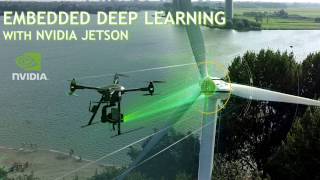
Embedded Deep Learning with NVIDIA Jetson
Learn to develop AI and computer vision applications using NVIDIA's deep learning tools. Explore neural network primitives, real-time solutions, and training workflows for intelligent robots and drones on the Jetson Embedded Platform.
Accelerated Audio Computing: From Problem to Solution
Explore accelerated audio computing advancements: technology progress, use cases, SDK vision, and industry standards. Engage in shaping the future of GPU-powered audio processing.
Designing High-Performance Scalable Middleware for HPC, AI, and Data Science in Exascale Systems and Clouds
Explore high-performance middleware design for exascale systems, focusing on MVAPICH2 project's features and performance in HPC, AI, and data science applications across various platforms.
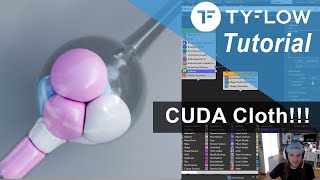
TyFlow Tutorial - CUDA Cloth Bubbles + Project Files
Explore 3ds Max's TyFlow CUDA cloth features to simulate precise cloth collisions, creating glass bulbs with procedural bubbles for visually satisfying results.
Linux Video Production: Alternatives to Adobe Creative Cloud
Experiment using Linux-based video production tools as alternatives to Adobe Creative Cloud, exploring DaVinci Resolve, Autograph, Photopea, Lightworks, Inkscape, and Audacity for a two-week period.
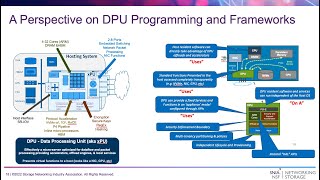
Programming Frameworks for xPU, GPU, and Computational Storage - A Comprehensive Overview
Explore programming frameworks for GPUs, xPUs, and computational storage devices, covering CUDA, SYCL, DOCA, and emerging standards for accelerated processing and host offload capabilities.
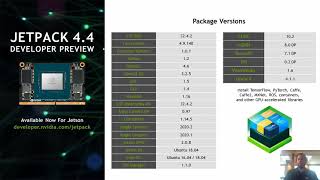
Jetson Xavier NX Developer Kit - Edge AI Supercomputer Features and Applications
Explore Jetson Xavier NX Developer Kit's edge AI capabilities, software features, and deployment strategies for advanced applications in video analytics, perception, and natural language processing.
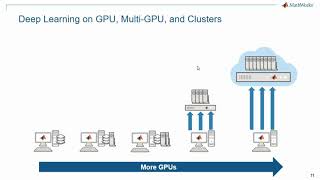
Deep Learning in MATLAB: From Algorithm Design to Embedded Deployment on NVIDIA Jetson
Explore deep learning in MATLAB, from transfer learning to GPU deployment on NVIDIA Jetson. Learn algorithm design, CUDA compilation, and performance optimization for embedded systems.
Improvements to NVIDIA CUDA and Deep Learning Libraries - Session 1
Explore NVIDIA's latest AI tech advancements, including CUDA Graphs, WMMA, and cuDNN. Learn about performance improvements, Tensor Cores, and new features for deep learning acceleration.
Parallel Nsight 2.0 and CUDA 4.0 for GPU Computing - SIGGRAPH 2011
Explore GPU computing with CUDA 4.0 and Parallel Nsight 2.0, integrated into Visual Studio for enhanced graphics and parallel application development.
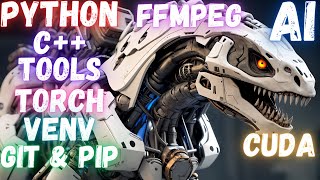
Essential AI Tools and Libraries - Installation Guide for Python, Git, C++, FFmpeg, CUDA, and PyTorch
Comprehensive guide to installing and configuring essential AI tools and libraries on Windows, covering Python, Git, C++ tools, FFmpeg, CUDA, and PyTorch. Includes troubleshooting tips and advanced techniques for optimal setup.
CUTLASS: A CUDA C++ Template Library for Accelerating Deep Learning Computations
Explore CUTLASS, an open-source CUDA C++ template library for optimizing deep learning computations on NVIDIA GPUs. Learn to develop high-performance custom kernels using Tensor Core programming.
CUDA Toolkit 12.2 - New Accelerated Computing and Security Enhancements
Explore CUDA 12.2's new features: Hopper GPU support, confidential computing, heterogeneous memory management, and MPS prioritization enhancements for efficient, secure, and accelerated application development.

Open Pretrained Transformer - ML Coding Series
Deep dive into OPT-175B codebase, covering setup, training script, model construction, CUDA kernels, and mixed precision training concepts for large language models.
Train Stable Diffusion on Your Own Photos - Updated Tutorial
Learn to customize Stable Diffusion with personal photos, using tools like RunPod and Dreambooth. Includes tips for image preparation, troubleshooting, and optimizing results.
Install Tensorflow Object Detection From Scratch in 5 Steps - Python Deep Learning
Step-by-step guide to installing TensorFlow Object Detection API, covering Python, Visual Studio, CUDA, CUDNN, Protoc, and API setup for deep learning projects.
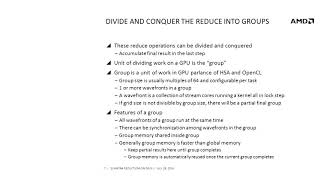
Reduction on GPUs
Explore GPU reduction techniques with Eric Caspole, enhancing your understanding of parallel computing and optimizing performance in GPU-based applications.
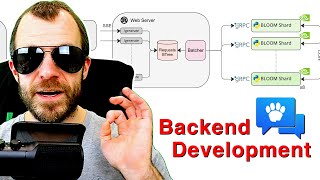
Open Assistant Inference Backend Development
Hands-on coding session building streaming inference into Hugging Face's text generation server, covering CUDA, Python, Rust, gRPC, WebSockets, and server-sent events for AI development.
PyTorch Datasets, DataLoaders and Transforms - GPU Series Part 3
Explore PyTorch's data handling tools: Datasets, DataLoaders, and Transforms. Learn to prepare, visualize, and optimize data for GPU-accelerated deep learning using Fashion-MNIST dataset.
Introduction to Tensors - PyTorch with GPU Series Part 2
Explore tensor initialization, GPU usage, operations, memory sharing, and profiling in PyTorch for efficient deep learning model development.
How to Train a Deep Learning Model Using Docker
Learn to train deep learning models using Docker, NVIDIA runtimes, and PyTorch for melanoma classification on a single GPU, with practical code implementation and troubleshooting tips.