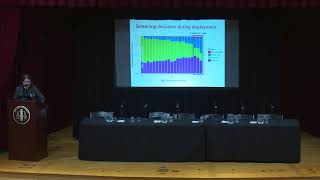
Case Study of Child Maltreatment Hotline Screening Decision Support
Explore algorithmic decision-making in child welfare hotline screening, examining ethical implications and real-world impact through a comprehensive case study analysis.
Mixed Messages - The Limits of Automated Social Media Content Analysis
Explore limitations of automated content analysis on social media, examining accuracy, bias, and implications for free expression and content moderation policies.
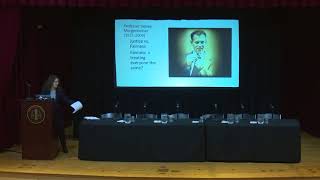
What Is Discrimination, When Is It Wrong and Why?
Exploration of discrimination's definition, permissibility, and ethical implications. Surveys scholarly perspectives on discrimination law's purpose and debates surrounding various approaches to identifying wrongful discrimination.

Privacy for All - Ensuring Fair and Equitable Privacy Protections
Explore fair and equitable privacy protections in computing, addressing challenges and proposing solutions for inclusive data protection across diverse populations.
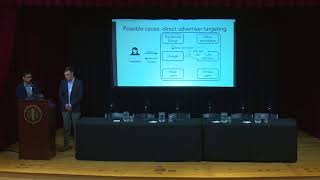
Discrimination in Online Personalization - A Multidisciplinary Inquiry
Explores multidisciplinary approaches to identifying and addressing discrimination in online personalization systems, examining legal, technical, and ethical perspectives on algorithmic fairness.
Saving Humanity
Explore the impact of AI and technology on society, policy, and human values with Harvard's Latanya Sweeney. Examine unforeseen consequences and discuss how to shape our technological future responsibly.
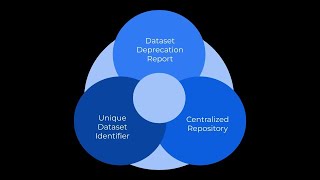
Caring for Datasets - A Framework for Deprecating Datasets and Responsible Data Stewardship
Explore a framework for responsible data stewardship, focusing on dataset deprecation and ethical considerations in AI development and research.
The Death of the Legal Subject - How Predictive Algorithms Are -Re-constructing Legal Subjectivity
Explore how predictive algorithms reshape legal subjectivity, challenging traditional notions of individual agency and responsibility in the justice system.
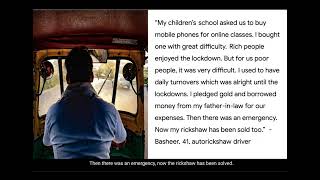
We Cannot Find Fault with a Friend - Perceptions of Algorithmic Accountability Among Instant Loan App Users in India
Explore perceptions of algorithmic accountability among instant loan app users in India, examining user trust, understanding, and attitudes towards AI-driven lending decisions.
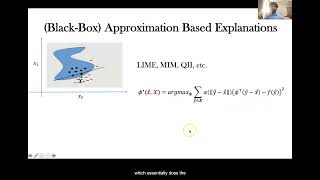
Model Explanations with Differential Privacy
Explore techniques for generating privacy-preserving explanations of machine learning models, balancing transparency with data protection in AI systems.
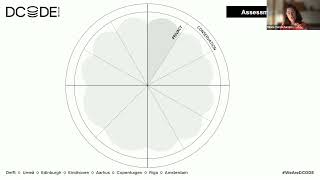
Towards a Multi-Stakeholder Value-Based Assessment Framework for Algorithmic Systems
Explore a value-based assessment framework for algorithmic systems, considering multiple stakeholders and their perspectives on ethical and societal impacts.
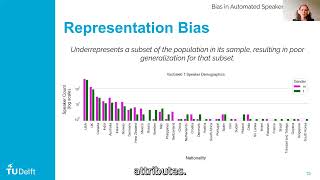
Bias in Automated Speaker Recognition
Explore the critical issue of bias in automated speaker recognition systems, examining its impact and potential solutions for fairer AI-driven voice technology.
REAL ML - Recognizing, Exploring, and Articulating Limitations in Machine Learning Research
Explore key strategies for identifying, investigating, and communicating limitations in machine learning research to enhance transparency and foster responsible AI development.
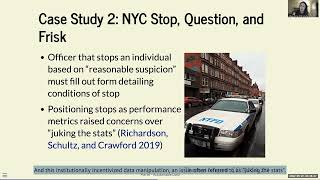
Accountable Datasets - The Politics and Pragmatics of Disclosure Datasets
Explore the political and practical aspects of disclosure datasets, examining their role in accountability and transparency in data-driven decision-making processes.
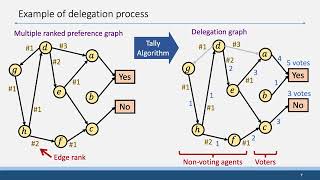
Characterizing Properties and Trade-offs of Centralized Delegation Mechanisms in Liquid Democracy
Explore centralized delegation mechanisms in liquid democracy, analyzing their properties and trade-offs for improved democratic decision-making processes.
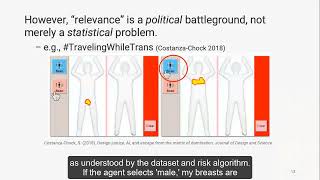
Are "Intersectionally Fair" AI Algorithms Really Fair to Women of Color? - A Philosophical Analysis
Philosophical examination of AI algorithms' fairness towards women of color, challenging the concept of "intersectional fairness" in artificial intelligence.
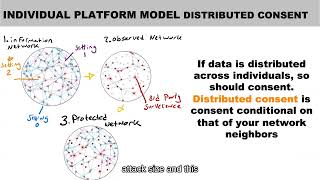
Limits of Individual Consent and Models of Distributed Consent in Online Social Networks
Explore the limitations of individual consent and alternative models of distributed consent in online social networks, examining ethical implications and potential solutions.
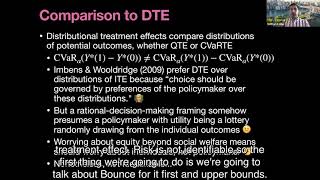
Treatment Effect Risk - Bounds and Inference
Explore bounds and inference in treatment effect risk analysis, focusing on statistical methods for causal inference and risk assessment in experimental studies.
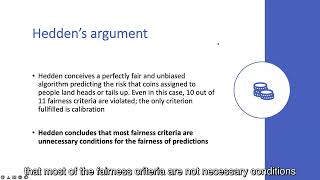
People Are Not Coins - Morally Distinct Types of Predictions Necessitate Different Fairness Constraints
Explore ethical implications of AI predictions and fairness constraints in different contexts, examining moral distinctions and their impact on algorithmic decision-making.
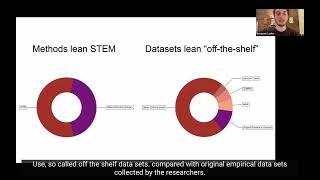
Four Years of FAccT - A Reflexive, Mixed-Methods Analysis of Research Contributions, Shortcomings, and Future Prospects
Reflexive analysis of FAccT research, examining contributions, limitations, and future directions in computing fairness, accountability, and transparency over four years.
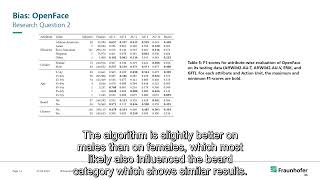
Bias Evaluation on Data and Algorithms for Affect Recognition in Faces
Explore bias in facial affect recognition algorithms, examining data and methods to identify and mitigate demographic disparities in emotion detection accuracy.