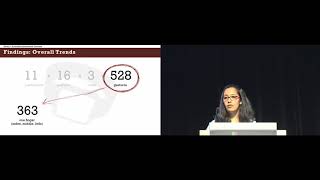
Exploring Accessible Smartwatch Interactions for People with Upper Body Motor Impairments
Investigates accessible smartwatch interactions for users with upper body motor impairments through two studies, offering insights and design recommendations for improved wearable technology accessibility.
Choosing to Help Monsters - A Mixed-Method Examination of Meaningful Choices in Narrative-Rich Games and Interactive Narratives
Explores how meaningful choices in narrative games impact player experiences, highlighting moral, social, and consequential aspects that enhance appreciation and engagement in both entertainment and serious game contexts.
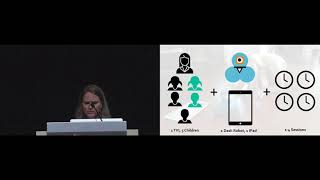
Blocks4All - Overcoming Accessibility Barriers to Blocks Programming for Children with Visual Impairments
Explore techniques to make blocks-based programming accessible for visually impaired children, addressing barriers and providing guidelines for inclusive touchscreen interactions.
Playing to Wait - A Taxonomy of Idle Games
Explores the characteristics and design of idle games, developing a taxonomy and analyzing game features to deepen understanding of this minimalist gaming phenomenon.
Visual ODLs - Co-Designing Patient-Generated Observations of Daily Living to Support Data-Driven Conversations in Pediatric Care
Explores co-designing visual tools with chronically-ill teens and parents to improve symptom communication in pediatric care, enhancing patient-generated data integration and clinical conversations.
The Space of Possibilities - Political Economies of Technology Innovation in Sub-Saharan Africa
Explores political and economic factors impacting tech innovation in sub-Saharan Africa, revealing how structural constraints shape possibilities for development beyond user-centric approaches.
Extending Manual Drawing Practices with Artist-Centric Programming Tools
Explore Dynamic Brushes, a programming environment that blends manual and procedural art creation. Learn how this tool transforms stylus inputs into complex patterns, enhancing traditional drawing practices.
Investigating the Role of an Overview Device in Multi-Device Collaboration
Explores impact of overview devices in multi-device collaboration for trip planning. Reveals benefits for decision-making, organization, and group dynamics in co-located collaborative tasks.
Gender Recognition or Gender Reductionism - The Social Implications of Automatic Gender Recognition Systems
Explores transgender individuals' perceptions of Automatic Gender Recognition technology, highlighting concerns about privacy, accuracy, and potential harms. Offers recommendations for designing gender-inclusive digital systems.
A Trip to the Moon - Personalized Animated Movies for Self-reflection
Explore how personalized animated movies can enhance self-reflection by visualizing mood and behavior data, leading to greater emotional engagement and deeper introspection.
SymbiosisSketch - Combining 2D & 3D Sketching for Designing Detailed 3D Objects in Situ
Explore SymbiosisSketch, an innovative hybrid sketching system combining 2D and 3D techniques for creating detailed augmented reality designs. Learn how this approach enhances creativity and precision in 3D conceptual design.
Silicone Devices - A Scalable DIY Approach for Fabricating Self-Contained Multi-Layered Soft Circuits Using Microfluidics
Scalable DIY fabrication workflow for prototyping stretchable devices using CO2 laser cutter. Includes techniques for multi-layered circuits, buried VIAs, and a sensor toolkit for makers and interaction designers.
All Work and No Play? Conversations with a Question-and-Answer Chatbot in the Wild
Exploring user interactions with HR chatbots, analyzing conversational patterns, and discussing design implications for adaptive conversational agents that balance functionality and playful engagement.
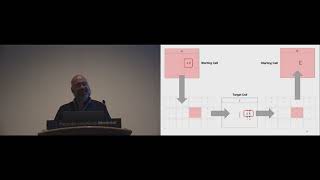
Introducing Transient Gestures to Improve Pan and Zoom on Touch Surfaces
Enhancing touch-based input with transient pan and zoom gestures for improved navigation and rapid view manipulation on touchscreen devices, reducing repetition in multi-level navigation.
Deployments of the Table-Non-Table - A Reflection on the Relation Between Theory and Things in the Practice of Design Research
Explores the evolving relationship between theory and design artifacts in HCI research through a series of field deployments, offering insights into the complex interplay of theory and practice in design-oriented studies.
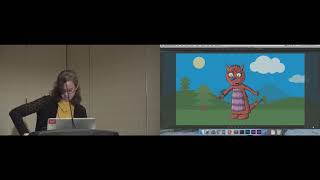
Triggering Artwork Swaps for Live Animation
Innovative system for real-time 2D character animation, featuring a multi-touch interface and predictive model to streamline artwork swaps during live performances, enhancing storytelling capabilities.
CircuitSense - Automatic Sensing of Physical Electric Circuits and Generation of Virtual Circuits to Support Software Tools
Automatic system for recognizing and digitizing physical circuits, enabling real-time software representation to enhance debugging, experimentation, and sharing in electronic prototyping projects.
MagTics - Flexible and Thin Form Factor Magnetic Actuators for Dynamic and Wearable Haptic Feedback
Innovative flexible haptic interface using magnetic actuators for wearable devices. Combines high performance with low energy consumption, enabling rich tactile feedback in mobile and VR applications.
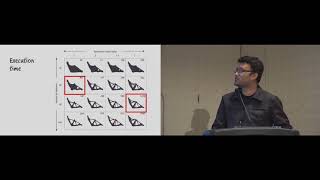
DreamSketch - Early Stage 3D Design Explorations with Sketching and Generative Design
Innovative 3D design interface combining sketching and generative algorithms for early-stage design exploration. Enables designers to visualize multiple solutions in context, enhancing creativity and decision-making.
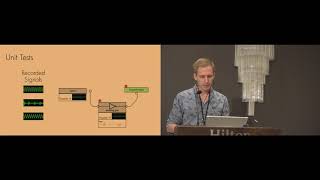
Scanalog - Interactive Design and Debugging of Analog Circuits with Programmable Hardware
Interactive tool for rapid analog circuit design using programmable hardware. Enables real-time manipulation, feedback, and testing without manual assembly, streamlining the iterative design process.
iSphere - Self-Luminous Spherical Drone Display
Innovative flying spherical display using rotating LED tapes on a drone, creating high-resolution images visible from all angles. Potential applications include guidance, signage, and telepresence.