
Using Advisory 3D Sound Cues to Improve Drivers' Performance and Situation Awareness
Explores 3D auditory displays for advisory traffic information, improving driver performance and situation awareness while highlighting advantages and limitations of 3D sound cues in vehicles.

Performing Research - Four Contributions to HCI
Explore self-situated performance research in HCI, examining how researchers engage in creative experiences alongside participants to enhance intimacy, sense-making, and research refinement.

Desktop Orbital Camera Motions Using Rotational Head Movements
Explore head movements for 3D viewpoint control, comparing yaw and roll techniques. Studies reveal roll's efficiency for orbital camera control, outperforming traditional mouse/keyboard methods by 14.5%.
On Your Feet! Enhancing Self-Motion Perception in Leaning-Based Interfaces through Multisensory Stimuli
Explore enhancing self-motion perception in virtual environments using multisensory stimuli, including auditory, visual, and vibrotactile cues for improved user experience in VR and gaming applications.

SketchingWithHands - 3D Sketching Handheld Products with First-Person Hand Posture
Innovative 3D sketching system integrating hand-tracking for efficient handheld product design. Enables capturing hand postures, exploring concepts, and maintaining proper scale and usage through novel features and intuitive interfaces.
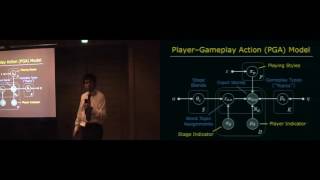
Mining Controller Inputs to Understand Gameplay
Innovative approach using probabilistic topic models to analyze controller inputs, revealing gameplay patterns and player-independent action types in video games.
Changing the Appearance of Physical Interfaces Through Controlled Transparency
Explore innovative physical interfaces that change appearance through controlled transparency, offering rapid transitions, energy efficiency, and unique benefits like creating apparent holes or nesting objects.
ViBand - High-Fidelity Bio-Acoustic Sensing Using Commodity Smartwatch Accelerometers
Innovative smartwatch technology enhances bio-acoustic sensing, enabling gesture recognition, object detection, and body-based data transmission, expanding wearable interaction possibilities.

Immersive Scuba Diving Simulator Using Virtual Reality
Experience scuba diving on land with Amphibian, a VR simulator that replicates underwater sensations like buoyancy, drag, and temperature changes for a realistic diving experience without getting wet.

NormalTouch and TextureTouch - High-fidelity 3D Haptic Shape Rendering on Handheld Virtual Reality Controllers
Innovative haptic controllers for VR that render 3D shapes and textures through physical displacement, enhancing user interaction and accuracy in virtual environments.
ERICA - Interaction Mining Mobile Apps
Innovative system for capturing app design components, enabling data-driven design through interaction mining. Detects UI changes, records data streams, and creates user interaction traces for improved UX analysis and development.
Interacting with Soli - Exploring Fine-Grained Dynamic Gesture Recognition in the Radio-Frequency Spectrum
Explore novel machine learning for RF-based gesture recognition using Google's Soli sensor. Learn about high-frequency radar sensing and advanced neural network techniques for fine-grained motion detection.

Deciphering a Meal through Open Source Standards - Soylent and the Rise of Diet Hackers
Explore the DIY soylent movement, its impact on food standards, and the motivations of nutrition hobbyists. Gain insights into the risks and opportunities of amateur food-tech practices.
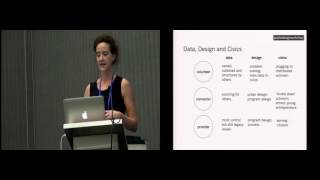
Data, Design and Civics - An Exploratory Study of Civic Tech
Exploratory study examining how civic leaders conceptualize civic tech, focusing on intersections of data, design, and civics. Identifies key issues and proposes guiding questions for advancing the field.

A Feminist HCI Approach to Designing Postpartum Technologies - When I First Saw a Breast Pump I Was Wondering If It Was a Joke
Exploring feminist HCI design for postpartum technologies, focusing on improving breast pumps through crowdsourced ideas and addressing environmental, legal, social, and emotional aspects of new motherhood.

Syrian Refugees and Digital Health in Lebanon - Opportunities for Improving Antenatal Health
Exploring digital technology opportunities to support antenatal care access for Syrian refugees in Lebanon, considering cultural factors, health beliefs, and smartphone utilization.

Anti-Solutionist Strategies - Seriously Silly Design Fiction
Explore unconventional design approaches that challenge solutionism in technology innovation, focusing on absurd and imaginative concepts to foster critical thinking and creativity.

Mind The Gap
Explore the intersection of research and practice in UI design with Jeff Johnson, focusing on translating research for practitioners and designing for an aging population.

Education Reimagined
Salman Khan shares the inspiring story of Khan Academy's founding and vision for reimagining education. He discusses providing free, world-class education globally and the platform's impact on millions of learners.
Easy Return - An App for Indoor Backtracking Assistance
Innovative iPhone app assists blind users in backtracking indoor routes without maps or environment modifications, using turn sequences and step counts. Tested with blind participants in controlled indoor experiments.
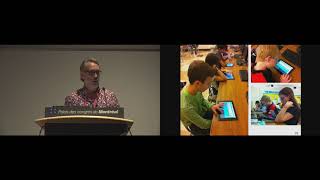
Educational Game and Intelligent Tutoring System - A Classroom Study and Comparative Design Analysis
Comparative study of DragonBox and Lynnette for equation-solving: DragonBox offers more enjoyment and problem-solving, while Lynnette yields better post-test performance. Analysis explores combining strengths of both systems.