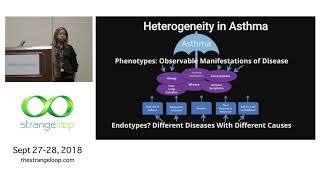
Machine Learning for Personalised Health
Exploring machine learning applications in healthcare for personalized medicine, disease subtyping, and patient stratification. Focuses on probabilistic modeling to uncover heterogeneous disease phenomena and asthma phenotypes.
Proof Theory Impressionism - Blurring the Curry-Howard Line
Exploring approaches to bridge the gap between proof assistants and production languages, focusing on Rust and its potential for incorporating provable system capabilities.
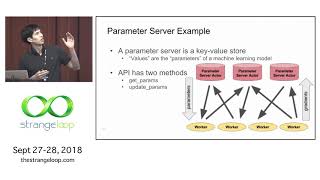
Ray - A Distributed System for Emerging AI Applications
Explore Ray, a scalable distributed system designed for AI workloads, featuring task-parallel and actor abstractions, in-memory storage, and a distributed scheduler for emerging AI applications.
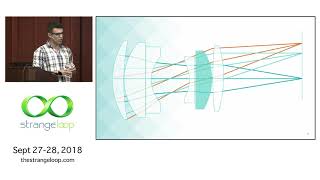
Trusting Your Data Science Pipelines - A Quantitative Approach
Explore quantitative methods for ensuring reliability in complex data science pipelines. Learn about Two Sigma's approach to verifying end-to-end results and developing scalable algorithms for improved system stability.
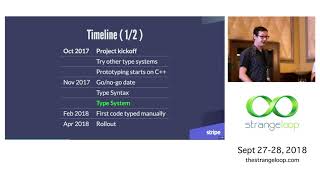
Gradual Typing of Ruby at Scale
Explore Stripe's journey in implementing gradual typing for their large Ruby codebase, including key design decisions and their impact on developer productivity and code quality.
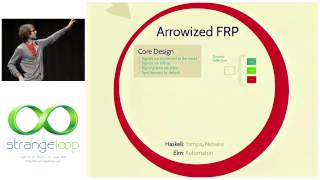
Controlling Time and Space - Understanding the Many Formulations of FRP
Explore diverse formulations of Functional Reactive Programming, their historical and theoretical connections, and how Elm's FRP variation enables features like hot-swapping and time-traveling debugging.
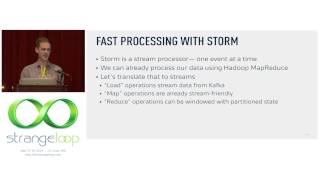
Building Real-time Systems with Open Source Technologies
Learn to build a real-time analytics stack using Kafka, Storm, and Druid for fast, flexible, and reliable data processing. Discover how to combine these technologies with Hadoop for comprehensive analytics solutions.
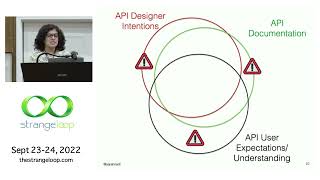
It's Not You, It's the API - Automatically Avoiding API Misuses
Automated approach to detect and prevent API misuses by mining usage patterns, creating rules, and implementing checks, bridging the gap between API designers and users.
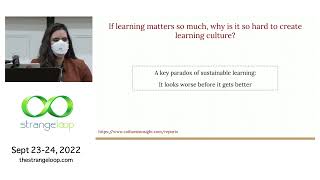
It's Like Coding in the Dark - The Need for Learning Culture in Engineering Teams
Explore the importance of fostering a learning culture in engineering teams, emphasizing its impact on performance, developer satisfaction, and overall team success.
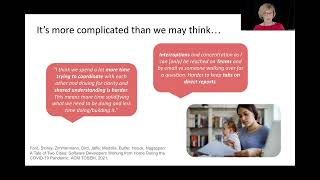
What Does 'Productivity' Actually Mean for Developers?
Explores the complex concept of developer productivity, challenging simplistic metrics and highlighting multifaceted factors that influence software engineering effectiveness.
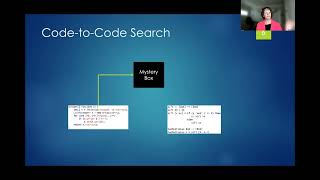
To Search or Not to Search - It Depends on the Question
Explore when searching is beneficial in programming, with insights on effective code review, remote onboarding, test-driven development, and programmer productivity from leading software engineering researchers.
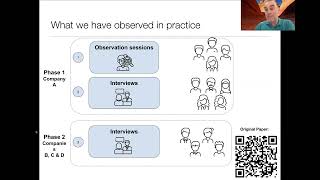
Negotiation and Padding in Software Project Estimates
Explore factors influencing software project estimate padding across roles. Gain insights into stakeholder perspectives, agile practices, and risk management in estimation processes.
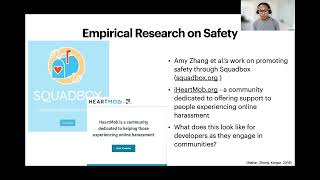
Online Community and Safety in Software Engineering
Empirical research insights on fostering safety in online coding communities, exploring successful strategies and future directions for inclusive software engineering environments.
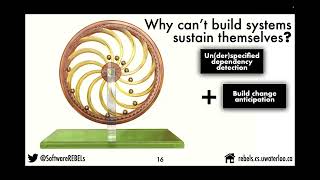
The Unintended Consequences of Mining Software Build Systems
Explore how historical build failure data can improve software development processes, with insights on testing, code reviews, remote onboarding, and productivity measurement.
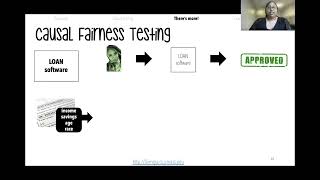
Causal Testing - Understanding the Root Causes of Defects
Explore causal testing techniques to trace software defects to their origins, enhancing fault detection and improving overall software quality and reliability.
How Expert Programmers Think About Errors
Explore how expert programmers approach errors, viewing them as opportunities for learning and improvement. Gain insights into disciplined practices and perspectives that enhance problem-solving skills.
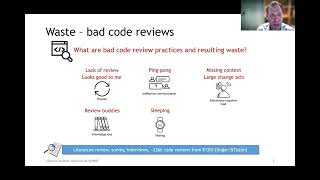
Value and Waste in Software Engineering
Explore sources of waste in software development, including bad code reviews and technical debt, and learn strategies to create value and reduce inefficiencies in the development process.
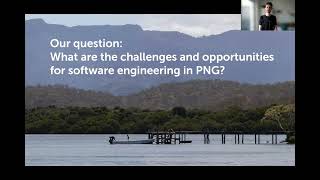
Challenges and Opportunities for Software Engineering in Papua New Guinea
Exploring software engineering in Papua New Guinea: regional challenges, opportunities, and lessons for global developers on considering local contexts in their work.
Chat with Hillel Wayne about TLA+
Explore TLA+, a formal specification language, with Hillel Wayne. Learn about its applications, benefits, and the upcoming TLA+ Conference, gaining insights into this powerful tool for software design and verification.

Chat with Paula Gearon about the Asami Graph Database
Explore Asami, a graph database that transforms JSON into a graph with minimal code. Learn its features, querying syntax, and ideal use cases from creator Paula Gearon.

Carbon Footprint Aware Software Development
Explore sustainable software practices with Netflix engineer Tejas Chopra, discussing carbon-aware development strategies and their impact on the tech industry's environmental footprint.