The Idea Becomes a Machine That Makes the Art
Exploring human-machine collaboration in art creation, inspired by Sol LeWitt's Wall Drawings. Investigates the boundaries between idea, execution, and artistic authorship using AI and human interpretations.
Voice Driven Development - Who Needs a Keyboard Anyway?
Explore speech recognition as a viable alternative for programmers facing physical limitations, offering insights on tools, techniques, and workplace adaptations for voice-driven development.
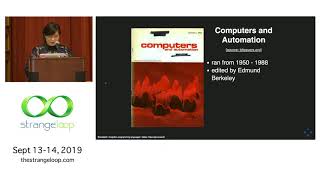
Recreating Forgotten Programming Languages, for Art
Explore the revival of early computer graphics languages, focusing on ART 1's recreation to understand vintage digital art techniques and limitations.
Alda's Dynamic Relationship with Clojure
Explore the intertwined history of Alda music programming language and Clojure, discussing their complex relationship, ZeroMQ, Open Sound Control, and native executable creation.
Typing the Untyped - Soundness in Gradual Type Systems
Explore tradeoffs in gradual type systems for untyped languages, examining soundness vs. completeness in type refinement, array errors, and variance across different implementations.
Observability - Superpowers for Developers
Explore how integrating observability into development enhances productivity, transforms production environments, and empowers developers with practical superpowers for debugging and improving systems.

Behind the New York Times Crossword
Explore the tech behind The New York Times Crossword: serverless architecture, Go rewrite, traffic management, and innovation driving the popular puzzle from creation to solving.
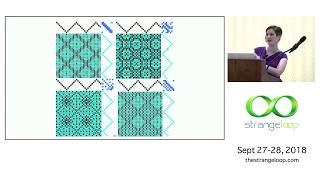
It's Just Matrix Multiplication - Notation for Weaving
Explore weaving notation, from basic terminology to complex network drafting, revealing connections between textile patterns and mathematical concepts like matrix multiplication.
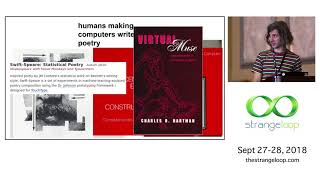
For AI, By AI - Freedom & Evolution of the AlgoPoetic Avant-Garde
Explore AI-generated poetry and its impact on language as a social practice. Delve into the New Yorken Poesry Magazine's approach to machine-created art and the importance of community in algorithmic poetry.
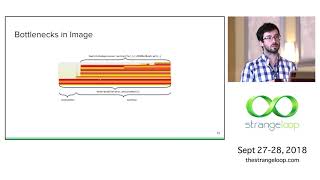
Flare - Optimizing Apache Spark for Scale-Up Architectures and Medium-Size Data
Optimizing Apache Spark for medium-size data on single powerful servers. Flare accelerator module delivers significant speedups using code generation techniques inspired by main-memory database systems.
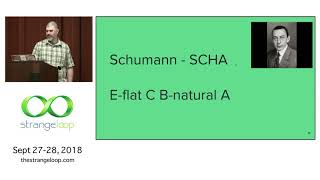
Musical Steganography - Hiding Things in Music
Explore techniques for concealing messages in music, from Bach's compositions to modern digital methods. Learn to apply steganographic principles using TidalCycles and Haskell.
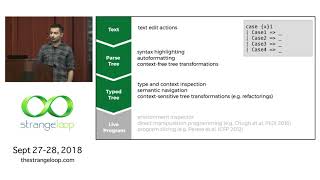
Hazel - A Live Functional Programming Environment with Typed Holes
Explore Hazel, a web-based environment for functional programming with typed holes, enabling continuous type-based services and live debugging during development of incomplete programs.
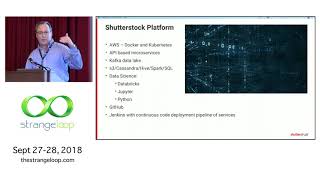
The Search for a New Visual Search - Beyond Language
Exploring AI-powered visual search beyond text, focusing on composition-aware technology for precise image retrieval using machine vision, NLP, and information retrieval techniques.
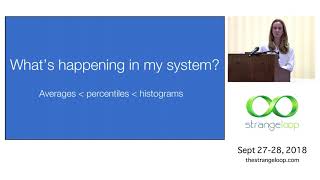
Software Performance - A Shape Not a Number
Explore the evolution of software performance measurement, from averages to percentiles to unsampled histograms, and learn how latency histograms provide clearer insights for modern microservice architectures.
Understanding TypeScript's Structural Type System
Explore TypeScript's structural type system, its benefits for JavaScript development, and how it balances flexibility with type safety through shape-based typing.

Mapping Imaginary Cities
Explore algorithms and techniques for procedurally generating fictional city maps, including topography, landscape, populations, and street plans. Dive into maps as a creative tool for conveying ideas about space and inhabitants.
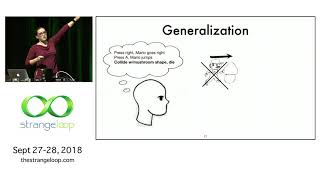
Puzzles, Problems, and Programs
Explore mental model alignment in puzzles, problems, and programming through interactive techniques and informative failure, enhancing cognitive abilities and problem-solving skills.
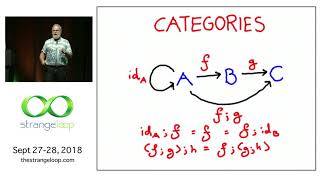
Categories for the Working Hacker
Explore category theory's relevance to developers through Java, Haskell, and blockchain languages. Learn how categories model basic data types and their connection to logic and computing.
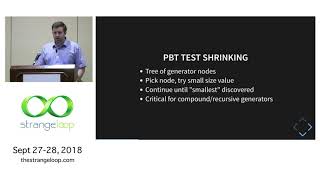
Browser Testing Using Grammars and a Consensus Oracle
Explore property-based testing for browser rendering using grammar-based generators and consensus oracles. Learn innovative techniques to identify and minimize failing test cases.
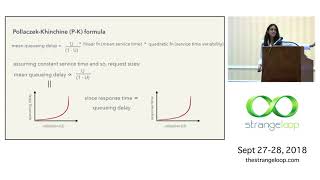
A Practical Look at Performance Theory
Explore performance theory for system tuning and capacity planning. Learn Little's Law, Universal Scalability Law, and real-world applications from companies like Facebook.
A Tale of Two Asyncs - Open Source Language Design in Rust and Node.js
Explore asynchronous programming in Rust and Node.js, comparing language design approaches, technical constraints, and governance models to understand open source language evolution.