A Journey Into Fuzzing WebAssembly Virtual Machines
Explore WebAssembly VM architecture, attack surfaces, and fuzzing strategies. Learn about bug discovery across multiple projects using various fuzzing techniques and frameworks.
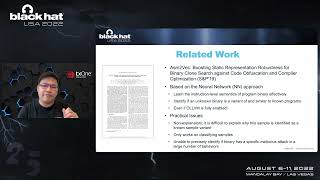
A New Trend for the Blue Team - Using a Symbolic Engine to Detect Evasive Forms of Malware - Ransomware
Explore symbolic engines for detecting evasive malware and ransomware, enhancing blue team capabilities in reverse engineering and threat analysis.

Trace Me if You Can - Bypassing Linux Syscall Tracing
Novel vulnerabilities and exploitation techniques to bypass Linux syscall tracing, even with security measures like seccomp, SELinux, and AppArmor in place. Demonstrates how user-mode programs can evade detection.
Monitoring Surveillance Vendors - A Deep Dive into In-the-Wild Android Full Chains in 2021
Explore in-the-wild Android exploits discovered by Google's TAG and Android Security teams, including deep dives into CVE-2021-0920 and novel kernel exploitation techniques for bypassing hardware mitigations.
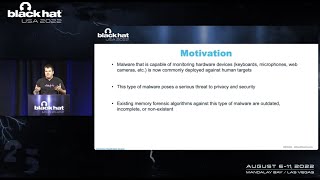
New Memory Forensics Techniques to Defeat Device Monitoring Malware
Discover new Volatility plugins for detecting device monitoring malware across major OS. Learn about advanced memory forensics techniques to combat sophisticated threats.

Unlimited Results - Breaking Firmware Encryption of ESP32-V3
Unveiling vulnerabilities in ESP32-V3 microcontrollers through hardware security evaluation, focusing on extracting firmware encryption keys to decrypt flash content containing potential secret data.
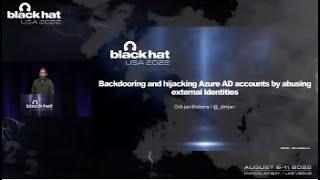
Backdooring and Hijacking Azure AD Accounts by Abusing External Identities
Explore Azure AD external identities, their vulnerabilities, and potential exploitation methods for backdooring and hijacking accounts in this informative cybersecurity presentation.
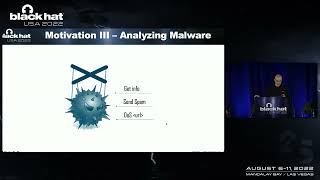
Automatic Protocol Reverse Engineering
Discover techniques for automatically extracting network protocol specifications from binary code, useful for security analysis, bug finding, and understanding botnet communications.
Pwning Cloud Vendors with Untraditional PostgreSQL Vulnerabilities
Explore PostgreSQL vulnerabilities in cloud services, including isolation issues and potential cross-account access attacks. Learn about real-world impacts and recent demonstrations of database security flaws.

Building an Open Source Artificial Pancreas
Exploring the development of an open-source artificial pancreas system for type 1 diabetes management, its technical aspects, and personal impact on blood sugar control.
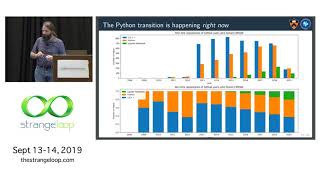
Jagged, Ragged, Awkward Arrays
Explore awkward-array, a Numpy extension for processing irregular datasets with jagged edges. Learn how it simplifies data analysis in particle physics and other fields using array programming paradigms.
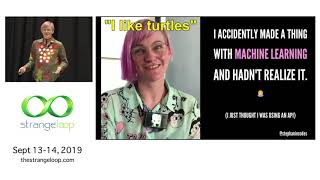
How Not to Read the Room - Creating Wearables with ML
Explore creating interactive wearables using machine learning and tiny computers, blending fashion with technology to encourage social interaction and showcase LED-adorned creations.
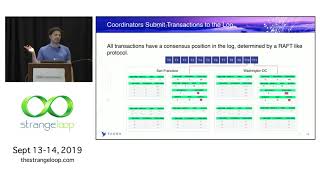
Makings of a Modern ACID Compliant Distributed Database
Explore the internal design of FaunaDB, focusing on ACID guarantees, distributed systems, and performance optimization techniques like Calvin protocol and control theory applications.
Meander - Declarative Explorations at the Limits of FP
Explore declarative data manipulation in functional programming using Meander, a Clojure library inspired by logic programming and term rewriting for complex data transformations.

Tweet My Wedding Dress
Discover how to create a tech-enhanced wedding dress controlled by tweets, exploring Arduino coding, API usage, and wiring, with insights on overcoming challenges and embracing mistakes.
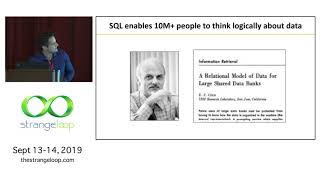
InferenceQL - AI for Data Engineers, Without the Math
Explore AI-powered data analysis with InferenceQL, an open-source platform enabling data engineers to build and query models using SQL-like syntax and intuitive interfaces, without requiring advanced mathematical knowledge.
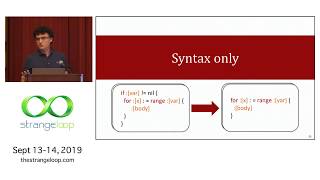
Parser Combinators for Program Transformation
Explore Parser Parser Combinators for multi-language syntax transformation, overcoming regex limitations. Learn about a common grammar approach and open extension points for customized syntax handling.
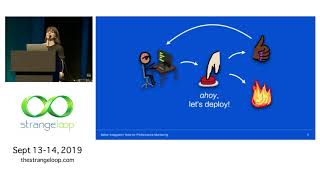
Better Integration Tests for Performance Monitoring
Discover how Slack built "Slerf" to detect and prevent performance regressions, improving product stability while maintaining high development velocity.
Networking and Go - An Engineer's Journey
Explore Go's applications in networking, from DHCP servers to IP management. Learn about useful packages, key learnings, and challenges in building networking services, with insights from DigitalOcean's experiences.
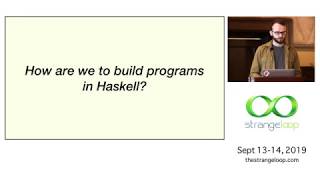
Building Haskell Programs with Fused Effects
Explore fused-effects library for Haskell: a powerful, flexible alternative to monad transformers, offering improved expressiveness without performance loss. Learn its history, benefits, and practical applications.
Safety in Chaos - Forming Realistic Failure Hypotheses
Explore techniques for forming effective failure hypotheses, pushing safety boundaries, and influencing organizational investment in chaos engineering to enhance production stability and system resilience.