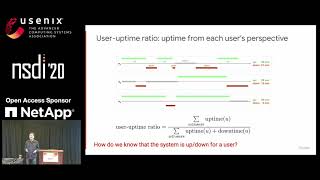
Meaningful Availability
Explores a new availability metric for cloud applications: windowed user-uptime. Discusses its advantages over traditional metrics in accurately reflecting user experience and distinguishing outage patterns.
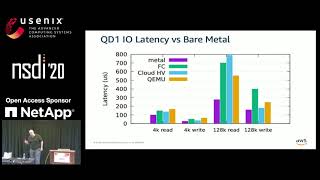
Firecracker - Lightweight Virtualization for Serverless Applications
Explore Firecracker, a lightweight VMM for serverless applications, offering strong security and minimal overhead. Learn about its design, deployment, and impact on AWS Lambda and Fargate services.
Experiences with Modeling Network Topologies at Multiple Levels of Abstraction
Explores MALT, a multi-layer topology representation for network management, covering its benefits, implementation challenges, and lessons learned in creating a comprehensive topology model.
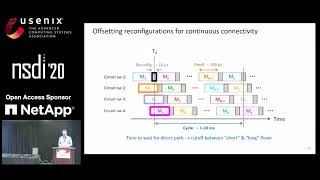
Expanding Across Time to Deliver Bandwidth Efficiency and Low Latency
Innovative network design for datacenters combining low-latency delivery and high-bandwidth efficiency through dynamic reconfiguration, outperforming static topologies for various workloads.
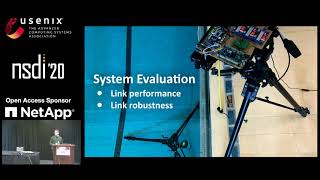
AmphiLight - Direct Air Water Communication with Laser Light
Innovative laser-based system for high-bandwidth bidirectional air-water communication, adapting to water dynamics and offering 3D steering capabilities for improved underwater operations and coordination.
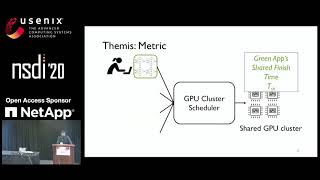
Themis - Fair and Efficient GPU Cluster Scheduling
Innovative GPU cluster scheduling framework for fair and efficient allocation of resources in distributed machine learning workloads, addressing unique challenges of long-running, gang-scheduled tasks and placement sensitivity.

DC-Store - Eliminating Noisy Neighbor Containers Using Deterministic I/O Performance and Resource Isolation
Explore a storage framework offering deterministic I/O performance in multi-container environments, eliminating noisy neighbor issues through hardware and software innovations.
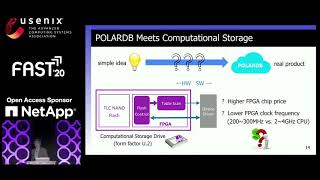
POLARDB Meets Computational Storage - Efficiently Support Analytical Workloads in Cloud
Explore how computational storage drives enhance cloud-native relational databases for analytical workloads, focusing on POLARDB's implementation and deployment in Alibaba Cloud.
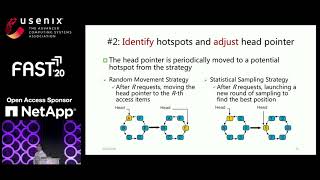
HotRing - A Hotspot-Aware In-Memory Key-Value Store
Explores HotRing, a novel in-memory key-value store optimized for concurrent access to hot data, featuring an ordered-ring hash index and lock-free structures for improved performance on skewed workloads.
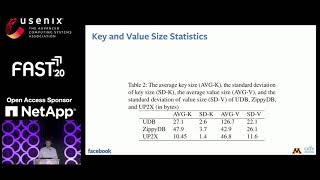
Characterizing, Modeling, and Benchmarking RocksDB Key-Value Workloads at Facebook
Detailed analysis of RocksDB workloads at Facebook, revealing key-value usage patterns and proposing improved benchmarking methods for more accurate representation of real-world scenarios.
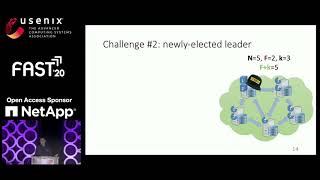
CRaft - An Erasure-coding-supported Version of Raft for Reducing Storage Cost
Explores CRaft, an erasure-coding-supported version of Raft consensus protocol, reducing storage and network costs while maintaining fault tolerance and liveness. Presents design, challenges, and performance improvements.
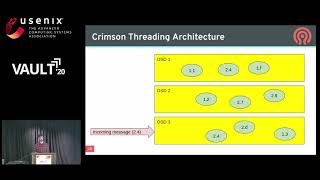
Crimson - A New Ceph OSD for the Age of Persistent Memory and Fast NVMe Storage
Explore Crimson, a new Ceph OSD designed for low-latency persistent memory and NVMe storage. Learn about its architecture, performance benefits, and future developments in this technical deep dive.
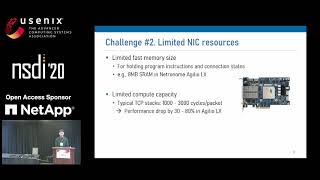
AccelTCP - Accelerating Network Applications with Stateful TCP Offloading
Explores hardware-assisted TCP stack architecture using programmable NICs to offload complex operations, improving performance for short-lived connections and layer-7 applications like Redis and HAProxy.
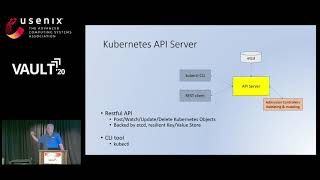
Understanding Kubernetes Storage - Getting in Deep by Writing a CSI Driver
Explore Kubernetes storage internals through CSI driver development. Gain insights into storage objects, scheduling, controllers, and the CSI ecosystem for a comprehensive understanding of Kubernetes storage mechanisms.

Speeding Up Linux Disk Encryption
Explore techniques to optimize Linux disk encryption performance, focusing on dm-crypt architecture and potential improvements for faster transparent data protection.
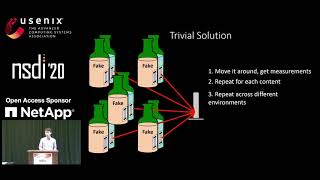
Food and Liquid Sensing in Practical Environments Using RFIDs
Innovative RF sensing system for non-invasive food and liquid identification in closed containers, achieving high accuracy across various applications and environments.
Key Per IO Security Subsystem Class for NVM Express Storage Devices
Explore KPIO, a new security standard for NVMe storage devices offering granular encryption, enhanced data protection, and improved compliance with data privacy regulations.
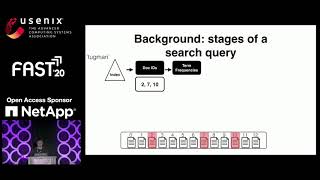
Read as Needed - Building WiSER, a Flash-Optimized Search Engine
Explore WiSER, a flash-optimized search engine designed to maximize SSD performance. Learn about innovative techniques for high throughput, low latency, and efficient memory usage in search applications.
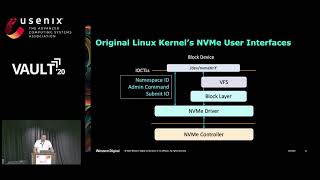
Linux User Library for NVM Express
Explore the Linux User Library for NVM Express, covering recent enhancements, kernel interfaces, and future plans for this open-source tool designed to simplify NVMe device management and development.
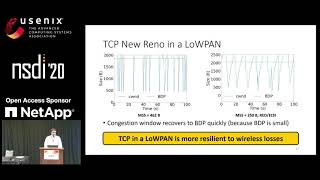
Performant TCP for Low Power Wireless Networks
Optimizing TCP for low-power wireless networks, achieving high performance and energy efficiency through careful implementation and interaction between transport and link layers.
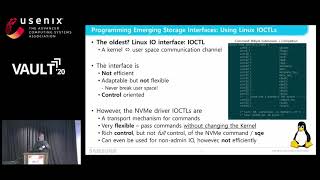
Programming Emerging Storage Interfaces
Explore xNVMe, a user-space library simplifying I/O submission for emerging storage interfaces like NVMe KV and ZNS namespaces, addressing memory constraints and providing a unified API for various I/O engines.