
Don't Burn Out or Fade Away - Conquering Occupational Burnout
Explore occupational burnout's causes, symptoms, and impacts. Learn to recognize warning signs, prevent escalation, and recover effectively. Gain insights from personal experiences and scientific research.

Lock It and Still Lose It - On the -In-Security of Automotive Remote Keyless Entry Systems
Unveils vulnerabilities in automotive remote keyless entry systems, demonstrating how attackers can exploit flaws to gain unauthorized access to vehicles from major manufacturers.
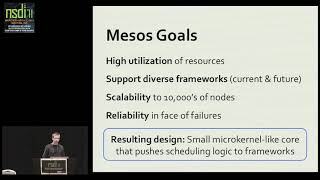
Mesos - A Platform for Fine-Grained Resource Sharing in the Data Center
Explore Mesos, a platform for efficient resource sharing in data centers. Learn about fine-grained allocation, resource offers, and improved cluster utilization across diverse computing frameworks.
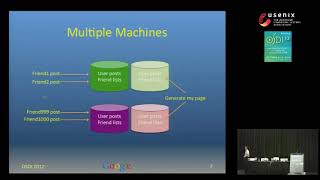
Spanner - Google’s Globally-Distributed Database
Explore Google's Spanner: a globally-distributed database with scalability, multi-version support, and synchronous replication. Learn about its structure, features, and innovative time API for external consistency.
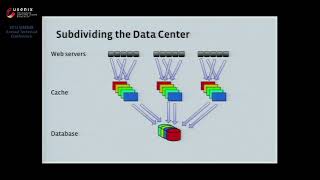
TAO - Facebook’s Distributed Data Store for the Social Graph
Explore Facebook's TAO, a distributed data store designed for efficient social graph access. Learn about its architecture, API, and how it handles billions of reads and millions of writes per second.
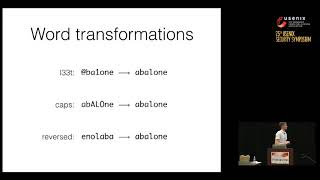
zxcvbn - Low-Budget Password Strength Estimation
Explore zxcvbn, an innovative password strength estimator that outperforms traditional methods. Learn its efficient design, accuracy, and easy implementation for enhanced online security.

In Search of an Understandable Consensus Algorithm
Explore Raft, a consensus algorithm for replicated logs, designed to be more understandable than Paxos while maintaining efficiency and providing a solid foundation for practical systems.
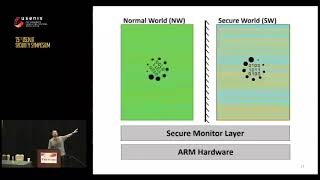
fTPM - A Software-Only Implementation of a TPM Chip
Explore software-based TPM implementation using ARM TrustZone, overcoming hardware limitations to provide robust security features for trusted computing in mobile devices.
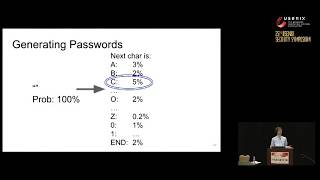
Fast, Lean, and Accurate - Modeling Password Guessability Using Neural Networks
Neural networks for modeling password guessability: faster, smaller, and more accurate than existing methods. Enables real-time, client-side password strength evaluation with sub-second latency.
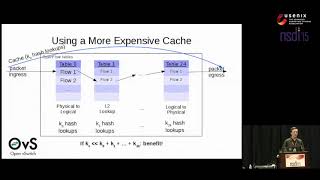
The Design and Implementation of Open vSwitch
Explore the architecture, design, and performance optimizations of Open vSwitch, an open-source virtual switch for hypervisor platforms, focusing on flow classification and caching techniques.
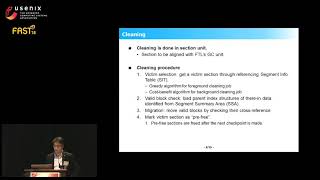
F2FS - A New File System for Flash Storage
Explore F2FS, a Linux file system optimized for flash storage. Learn its design, data structures, and algorithms, and see how it outperforms EXT4 in various scenarios on mobile and server systems.
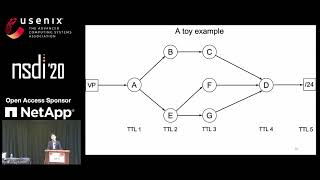
Diamond Miner - Comprehensive Discovery of the Internet's Topology Diamonds
Comprehensive Internet topology mapping system reveals hidden complexities, including load-balanced paths and frequent remapping events, offering deeper insights into network structure and resilience.
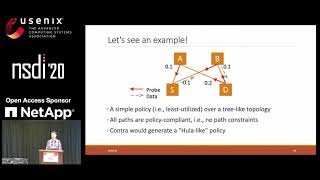
Contra - A Programmable System for Performance Aware Routing
Programmable system for adaptive, performance-aware network routing across various topologies and policies. Compiles network-wide policies into switch-local programs, implementing specialized distance-vector protocols for optimized path selection.
Is Big Data Performance Reproducible in Modern Cloud Networks?
Explores network variability in cloud computing, its impact on big data workloads, and provides guidelines for more repeatable and predictable performance experiments in cloud environments.
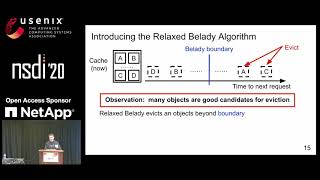
Learning Relaxed Belady for Content Distribution Network Caching
Innovative machine learning approach for CDN caching, approximating Belady MIN algorithm. Reduces WAN traffic, outperforms state-of-the-art methods, with modest overhead for real-world deployment.
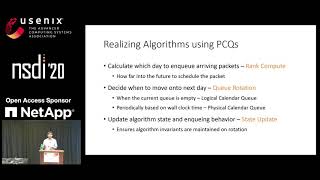
Programmable Calendar Queues for High-Speed Packet Scheduling
Explores programmable calendar queues for dynamic packet scheduling, enabling priority changes based on network time. Demonstrates implementation and benefits through case studies in delay guarantees, fairness, and flow prioritization.
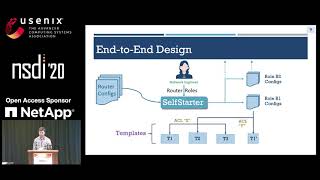
Finding Network Misconfigurations by Automatic Template Inference
Automated outlier detection technique for network configurations, inferring templates to identify likely errors without explicit specifications. Applicable to complex elements like ACLs and route policies.
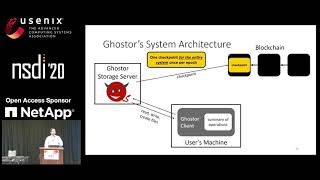
Ghostor - Toward a Secure Data Sharing System from Decentralized Trust
Explore a secure data-sharing system that protects user privacy and ensures data integrity through decentralized trust, hiding identities and detecting server-side violations.
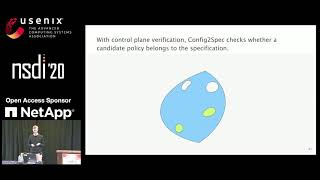
Config2Spec - Mining Network Specifications from Network Configurations
Automated system for synthesizing formal network specifications from configurations, combining data plane analysis and control plane verification to enhance network reliability and security.
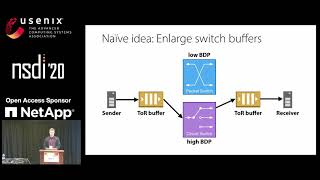
Adapting TCP for Reconfigurable Datacenter Networks
Explores TCP adaptation for modern reconfigurable datacenter networks, proposing dynamic queue resizing and explicit circuit state feedback to improve circuit utilization and performance.
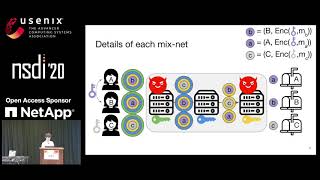
XRD - Scalable Messaging System with Cryptographic Privacy
Scalable messaging system offering cryptographic privacy, using parallel mix networks and novel techniques to support millions of users with low latency while protecting communication metadata.