
Spike Detection in Alert Correlation at LinkedIn
Discover how LinkedIn uses spike detection in alert correlation to quickly identify root causes of outages in their complex microservices architecture, reducing false positives and engineer toil.
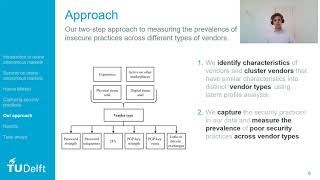
Risky Business - Investigating the Security Practices of Vendors on an Online Anonymous Market Using Ground-Truth Data
Investigates security practices of vendors on dark web markets, revealing surprising vulnerabilities among digital item sellers compared to drug vendors. Analyzes password strength, 2FA usage, and PGP adoption.
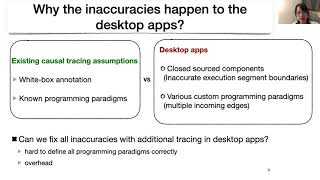
Argus - Debugging Performance Issues in Modern Desktop Applications with Annotated Causal Tracing
Innovative tool for debugging performance issues in desktop applications, using annotated causal tracing to model ambiguities and efficiently diagnose root causes of slowdowns.

Octo - INT8 Training with Loss-aware Compensation and Backward Quantization for Tiny On-device Learning
Explores INT8 quantization for on-device learning, introducing Loss-aware Compensation and Parameterized Range Clipping to optimize forward and backward passes while preserving training quality.
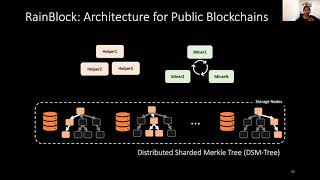
RainBlock - Faster Transaction Processing in Public Blockchains
Innovative blockchain architecture that significantly increases transaction processing speed without modifying proof-of-work consensus, using novel data structures and I/O optimization techniques.

RIFF - Reduced Instruction Footprint for Coverage-Guided Fuzzing
Efficient coverage measurement technique for fuzzing, reducing overhead in runtime collection and post-execution processing. Improves fuzzer performance and coverage exploration.
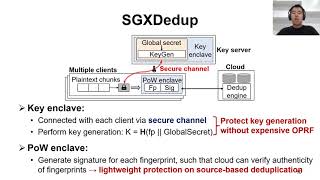
Accelerating Encrypted Deduplication via SGX
Explore SGXDedup, a novel approach leveraging Intel SGX to accelerate encrypted deduplication for outsourced storage, offering significant performance improvements while maintaining security and efficiency.
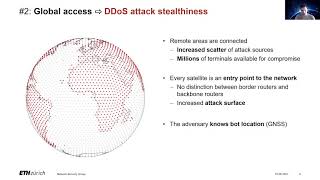
ICARUS - Attacking Low Earth Orbit Satellite Networks
Explores vulnerabilities in low Earth orbit satellite networks, introducing ICARUS attacks that exploit global accessibility, low-latency constraints, and network predictability to disrupt communications over large areas.
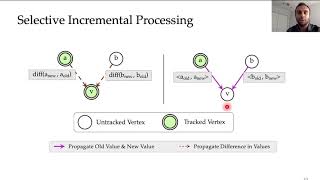
Controlling Memory Footprint of Stateful Streaming Graph Processing
Innovative techniques for reducing memory usage in streaming graph processing systems, enabling analysis of larger dynamic graphs while maintaining performance and accuracy.
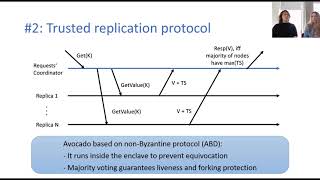
Avocado - A Secure In-Memory Distributed Storage System
Explore Avocado, a secure in-memory distributed storage system for untrusted cloud environments, offering strong security, fault-tolerance, consistency, and performance through innovative design and implementation.
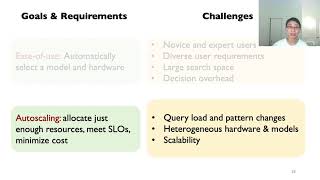
INFaaS - Automated Model-less Inference Serving
Automated system for distributed inference serving, optimizing model selection and resource allocation to meet performance and accuracy requirements while reducing costs and complexity for developers.
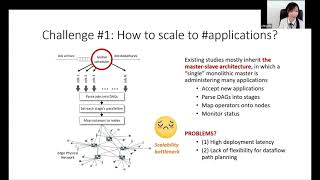
DART - A Scalable and Adaptive Edge Stream Processing Engine
Scalable, adaptive edge stream processing engine for IoT applications, enabling fast processing of concurrent queries in dynamic environments through dynamic dataflow abstraction and P2P overlay networks.
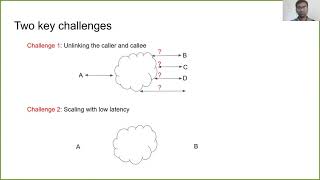
Addra - Metadata-Private Voice Communication Over Fully Untrusted Infrastructure
Innovative system for metadata-private voice communication, scaling to 32K users with low latency. Utilizes untrusted infrastructure and novel mailbox assignment, improving on existing solutions for secure communication.
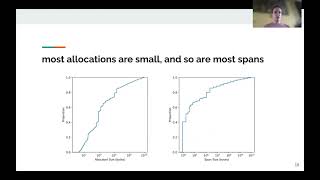
Beyond Malloc Efficiency to Fleet Efficiency - A Hugepage-Aware Memory Allocator
Explore TEMERAIRE, a hugepage-aware memory allocator enhancing TCMALLOC to reduce CPU overheads, improve application performance, and optimize fleet efficiency in warehouse-scale computing.
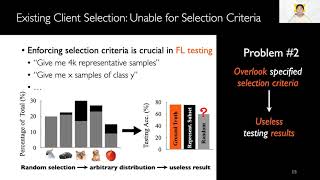
Oort - Efficient Federated Learning via Guided Participant Selection
Efficient federated learning system that improves model training and testing by intelligently selecting participants based on data utility and device capabilities, enhancing accuracy and performance.
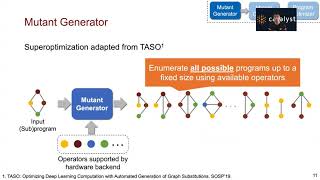
PET - Optimizing Tensor Programs with Partially Equivalent Transformations and Automated Corrections
Optimizing tensor programs with partially equivalent transformations, improving DNN efficiency by up to 2.5×. Introduces PET framework for automated corrections and theoretical foundations for equivalence examination.
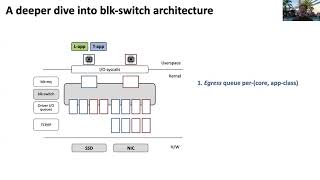
Rearchitecting Linux Storage Stack for µs Latency and High Throughput
Explore a novel Linux kernel storage stack architecture achieving microsecond-scale latency and high throughput, adapting network switch techniques for improved performance without application modifications.
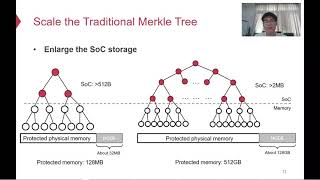
Scalable Memory Protection in the PENGLAI Enclave
Innovative hardware-software design for scalable, dynamic secure memory in enclaves, featuring Guarded Page Tables and Mountable Merkle Trees to enhance protection, performance, and resource utilization.
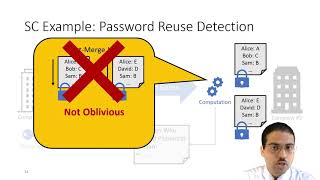
MAGE - Nearly Zero-Cost Virtual Memory for Secure Computation
MAGE: An execution engine for secure computation, enabling efficient processing of large-scale encrypted data by leveraging oblivious memory access patterns to optimize virtual memory management.
Latency SLOs Done Right
Explore three approaches to accurately calculate latency SLOs using histograms for correct quantiles. Learn to frame SLOs effectively for improved service level management and monitoring.
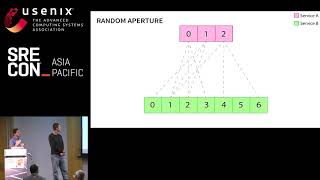
Aperture - A Non-Cooperative, Client-Side Load Balancing Algorithm
Explore Twitter's Aperture algorithm for client-side load balancing, addressing scalability challenges in large service clusters and improving RPC framework efficiency.