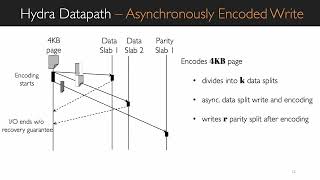
Hydra - Resilient and Highly Available Remote Memory
Resilient remote memory system with low latency, high availability, and efficient erasure coding. Improves performance-efficiency tradeoff and reduces data loss probability under correlated failures.
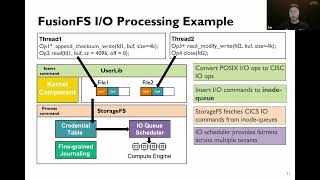
FusionFS - Fusing I/O Operations using CISCOps in Firmware File Systems
Explores FusionFS, a firmware-level filesystem leveraging near-storage computation to reduce I/O bottlenecks through CISCOps, offering improved performance and faster recovery for applications.
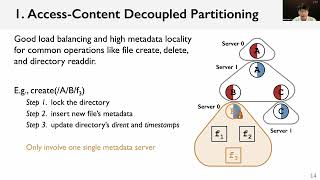
InfiniFS - An Efficient Metadata Service for Large-Scale Distributed Filesystems
Explore InfiniFS, an efficient metadata service for large-scale distributed filesystems, addressing challenges like load balancing, path resolution, and near-root hotspots.
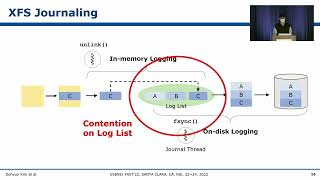
ScaleXFS - Getting Scalability of XFS Back on the Ring
Explores XFS filesystem scalability issues in manycore systems, proposing techniques like Double Committed Item List and Per-core In-memory Logging to enhance performance and reduce contention.
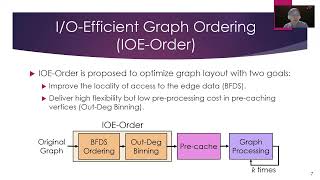
Practicably Boosting the Processing Performance of BFS-like Algorithms on Semi-External Graph System via I-O-Efficient Graph Ordering
Explores innovative techniques to enhance BFS-like algorithm performance on semi-external graph systems, focusing on I/O efficiency improvements through strategic graph data pre-processing.
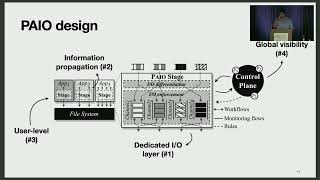
PAIO - General, Portable I/O Optimizations With Minor Application Modifications
Explore PAIO, a framework for implementing portable I/O policies and optimizations across different applications with minimal code changes, improving performance and resource management in data-centric systems.
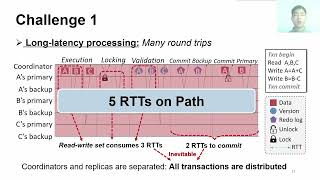
FORD - Fast One-sided RDMA-based Distributed Transactions for Disaggregated Persistent Memory
Explore efficient distributed transactions for disaggregated persistent memory using FORD, a system leveraging one-sided RDMA to improve throughput and reduce latency in remote memory pools.
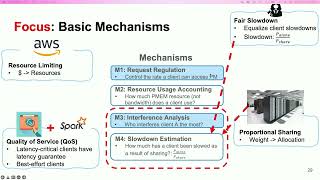
NyxCache - Flexible and Efficient Multi-tenant Persistent Memory Caching
Flexible multi-tenant persistent memory caching framework for efficient resource management, QoS guarantees, and performance isolation in cloud environments.
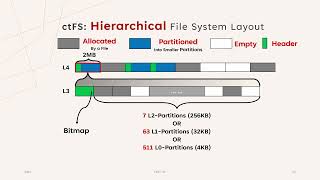
ctFS - Replacing File Indexing with Hardware Memory Translation through Contiguous File Allocation for Persistent Memory
Innovative file system design leveraging hardware memory translation for persistent memory, enhancing performance by eliminating indexing overhead and improving efficiency in file operations.
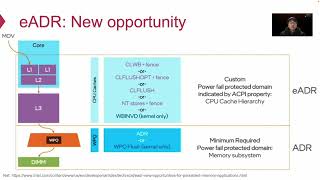
HTMFS - Strong Consistency Comes for Free with Hardware Transactional Memory in Persistent Memory File Systems
Explore hardware-software cooperation for high-performance, strongly consistent persistent memory file systems using Hardware Transactional Memory, overcoming traditional trade-offs between speed and data integrity.
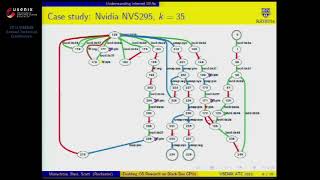
Enabling OS Research by Inferring Interactions in the Black-Box GPU Stack
Uncover GPU stack interactions to enable OS-level resource management. Methodology creates state machines capturing meaningful transitions, allowing kernel interception and control of GPU requests.
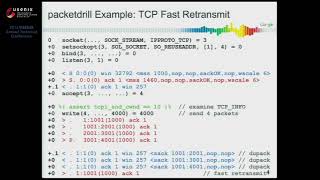
Packetdrill - Scriptable Network Stack Testing, from Sockets to Packets
Explore packetdrill, a scripting tool for testing TCP/UDP/IP network stack implementations. Learn its design, usage, and impact on developing Linux TCP features and bug fixing.
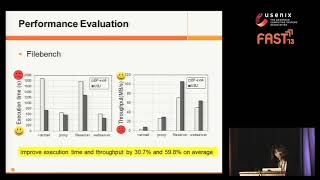
Unioning of the Buffer Cache and Journaling Layers with Non-volatile Memory
Innovative buffer cache architecture using non-volatile memory to improve file system performance by unifying caching and journaling, resulting in significant I/O performance gains without compromising reliability.
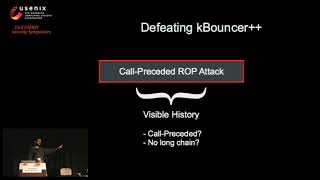
ROP is Still Dangerous - Breaking Modern Defenses
Explores advanced Return Oriented Programming attacks, demonstrating vulnerabilities in modern defense mechanisms and proposing strategies to overcome security measures like kBouncer and ROPecker.
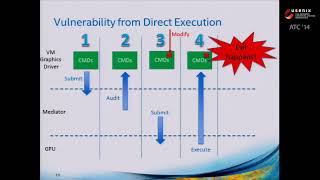
A Full GPU Virtualization Solution with Mediated Pass-Through
Explore GPU virtualization with gVirt, achieving 95% native performance and scalability up to 7 VMs through mediated pass-through technology for secure isolation and full feature support.
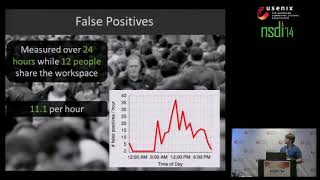
Bringing Gesture Recognition to All Devices
Innovative gesture recognition system for low-power devices, utilizing existing wireless signals to enable always-on functionality across various platforms, including battery-free devices.
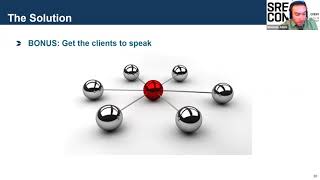
The Origins of USAA's Postmortem of the Week
Discover USAA's journey in establishing an IT-wide Postmortem Review meeting, with tips for implementing your own large-scale review process. Learn from their experiences and insights.

How Our SREs Safeguard Nanosecond Performance - at Scale - in an Environment Built to Fail
Explore SRE principles in high-frequency trading, balancing innovation with risk management. Learn strategies for safeguarding nanosecond performance in a regulated, failure-prone environment at scale.

SRE "Power Words" - The Lexicon of SRE as an Industry
Explore the impact of language in Site Reliability Engineering, examining key terms and their role in shaping industry practices and communication with stakeholders.
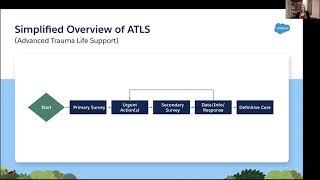
When Systems Flatline - Enhancing Incident Response with Learnings from the Medical Field
Explore how medical field strategies can enhance incident response in tech systems, from algorithm-guided decisions to standardized protocols for effective management and resolution.
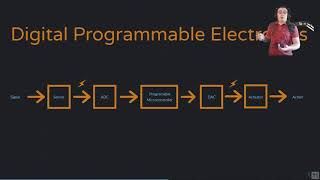
Ceci N'est Pas un CPU Load
Explore the limitations of digital troubleshooting compared to analog electronics, and discover why our mental models for digital systems are constrained.