Improving Graphics Interactivity - It's All in the Timing
Explore techniques for improving graphics interactivity in Linux systems, focusing on timing issues, kernel modifications, and API enhancements to achieve smoother animations and better user experiences.
XDP Acceleration Using NIC Metadata, Continued
Exploring XDP program enhancements with NIC-generated metadata hints, showcasing prototypes, performance characteristics, and AF_XDP socket applications. Discusses upstreaming plans and implementation details.
Zinc - Minimal Light-weight Kernel Cryptography API
Explore Zinc, a minimal kernel cryptography API for Linux, covering its design, implementation, and optimization strategies for enhanced security and performance.
Filename Encoding and Case-Insensitive Filesystems
Exploring challenges and solutions for case-insensitive file lookups in Linux, focusing on encoding issues and filesystem abstractions for improved user experience.
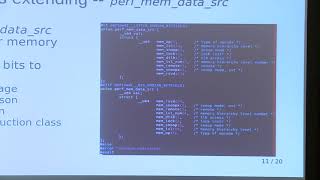
Enhancing Performance to Export Processor Hazard Information
Explore microprocessor instruction pipelines, hazards affecting efficiency, and a proposed extension to perf for exporting hazard data across architectures, with focus on IBM Power processors.
XArray
Explore XArray's capabilities, conversions from radix trees and IDA, potential replacements for list_head, and future improvements for broader application in Linux kernel development.
An Introduction to RISC-V
Explore RISC-V architecture: its design principles, key features, and potential impact on the computing industry. Learn about this open-source instruction set's advantages and applications.
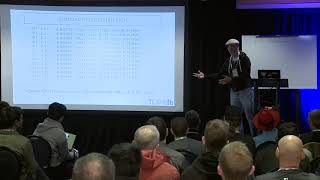
Experiences Evaluating DC-TCP
Evaluation of DC-TCP reveals significant reduction in packet discards but increased CPU usage. Fixes for NIC fairness and Linux code bugs improved RPC latencies. Detailed results and potential solutions discussed.
Phylink and SFP - Going Beyond 1G Copper PHYs
Exploring phylink API for high-bandwidth Ethernet MACs, SERDES interfaces, and fiber optics. Covers conversion from phylib, hot-pluggable PHYs, and SFP module support in Linux kernels.
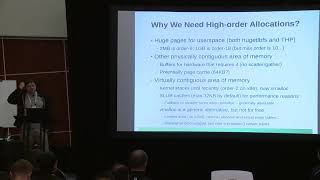
The Hard Work Behind Large Physical Allocations in the Kernel
Exploring mechanisms for large physical memory allocations in Linux kernel, focusing on memory compaction and page grouping by mobility, their challenges, and potential solutions.
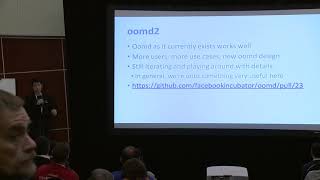
OOMD - A Userspace OOM Killer
Explore oomd, a userspace OOM killer that outperforms the Linux kernel OOM killer. Learn about its effectiveness, flexibility, and resource utilization improvements.
Task Migration at Scale Using CRIU
Exploring Google's use of CRIU for efficient container workload migration, addressing challenges, improvements, and future directions in task migration for Linux systems.
SCHED_DEADLINE Desiderata and Slightly Crazy Ideas
Explore SCHED_DEADLINE scheduling policy's current state, upcoming features, and potential improvements. Gain insights into Linux kernel scheduling and real-time systems.
SoC Maintainer Group
Explore SoC maintenance challenges and strategies in Linux kernel development with insights from industry experts.
A Practical Introduction to XDP
Fast, programmable packet processing with XDP: Learn to develop eBPF programs for kernel-integrated network processing, offering an alternative to kernel bypass mechanisms.
eBPF - XDP Based Firewall and Packet Filtering
Introducing an eBPF/XDP-based firewall solution for efficient packet filtering, offering performance benefits, easier policy updates, and deployment flexibility compared to traditional iptables.
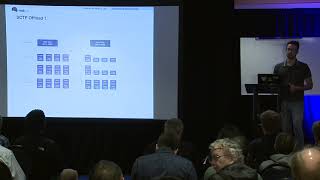
Linux SCTP is Catching Up and Going Above
Exploring SCTP's evolution in Linux: recent improvements, new features, and future developments. Compares SCTP with TCP/UDP and other systems, highlighting its unique capabilities and potential applications.
Clang + Linux
Explore Clang and LLVM for Linux kernel development, covering priorities, tools, and techniques to enhance compilation, debugging, and code analysis processes.
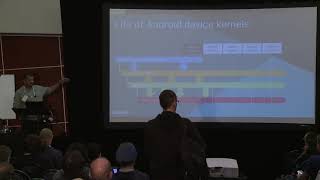
Android and the Kernel - Herding Billions of Penguins, One Version at a Time
Explore Android kernel updates, testing processes, and tools for maintaining compatibility across billions of devices. Learn about efforts to bridge the gap between Android and mainline Linux kernels.
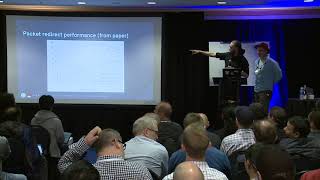
XDP Challenges & Future Work
Exploring future improvements for XDP, including user experience, driver support, performance optimization, QoS handling, and potential extensions to accelerate other parts of the networking stack.
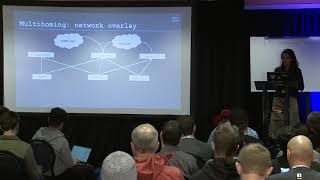
Scaling Linux Bridge Forwarding Database
Scaling Linux bridge forwarding database for large Layer-2 domains, addressing performance challenges, and improving convergence in data center switches and network overlays.