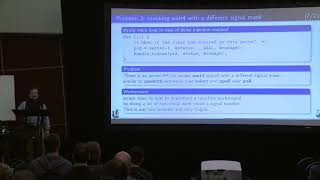
What Could Be Done in the Kernel to Make Strace Happy
Explore kernel API improvements for strace, including syscall info retrieval, enhanced wait functionality, increased time precision, PID namespace translation, and declarative syscall descriptions.
Elivepatch - Flexible Distributed Linux Kernel Live Patching
Explore flexible distributed Linux kernel live patching with Elivepatch, a tool for efficient and secure system updates without rebooting.
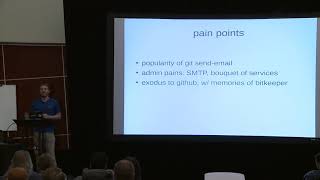
Migrating to Gitlab
Exploring graphics subsystem's innovative processes and freedesktop.org's migration to GitLab, discussing changes, experiments, and potential impacts on kernel development workflows.
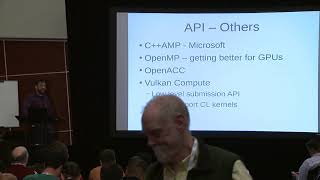
Open Source GPU Compute Stack - Not Dancing the CUDA Dance
Exploring open-source alternatives to CUDA for GPU compute acceleration, discussing potential for a vendor-neutral reference stack using SYCL/OpenCL/Vulkan and Mesa.
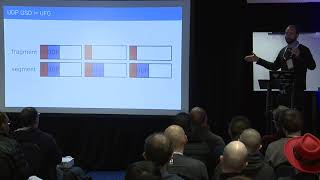
Optimizing UDP for Content Delivery with GSO, Pacing and Zerocopy
Optimizing UDP for content delivery: segmentation offload, zerocopy, and pacing techniques to improve performance, reduce overhead, and enhance protocol innovation in userspace.
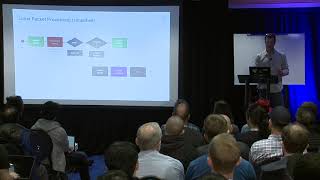
Leveraging Kernel Tables with XDP
Explore XDP framework for high-performance packet processing using kernel networking tables, discussing advantages, implemented features, and challenges in creating programmable packet pipelines.
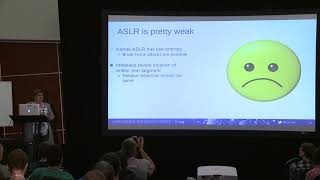
Proactive Defense Against CPU Side Channel Attacks
Explore proactive OS defenses against CPU side channel attacks, including Intel's strategies and community input on prioritizing Linux kernel protection measures.
When eBPF Meets FUSE - Improving Performance of User File Systems
Explore eBPF and FUSE integration to enhance user file system performance, with insights on architecture, examples, and applications.
Using eBPF as an Abstraction for Switching
Exploring eBPF's potential in container and physical switching, addressing bottlenecks, and proposing solutions for improved functionality and integration with other subsystems.
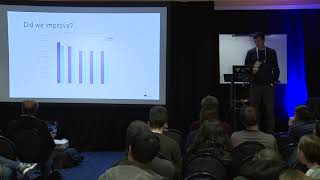
TC SW Datapath - A Performance Analysis
Evaluación y optimización del rendimiento de datapaths TC SW y ovskdp en Linux, con propuestas para mejorar la eficiencia del reenvío de paquetes y reducir la sobrecarga.
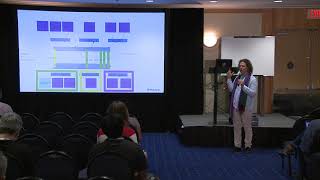
ZUFS - Zero Copy User-Mode FileSystem - One Year Later
Zero-copy user-mode filesystem architecture overview, highlighting improvements, challenges, and future directions for kernel integration and wider adoption of ZUFS technology.
Keynote - This Talk Is Not About XDP - From Resource Limits to SKB Lists
Explore network stack optimizations, from SKB lists to resource sharing across namespaces, with insights on packet scheduling and wireless drivers.
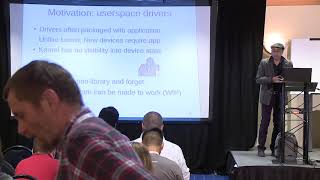
Virtio as a Universal Communication Format
Explore virtio as a universal communication format, covering its properties, feature negotiation, compatibility, and applications in userspace drivers and VM guests.
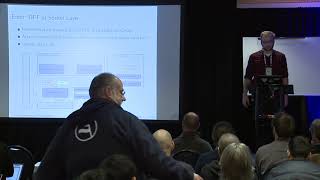
Combining kTLS and BPF for Introspection and Policy Enforcement
Exploring the integration of kTLS and BPF for enhanced in-kernel introspection and policy enforcement of application data before encryption, addressing challenges and discussing optimization approaches.
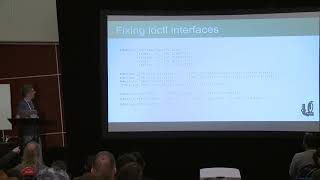
The End of Time - 19 Years to Go
Exploring the 2038 Unix timestamp overflow issue, its impact on software and hardware, and ongoing efforts to address it in the Linux kernel and user space.
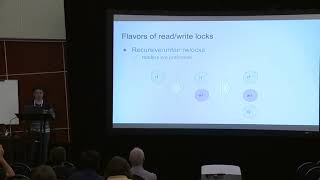
Recursive Read Deadlocks and Where to Find Them
Improving Linux kernel's lockdep tool to detect read/write lock deadlocks, focusing on recursive read deadlocks. Discusses detection algorithms, implementation details, and potential usage scenarios.
Building Socket-Aware BPF Programs
Explore BPF program enhancements for socket awareness, including verifier improvements and new API functions. Learn to build advanced networking logic and improve traffic management.
Path to DPDK Speeds for AF XDP
Optimizing AF_XDP socket performance to match DPDK speeds. Explores seamless and API-extending improvements for enhanced throughput in Linux networking, targeting 40 Mpps for 64-byte packets.
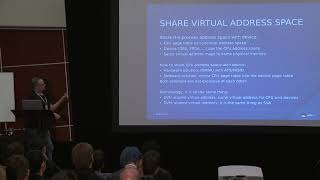
Heterogeneous Memory Management
Explore heterogeneous computing challenges, focusing on unified address spaces, memory management, and data placement across CPUs and parallel devices like GPUs.
XDP 1.5 Years in Production - Evolution and Lessons Learned
Evolution of XDP and BPF in production: performance improvements, operational challenges, and future enhancements. Insights from Facebook's network processing implementation using XDP for over 1.5 years.
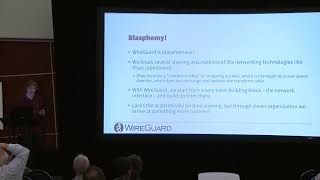
WireGuard - Next-Generation Secure Kernel Network Tunnel
Explore WireGuard, a new Linux network tunneling mechanism with formal cryptographic protocol, small codebase, and widespread deployment. Learn about its kernel integration, performance, and ecosystem impact.