Device Tree MC - Part 2
Explore advanced Device Tree topics: validation, overlays, bootloader implementation, DTB format updates, and practical applications in embedded systems and FPGAs.
Toolchain MC
Explore recent developments, roadmaps, and challenges in GNU Toolchain and Clang/LLVM, focusing on their critical role in Linux Kernel, Open Source Software, and hardware innovation.
Containers Micro-Conference at Linux Plumbers Conference
Explore cutting-edge container technologies, including CRIU, cgroups, namespaces, and security enhancements. Gain insights from industry experts on improving container runtimes and addressing challenges in large-scale deployments.
Testing and Fuzzing
Explore advanced Linux kernel testing techniques, including fuzzing, automated testing, and static analysis tools. Gain insights from leading developers to improve kernel reliability and security.
Live Kernel Patching
Live Kernel Patching miniconference: Discussing unresolved issues and proposed features to enhance Linux Kernel's live patching capabilities, focusing on implementation challenges and potential solutions.
Remote DMA Microconference
Comprehensive exploration of Remote DMA topics including containers, namespaces, remote page faults, user space memory management, PCI peer-to-peer, testing improvements, and API developments for Linux kernel developers.
RISC-V MC
Explore RISC-V ecosystem growth, hardware designs, and Linux kernel support. Discuss design challenges and ideas for implementing kernel features, aiming to increase developer participation and improve RISC-V Linux stability.
Thermal MC
Improving Linux thermal subsystem: discussions on enhancing hardware interactions, userspace policies, and system-wide thermal management for diverse computing environments.
Building Stable Kernel Trees with Machine Learning
Explore machine learning techniques for building stable kernel trees, focusing on automated patch review and neural network applications in kernel development.
ERSPAN Support for Linux
Explore ERSPAN support in Linux for network troubleshooting, including implementation, use cases, and practical examples for enhanced port mirroring capabilities across Layer 3 networks.
GCMA - Guaranteed Contiguous Memory Allocator
Explore the Guaranteed Contiguous Memory Allocator (GCMA) for Linux, its design principles, implementation challenges, and potential performance benefits for memory-intensive applications.
Managing Memory Bandwidth Antagonism at Scale
Explore memory bandwidth management in multi-tenant cloud environments, covering detection, mitigation strategies, and Intel RDT implementation challenges for consistent application performance.
Multiple Time Domains
Explore multiple time domains in Linux systems, focusing on challenges and solutions for managing diverse timing requirements across different hardware components.
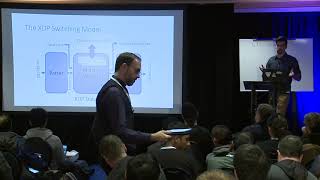
P4C-XDP - Programming the Linux Kernel Forwarding Plane Using P4
Explore P4C-XDP, a new backend for the P4 compiler leveraging XDP for high-performance software data plane in Linux kernel. Learn about its architecture, implementation, and potential applications.
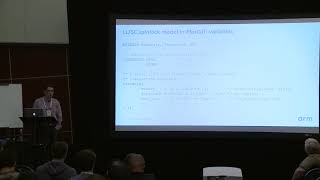
Formal Methods for Kernel Hackers
Discover how formal methods can benefit kernel development, find bugs, and improve design choices in Linux, with practical examples using PlusCal and TLA+.
Concurrency with Tools - Memory Model
Explore advanced concurrency concepts, tools, and memory models in Linux systems with experts Andrea Parri and Paul McKenney, enhancing your understanding of parallel programming.
Linux's Code of Conduct Panel
Panel discussion on Linux's Code of Conduct, exploring its implementation, impact, and importance for fostering a respectful and inclusive open-source community.
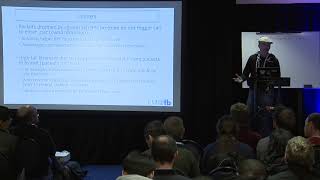
BPF Host Network Resource Management
Exploring BPF-based framework for efficient network resource management, addressing limitations of traffic control subsystem and supporting both local and global allocations.
Towards a Linux Kernel Maintainer Handbook
Exploring the need for a Linux Kernel Maintainer Handbook, addressing challenges, and proposing guidelines to improve consistency and efficiency in kernel maintenance.
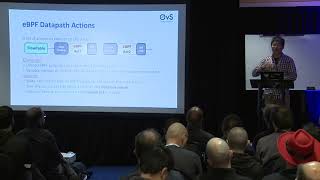
Bringing the Power of eBPF to Open vSwitch
Exploring eBPF integration with Open vSwitch: TC attachment, XDP offloading, and AF_XDP bypassing. Discusses challenges, experiences, and future directions for enhancing OVS performance and functionality.
Mind the Gap - Between Real-Time Linux and Real-Time Theory
Bridging real-time Linux and theory: task models, metrics, and validation for PREEMPT RT, enhancing understanding and improving kernel performance.