Spirit.Qi in the Real World
Develop a Spirit.Qi parser for printf()-style format strings, exploring real-world challenges and solutions to create a typesafe and efficient printf() replacement.
Mastering the Cell Broadband Engine via a Boost-Based Library
Explore optimizing the Cell Broadband Engine using Boost-inspired design, discussing performance improvements and potential applications in embedded systems.
Haskell - The Pseudocode Language for C++ Template Metaprogramming
Explore functional programming concepts in Haskell to improve C++ template metaprogramming skills. Learn to read and write complex metaprograms using Haskell as pseudocode for C++.
Parsing C++ with GCC Plugins
Explore GCC plugin architecture for parsing C++, including internal representation, code injection, template instantiation, and handling pragmas/attributes. Compare with Clang and discuss potential applications.
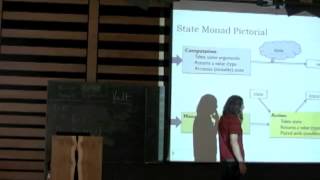
Haskell - The Pseudocode Language for C++ Template Metaprogramming - Part 2
Explore functional programming concepts in Haskell to enhance C++ template metaprogramming skills. Learn to write and analyze complex metaprograms using Haskell as pseudocode.
Are You Ready for IPv6?
Explore IPv6 basics, Boost.Asio support, and design strategies for protocol-independent networked applications as IPv4 address space exhausts and IPv6 adoption grows.
Generic Conversion & Segmentation for Ranges - A Solution for Unicode
Presentation on a generic, flexible Unicode solution for C++ using Range concepts, including a spin-off library for range conversion and segmentation with potential SIMD acceleration.

Design Journeys with Skoot, a Peer Oriented Generic Networking Library
Explore the design process of Skoot, a generic C++ networking library. Learn about template-based techniques, Boost libraries usage, and API refinement for effective peer-oriented distributed processing.
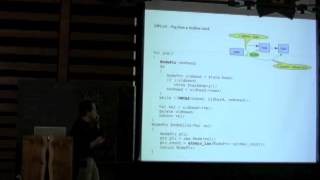
Lockfree Programming Part 2 - Data Structures
Explore advanced lockfree programming techniques, focusing on data structures like stacks and queues, while addressing challenges such as ABA problems and memory ordering.
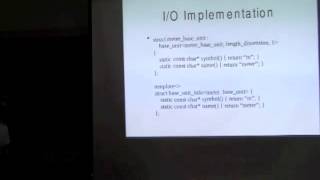
Boost.Units
Explore compile-time dimensional analysis and unit conversions with Boost.Units, reducing errors and enhancing code precision through declarative value representation and automatic conversions.
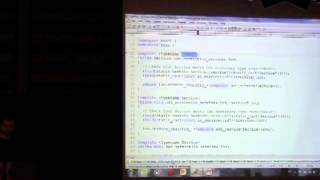
Creating Boost.Asio Extensions
Learn to extend Boost.Asio's asynchronous framework beyond networking, exploring custom operations and limitations through practical examples like directory monitoring.
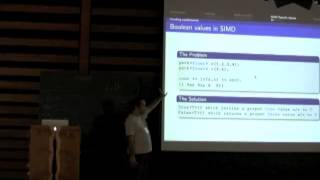
Practical SIMD Acceleration with Boost.SIMD
Explore SIMD acceleration techniques using Boost.SIMD library. Learn to optimize algorithms, abstract hardware, and leverage SIMD registers for efficient parallel computing across various platforms.
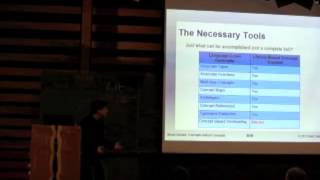
Boost.Generic - Concepts without Concepts
Explore Boost.Generic, a C++0x library for creating concepts, concept maps, and concept-based function template overloads. Learn to implement powerful generic programming techniques without direct language support.
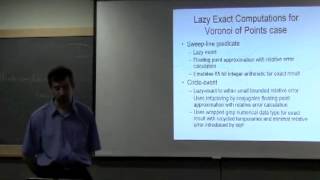
Sweep-Line Algorithm for Voronoi Diagrams
Efficient algorithm for computing Voronoi diagrams of points and segments, with applications in VLSI CAD and manufacturing. Covers numerical robustness, lazy-exact arithmetic, and reliable results for integer inputs.
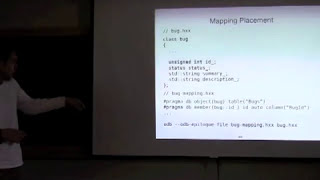
Object-Relational Mapping with ODB and Boost
Explore object-relational mapping in C++ using ODB and Boost. Learn automatic code generation, customization, and seamless integration with popular libraries for efficient database interactions.
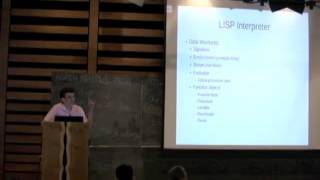
AST Construction with the Universal Tree
Explore utree in Boost.Spirit for building abstract syntax trees. Learn to create and manipulate ASTs for XML, symbolic expressions, JSON, and C-like code using Spirit parsers and generators.
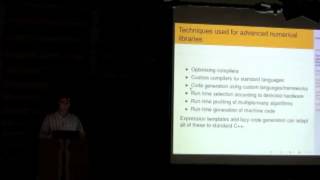
Fast Numerical Computation in C++ - Expression Templates
Optimizing numerical computations in C++ using expression templates, exploring limitations and advanced techniques for performance beyond traditional C++-only libraries.
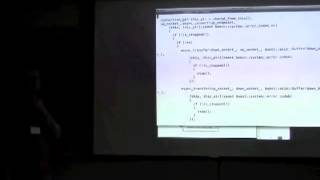
Why C++0x is the Awesomest Language for Network Programming
Explore cutting-edge C++0x features and Boost.Asio for creating efficient, expressive network programs. Learn advanced techniques for asynchronous operations, memory management, and server-side development.
Boost.Process - Process Management in C++
Explore Boost.Process for managing system processes in C++. Learn about its evolution, challenges, and new ideas for cross-platform process management and communication.
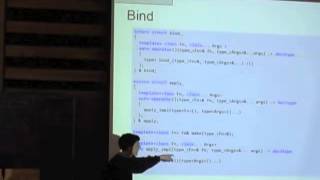
Instantiations Must Go!
Explore a unique technique in C++ metaprogramming that simplifies template metaprogramming, making it resemble functional programming and reducing template instantiations.
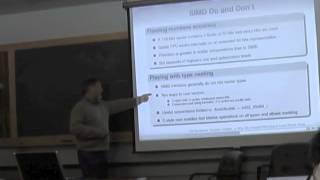
The Numerical Template Toolbox for High Performance Computing
Explore the Numerical Template Toolbox for high-performance computing in C++, focusing on efficient array operations, architectural optimization, and intuitive API design using Boost components.