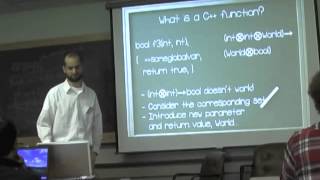
Functional Programming in C++
Explore functional programming techniques in C++, including recursive algebraic data types, curried functions, purity, generic programming, and category theory for more general, concise, and composable code.
Techniques in Flexible Header-Only C++ Network Library Implementations
Explores techniques for creating flexible header-only C++ network libraries, focusing on cpp-netlib's modular design, generic programming principles, and implementation of key components like message types and URI parsers.
Spirit - History and Evolution
Explore Spirit's 10-year journey from a small library to a sophisticated Boost component, influencing other libraries and showcasing advanced C++ techniques along the way.
Is Boost Broken?
Explore the current state of Boost C++ libraries, examining potential issues and discussing their impact on modern C++ development.
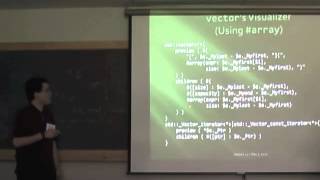
Data Structure Visualizers in Visual Studio 2010
Explore Visual Studio's data structure visualizers for easier debugging of STL objects, and learn to create custom visualizers for complex types like Boost classes.
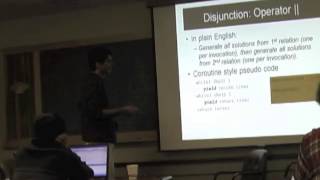
Logic Paradigm for C++
Explore the Logic Paradigm in C++ with Castor library. Learn basics, see examples, and discover how it integrates with Boost for powerful multiparadigm solutions.
Ryppl - A New Platform for Boost Development
Unveiling Ryppl: A revolutionary system for managing complex software projects, addressing Boost's development challenges and potentially transforming open-source collaboration.
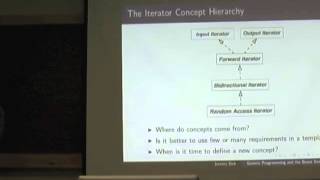
Generic Programming and the Boost Graph Library
Explore generic programming principles and their application in the Boost Graph Library, learning C++ template techniques for efficient and flexible graph problem-solving.
An Asio Based Flash XML Server
Build an Asio-based server for reactive systems, utilizing Boost libraries to handle asynchronous resources, route data streams, and communicate with Flash displays via XMLSocket.
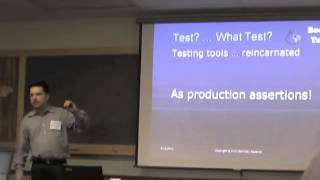
Production Use of Boost.Test
Explore advanced Boost.Test usage in production, including execution monitoring, floating point exception handling, in-place unit testing, and integrating test tools into components.
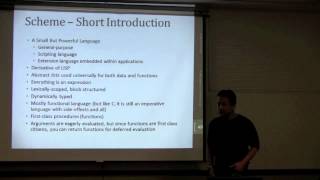
A Framework for RAD Spirit
Exploring a tool for rapid parser development using Boost Spirit, addressing compile time issues and enhancing debugging capabilities for complex parsing tasks.
The Basics of Lock-free Programming
Comprehensive exploration of lock-free programming, covering atomicity, CAS instructions, memory barriers, and advanced concepts, with practical examples and future developments in C++.
Using Spirit V2 - Qi and Karma
Explore real-world applications of Spirit 2.1 library for parsing and generating communication streams. Learn techniques for implementing parsers and generators using Qi/Karma, including an XML parser and XPath-like extractor.

Beware of C++
Explore potential pitfalls and complexities in C++ programming with expert insights on language features, best practices, and common misconceptions to enhance code quality and efficiency.
Axiomatic Programming - From Euclidean Deductions to C++ Templates and Beyond
Explore the evolution of axiomatic programming, tracing its roots from Euclidean deductions to modern C++ templates and their future implications in software development.
C++14 - Through the Looking Glass
Explore the latest features and improvements in C++14, gaining insights into its enhanced capabilities and potential impact on modern software development.
Coroutines, Fibers and Threads, Oh My
Explore the intricacies of coroutines, fibers, and threads in C++, understanding their differences, use cases, and implementation strategies for efficient concurrent programming.
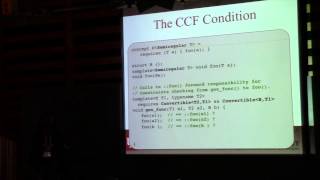
ConceptClang - Theoretical Advances with Full C++ Concepts
Explore theoretical advancements in C++ concepts, focusing on ConceptClang implementation and its impact on template metaprogramming and generic programming paradigms.
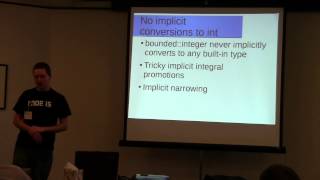
Removing Undefined Behavior from Integer Operations - The Bounded-Integer Library
Learn to eliminate undefined behavior in integer operations using the bounded::integer library, exploring its features, syntax, and practical applications in C++ programming.
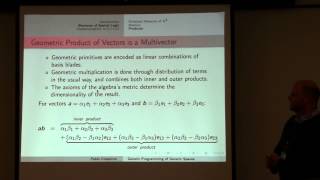
Generic Programming of Generic Spaces - Compile-Time Geometric Algebra with C++11
Explore compile-time geometric algebra implementation using C++11, focusing on generic programming techniques for efficient and flexible spatial computations.
Value Semantics and Range Algorithms - Composability and Efficiency
Explore value semantics and range algorithms in C++, focusing on composability and efficiency. Learn advanced techniques to enhance code performance and maintainability.