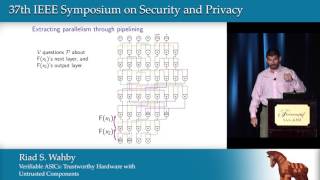
Verifiable ASICs
Explore verifiable computation for untrusted ASICs, enabling high-assurance execution without compromising performance. Learn about the Zebra system's implementation and its potential to match trusted platform performance.
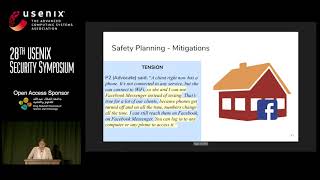
Computer Security and Privacy in the Interactions Between Victim Service Providers and Human Trafficking Survivors
Exploring technology's role in victim service provider-survivor interactions, balancing trust-building and risk mitigation for human trafficking survivors' recovery and empowerment.
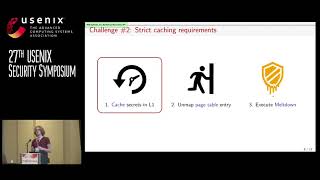
Foreshadow - Extracting the Keys to the Intel SGX Kingdom with Transient Out-of-Order Execution
Unveiling Foreshadow: A microarchitectural attack exploiting speculative execution to extract secrets from Intel SGX enclaves, compromising trusted execution environments and remote attestation.
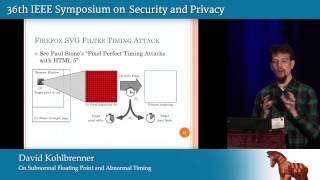
On Subnormal Floating Point and Abnormal Timing
Explores timing vulnerabilities in x86 floating-point operations, demonstrating practical attacks on Firefox and a privacy-focused database. Introduces a constant-time math library as a potential mitigation.
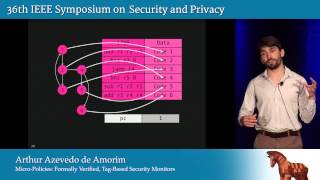
Micro-Policies - Formally Verified, Tag-Based Security Monitors
Explore formally verified tag-based security monitors for low-level policies. Learn about dynamic sealing, compartmentalization, control-flow integrity, and memory safety implementation.
Birds of a Feather - A Hardware & Security Panel
Engaging panel discussion on hardware security and defense strategies, featuring industry experts debating apocalypse preparedness in the context of cybersecurity.
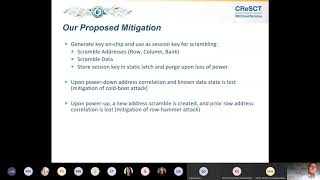
On-Chip Randomization for Memory Protection Against Hardware Supply Chain Attacks to DRAM
Explore innovative techniques for safeguarding DRAM against hardware supply chain attacks through on-chip randomization, enhancing memory protection in modern computing systems.
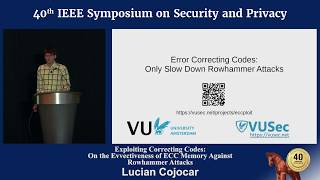
Exploiting Correcting Codes on the Effectiveness of ECC Memory Against Rowhammer Attacks
Investigates ECC memory's vulnerability to Rowhammer attacks, revealing limitations in its protective capabilities through reverse engineering and a novel attack method called ECCploit.
Hardware-Software Contracts for Secure Speculation
Explore secure speculation techniques through hardware-software contracts, enhancing system security and performance in modern computing architectures.
Trials and Tribulations of Setting up a Phishing Campaign - Insight into the How
Explore challenges and strategies for effective phishing campaigns, covering tools, frameworks, and key considerations for successful implementation and detection avoidance.
Quantifying Risk in Consumer Software at Scale - Consumer Reports' Digital Standard
Explore methodologies for quantifying software security risks, predicting vulnerabilities, and evaluating consumer products using the Digital Standard developed by Consumer Reports and CITL.
Exposing Bootkits with BIOS Emulation
Explore techniques to detect and counter bootkits using BIOS emulation, low-level anti-rootkit methods, and heuristic detection logic for enhanced system security and intruder defense.
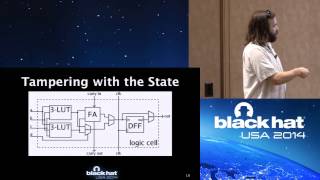
Secure Product Development
Explore hardware security validation techniques, Verilog vulnerabilities, and bug resolution methods in open-source core designs. Learn to identify and address security issues in integrated circuits.
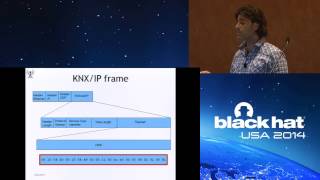
Learn How to Control Every Room at a Luxury Hotel Remotely
Descubre cómo controlar remotamente todos los dispositivos de un hotel de lujo, explorando vulnerabilidades en sistemas de automatización y sus implicaciones para la seguridad hotelera y de los huéspedes.
Smart Nest Thermostat - A Smart Spy in Your Home
Explore security vulnerabilities in Nest thermostats, including hardware-level attacks and potential for remote exploitation. Learn about risks to privacy and home security posed by compromised smart home devices.
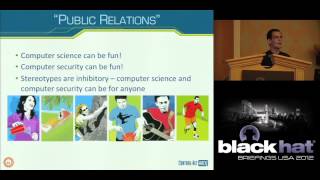
Control-Alt-Hack - White Hat Hacking for Fun & Profit
Explore ethical hacking through a card game that simulates security audits and consulting. Learn about diverse hacking skills, mission challenges, and cybersecurity concepts in an engaging, entertaining format.
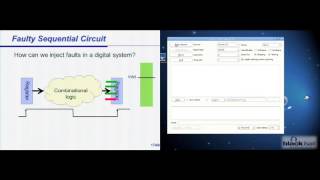
Torturing OpenSSL
Explore hardware vulnerabilities in secure systems through a side-channel attack on RSA signatures, demonstrating how induced faults can compromise software-secure systems and extract private keys.
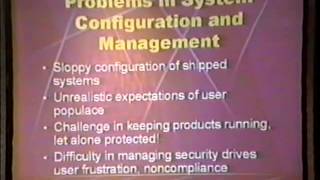
Computer Security - Textbook View
Explore computer security challenges, from software design to system management, with insights on trust issues, complexity, and evolving threats in the digital landscape.
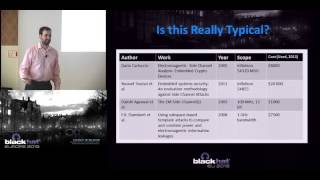
Power Analysis Attacks for Cheapskates
Discover affordable power analysis attack techniques for cryptographic systems using open-source hardware and software. Learn to set up a budget-friendly lab and perform live demonstrations against AES implementations.
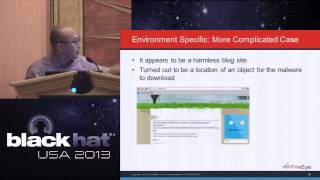
Hot Knives Through Butter - Bypassing Automated Analysis Systems
Explores advanced techniques used by malware to evade automated analysis systems, including extended sleep calls, mouse click triggers, and timed activation. Provides insights for security professionals on evolving threats.
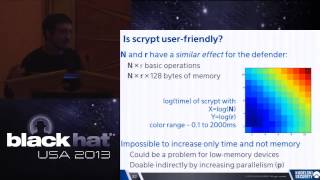
Password Hashing - The Future is Now
Explore the future of password hashing, its challenges, and the Password Hashing Competition initiative to develop improved methods for securing digital systems.