Attribute-based Key Exchange with General Policies
Explore attribute-based key exchange with general policies, presented by experts from Bell Labs, IBM Research, Bar-Ilan University, and Galios at the 23rd ACM Conference on Computer and Communications Security.
What Else is Revealed by Order Revealing Encryption?
Explores implications of order-revealing encryption, discussing potential security vulnerabilities and unintended information leakage in cryptographic systems.

MEMS Gyroscopes as Physical Unclonable Functions
Explore MEMS gyroscopes as Physical Unclonable Functions for enhanced security in embedded systems, presented at the ACM Conference on Computer and Communications Security.
Computational Soundness for Dalvik Bytecode
Explore computational soundness for Dalvik bytecode, focusing on security implications for Android applications and mobile device ecosystems.
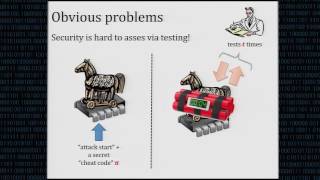
Private Circuits III - Hardware Trojan-Resilience via Testing Amplification
Explores innovative techniques for enhancing hardware security through testing amplification, focusing on resilience against hardware Trojans in private circuit design.
Twice the Bits, Twice the Trouble - Vulnerabilities Induced by Migrating to 64-Bit Platforms
Explore vulnerabilities in 64-bit platform migration, focusing on security implications and potential risks for software developers and system administrators.
Breaking Kernel Address Space Layout Randomization with Intel TSX
Explore techniques for breaking kernel address space layout randomization using Intel TSX, presented by researchers from Georgia Tech at a major computer security conference.

AUDACIOUS - User-Driven Access Control with Unmodified Operating Systems
Explore user-driven access control for unmodified operating systems, enhancing security without system modifications. Learn about AUDACIOUS and its implementation for improved data protection.
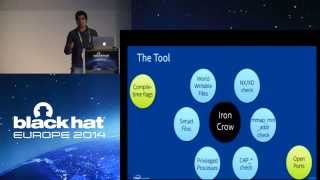
Android Kernel and OS Security Assessment with Iron Crow
Discover Iron Crow: a powerful tool for Android BSP developers and OEMs to detect platform-level vulnerabilities, enhancing security and protecting end users from potential exploits in customized Android environments.

Apple Neural Engine Internal - From ML Algorithm to HW Registers
Explore the inner workings of Apple's Neural Engine, from machine learning algorithms to hardware registers, with insights into FaceID's neural network and SEP firmware security.

Precursor - Towards Evidence-Based Trust in Hardware
Explore evidence-based trust in hardware through the Precursor platform, challenging faith-based approaches and proposing new methods for verifiable hardware security.

Inside the Apple T2
Explore the inner workings of Apple's T2 chip, including methodology and tools for complex security research, going beyond publicly available technical details.
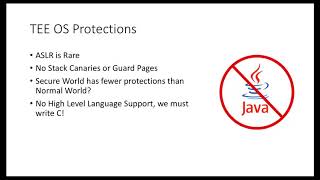
Writing Trusted Applications in Rust
Explore using Rust for Trusted Applications, leveraging its security features like memory safety and error handling for system-level code development in secure environments.
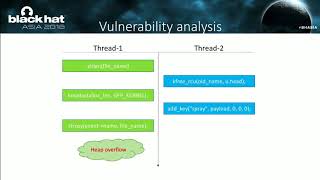
Breaking Android Kernel Isolation and Rooting with ARM MMU Features
Explore a new Android rooting solution, ReVent, exploiting a Use-After-Free vulnerability in 3.18 Linux kernels. Learn about breaking kernel isolation and ARM MMU features for device security.

Remote Timing Attacks on TPMs - AKA TPM-Fail
Uncovers vulnerabilities in Trusted Platform Modules through timing analysis, revealing potential security risks in hardware-based cryptographic systems used across various computing platforms.
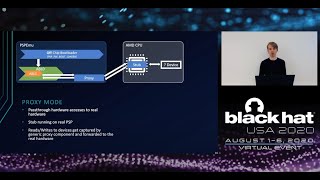
All You Ever Wanted to Know about the AMD Platform Security Processor and Were Afraid to Emulate - Inside a Deeply Embedded Security Processor
Explore AMD's Platform Security Processor: its role in system bootstrapping, security features, and proprietary nature. Gain insights into this embedded ARM core within x86 CPUs.

Escaping Virtualized Containers
Explore container escape techniques and new sandboxing tools using unikernels, lightweight VMs, and userspace-kernels to enhance isolation between host and container OS.

Breaking Samsung's Root of Trust - Exploiting Samsung S10 Secure Boot
Exploración de vulnerabilidades en el arranque seguro de Samsung S10, analizando el manejo de solicitudes USB en S-Boot y sus implicaciones para la seguridad del dispositivo.

Methodology for Creation and Practical Applications of Polyglots
Explore the creation and applications of polyglots - data parsed as multiple formats. Learn techniques, historical uses, and future potential in computer security.
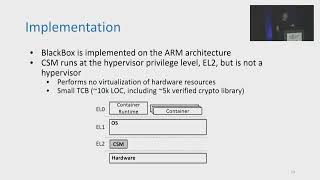
BlackBox - A Container Security Monitor for Protecting Containers on Untrusted Operating Systems
Innovative container security architecture using a trusted monitor to protect data confidentiality and integrity from untrusted operating systems, with minimal performance impact.
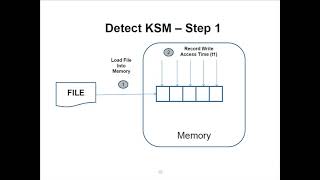
Hyperprobe - Towards Virtual Machine Extrospection
Explores a novel framework for detecting host OS kernel versions from within guest operating systems, leveraging hypervisor features and bugs to enable virtual machine extrospection.