
Eight Crazy Ways to Foil Hardware Attacks - For All Budgets
Explore cost-effective strategies to protect embedded devices from hardware attacks. Learn about common vulnerabilities, defense mechanisms, and design decisions for optimal security in IoT and industrial control systems.

The Memory Corruption Safety Dance
Explore memory safety vulnerabilities, their mitigation strategies, and the future of cybersecurity in this comprehensive analysis of defense-in-depth approaches and exploit techniques.
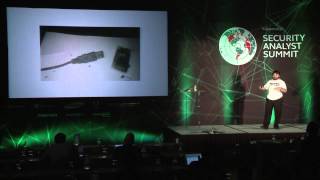
Tools of NSA Playset
Explore NSA's surveillance tools, including retroreflectors, USB implants, and Thunderbolt exploits. Learn about their capabilities and implications for cybersecurity.
Finding Government and Vendor Hardware Backdoors
Explore techniques for identifying hidden backdoors in government and vendor hardware, covering pentesting, security appliances, and various operating systems.
Page Cache Attacks - Microarchitectural Attacks on Flawless Hardware
Explore microarchitectural attacks on flawless hardware, focusing on page cache vulnerabilities. Learn about state-of-the-art techniques, countermeasures, and implications for system security.

When Lightning Strikes Thrice - Breaking Thunderbolt 3 Security
Explore Thunderspy attacks that compromise Thunderbolt security, revealing vulnerabilities in device authentication and DMA protection across Thunderbolt 1, 2, and 3 interfaces.

A Little Less Speculation, a Little More Action - A Deep Dive into Fuchsia's Mitigations for Specific CPU Side-Channel Attacks
Explore Fuchsia's approach to mitigating CPU side-channel attacks, including enumeration, implementation, and testing of protective measures across x86 and ARM processors.

HPE iLO5 Firmware Security - Go Home Cryptoprocessor, You're Drunk!
Explore vulnerabilities in HPE Gen10 servers' iLO5 management technology, focusing on the "silicon root of trust" and its implications for server security.
PCIe Device Attacks - Beyond DMA - Exploiting PCIe Switches, Messages and Errors
Explore advanced PCIe security threats targeting switches and Translation Layer Packets. Learn about novel attack vectors beyond traditional DMA exploits in high-bandwidth peripheral connections.

Behind the Speculative Curtain - The True Story of Fighting Meltdown and Spectre
Insider account of the urgent response to Meltdown and Spectre vulnerabilities, revealing the challenges and decisions faced by cybersecurity experts during a critical disclosure situation.
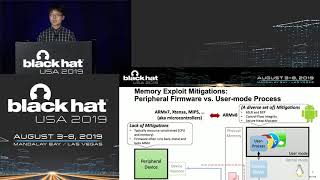
PeriScope - An Effective Probing and Fuzzing Framework for the Hardware-OS Boundary
Explore PeriScope, a Linux-based framework for analyzing device-driver interactions, enabling passive monitoring and active fuzzing to enhance hardware-OS boundary security.

Intel VISA - Through the Rabbit Hole
Explore Intel's internal architecture, PCH devices, and security-sensitive data access. Learn to read signals from internal buses and discover hidden components within Intel chips.

PicoDMA - DMA Attacks at Your Fingertips
Explore PicoDMA, a compact FPGA-based platform for DMA attacks. Learn about its capabilities, hardware, and potential security implications using the affordable PicoEVB board.
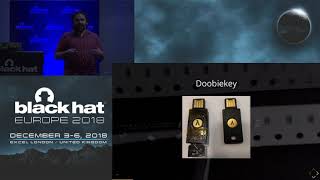
A Measured Response to a Grain of Rice
Explore hardware security vulnerabilities, implants, and detection challenges in modern devices. Learn about potential threats and protective measures in this comprehensive overview.

I, for One, Welcome Our New Power Analysis Overlords
Introduces ChipWhisperer-Lint, an open-source tool for automating power analysis attacks on devices using ChipWhisperer hardware, enhancing security testing capabilities.

Automating Exploit Generation for Arbitrary Types of Kernel Vulnerabilities
Explore automated exploit generation techniques for kernel vulnerabilities, reducing development time from thousands of hours to minutes and enhancing cybersecurity practices.
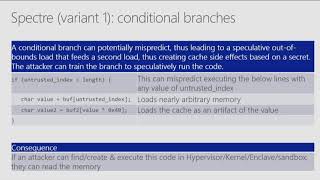
Wrangling with the Ghost - An Inside Story of Mitigating Speculative Execution Side Channel Vulnerabilities
Explore Microsoft's approach to mitigating speculative execution vulnerabilities, including research, collaboration, and industry-wide efforts. Learn about Spectre, Meltdown, and strategies for robust security measures.
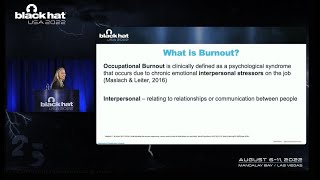
Trying to Be Everything to Everyone - Let’s Talk About Burnout
Explore burnout in computer security, its causes, and mitigation strategies. Learn to set boundaries, manage anxiety, and maintain passion in a high-stress industry facing significant workforce shortages.

Dive Into Apple IO80211Family Vol. 2
Explore Apple's Wi-Fi kernel extensions, uncovering new vulnerabilities and attack surfaces in the ever-evolving landscape of iOS security. Gain insights into the ongoing cat-and-mouse game of bug fixes and emerging threats.
Fault-Injection Detection Circuits - Design, Calibration, Validation and Tuning
Explores Intel's tunable replica circuit for detecting fault-injection attacks in processors, focusing on design, implementation, and effectiveness in preventing timing failures and unauthorized code execution.

Advanced IC Reverse Engineering Techniques - In Depth Analysis Of A Modern Smart Card
Explore advanced IC reverse engineering techniques through in-depth analysis of a modern smart card, focusing on hardware attacks, proprietary algorithms, and efficient analysis methods.