The CubeRover for Lunar Mobility as a Service
Explore CubeRover: an innovative, ultra-light lunar rover for diverse payloads. Learn about its modular design, scalability, and potential to revolutionize lunar exploration and commercial space ventures.
Science as Amateur Software Development
Explore how software development practices can enhance scientific research, addressing issues in academia and promoting more responsible and efficient scientific work.
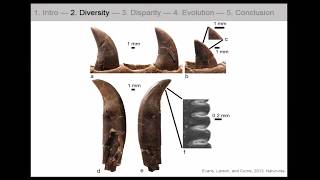
Morphology, Disparity, and Evolution of Theropod Teeth in the Late Cretaceous in Alberta
Explore theropod tooth evolution in Late Cretaceous Alberta through morphology and disparity analysis, revealing patterns across formations and time periods.
SEFS Webinar - Dr. Pajuelo - Sea Turtles
Learn about sea turtle conservation through cutting-edge science and technology. Explore migration, development, and innovative research methods to protect these ancient marine reptiles.
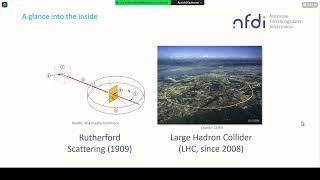
National Research Data Infrastructure - Keynote
Explore the National Research Data Infrastructure, covering FAIR principles, consortiums, and industry collaboration in the context of open science and data management.
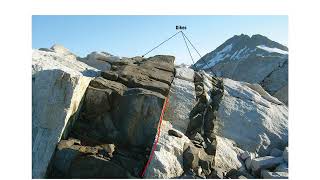
Geologic Time Lecture
Explore Earth's history through geologic principles, fossils, and dating methods. Uncover the secrets of our planet's past and learn to interpret the rock record.

DeepMind AlphaFold - A Gift to Humanity
Explore DeepMind's AlphaFold, a revolutionary AI system for protein structure prediction, and its potential impact on biology, medicine, and scientific research.
Building a Twitter UI with TypeScript, Qwik, SolidJS, and React in Mitosis
Explore building a Twitter UI across Qwik, React, and SolidJS using Mitosis. Learn about component sharing, conversion, deployment challenges, and performance comparisons in this hands-on tutorial.

Dendrites: Why Biological Neurons Are Deep Neural Networks
Explore how individual neurons function like deep neural networks, examining their complex information processing capabilities and the physiological mechanisms behind their computational complexity.
Introduction to Matter
Explore Matter, a unifying standard for smart home devices. Learn about its features, underlying technologies, and compatibility across ecosystems. Discover Nordic Semiconductor's hardware and software solutions for Matter implementation.
Wave Function Evolver - Calculating Expectation Values - Episode 3
Explore wave function calculations, expectation values, and quantum mechanics concepts through interactive coding and visualization techniques.
Electric Potential Calculation Using Double Integral - Part 1
Explore numerical integration to calculate electric potential of charged shapes using Scilab, with code examples and practical applications in physics.
Police Chase Simulation with Obstacles - Episode 7
Explore a physics simulation of a police chase with random obstacles, analyzing motion, probability, and decision-making using Scilab programming.
Double Pendulum Simulation: Coding and Energy Conservation - Part 5
Explore double pendulum physics through coding, focusing on energy conservation and chaotic motion. Skip algebra for practical implementation in VPython.
Gravity Simulator: Binary Star System - Episode 2
Explore gravitational interactions in binary star systems using a simulator. Learn about energy calculations, angular momentum, and the fascinating patterns of orbital motion.
Bouncy Balls Collision Math - Episode 3
Explore elastic collision math for bouncy balls, covering conservation of momentum, parallel axis, and unit vectors. Practical application in coding physics simulations.
Training People to Teach with Computation
Strategies for integrating computation into physics courses, including expanding the circle of instructors, creating space for computational content, and exploring CS pathways for effective teaching.
The Coulomb Cube: Estimating Charge in Grains of Sand - Back of the Envelope 0
Explore the fascinating calculation of sand grains needed to create a Coulomb of charge, guided by physicist Bree Barnett Dreyfuss in this engaging and educational discussion.
Importing a Video and Getting Data - Tracker for Beginners Lesson 1
Learn to import videos and generate graphs using Tracker, a video analysis tool for physics exploration. Covers basic processes like creating axes, setting scales, and auto-tracking.
Calculating Expectation Values - A Journey through Modern Physics
Explore computational modeling of early 20th-century physics discoveries, focusing on wave functions and expectation values in quantum mechanics through practical examples and numerical integration.
History of Neuroscience - Vernon Mountcastle's Contributions
Explore the life and groundbreaking discoveries of Vernon Mountcastle, a pioneering neuroscientist who revolutionized our understanding of the brain's modular organization and somatic sensory system.