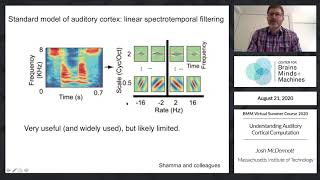
Understanding Auditory Cortical Computation
Explore auditory processing through computational models, comparing AI and human performance in speech recognition, sound localization, and pitch perception.

Toward Brain Computer Interface - Deep Generative Models for Brain Reading
Explore deep generative models for brain reading, covering GAN implementation, image reconstruction from brain signals, and evolving latent codes using genetic algorithms.
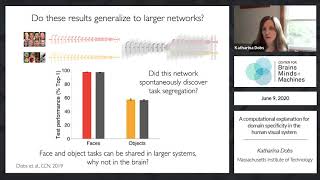
A Computational Explanation for Domain Specificity in the Human Visual System
Exploring how domain-specific organization in the brain emerges from computational optimization for face and object recognition tasks, using artificial neural networks to model cortical segregation.
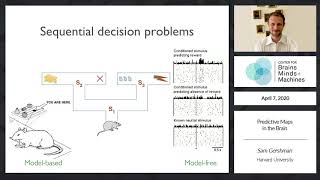
Predictive Maps in the Brain
Explore reinforcement learning theory using predictive maps, bridging model-based and model-free approaches. Discover insights into hippocampal spatial representation and entorhinal grid cells.
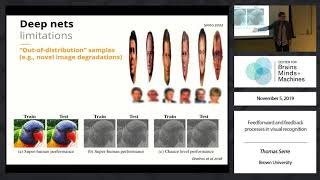
Feedforward and Feedback Processes in Visual Recognition
Explore visual recognition processes, comparing deep learning models with neuroscience-inspired approaches. Gain insights into complex visual reasoning and potential advancements in AI through computational neuroscience.
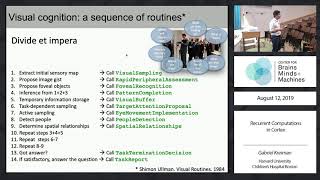
Recurrent Computations in Cortex
Explore recurrent computations in the brain's cortex, focusing on visual processing, neural networks, and cognitive models to understand human perception and cognition.
Thalamocortical System II
Explore thalamocortical system's cell types, synapses, and processing mechanisms. Gain insights into retinal and cortical structures, neurotransmitters, and sensory integration in the brain.
High Throughput Connectomics
Explore cutting-edge techniques in connectomics, from crowdsourcing to machine learning, for mapping neural connections and understanding brain function at scale.
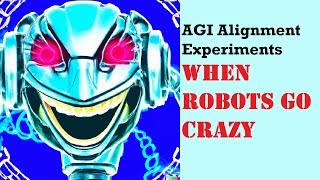
AGI Alignment Experiments - INSTRUCT vs Foundation and Agent Models
Explore AI alignment experiments comparing INSTRUCT vs foundation and agent models, focusing on interpretability, system-level alignment, and stability in complex AI systems.
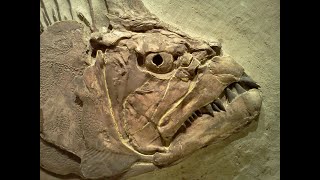
Geology - Geologic Time
Explore Earth's history through geologic principles, fossil evidence, and radiometric dating techniques to understand the vast timescales of our planet's evolution.
Integrating Inference with Stochastic Process Algebra Models - Jane Hillston, Edinburgh
Explore probabilistic programming for continuous-time systems using ProPPA, an extension of Bio-PEPA. Learn parameter inference methods and applications in biology, ecology, and urban transport.
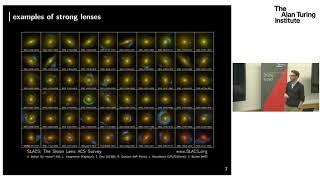
Exploring the Cosmos with Deep Learning
Explore how deep learning revolutionizes cosmology, from detecting gravitational lenses to generating galaxy images and modeling cosmic structures, addressing challenges in modern astronomical surveys.
Beyond Tech - Machine Learning in Science & Policy - Professor David Dunson, Duke
Exploring machine learning applications beyond tech, highlighting challenges in science and policy. Discusses fair algorithms, interpretable models, and the need for targeted methods in complex domains.
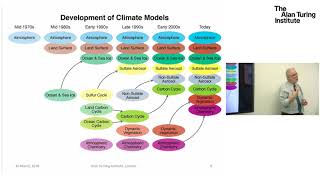
Responding to Complexity - Modelling and Organising Climate Data in CMIP6 - Dr Jeremy Walton
Explore climate data modeling in CMIP6, focusing on UK Earth System Model. Learn about processing pipelines, data conversion, and output analysis for advanced climate research.
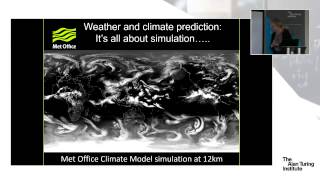
Big Data, Met Office and 21st Century Problems
Explore weather forecasting, climate prediction, and big data analysis at the Met Office. Learn about simulation techniques, ensemble forecasting, and addressing 21st-century environmental challenges.
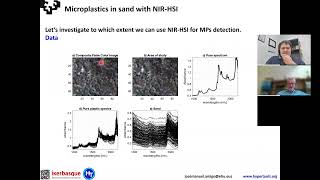
Classical and Generalized Least Squares
Explore advanced least squares techniques for analytical chemistry, including applications in microplastics detection and spectral analysis of biological samples.
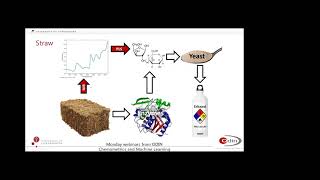
The Cage of Covariance
Explore strategies for handling correlated variables in data analysis, including orthogonalization techniques and predictive component methods.
Fusing Calibration Models
Explore techniques for merging multiple calibration models to improve efficiency and robustness in quality control, with a focus on balancing simplicity and prediction accuracy.
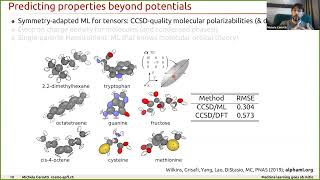
Machine Learning in Condensed Matter and Materials Physics
Explore machine learning applications in condensed matter physics, from electronic simulations to material engineering. Discover how ML enhances computational methods and enables new physical insights for exotic materials.
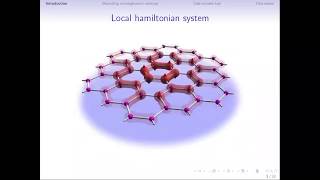
Entanglement Subvolume Law for 2D Frustration-Free Spin Systems
Explore entanglement entropy in 2D frustration-free spin systems, examining Hastings' proof, robust polynomials, and the Whole Screen Directivity Lemma.
Towards Protocol Design for Quantum Entanglement Routing - Chen Qian, UC Santa Cruz
Explore quantum entanglement routing protocols for long-distance secret sharing in quantum networks. Learn about challenges, models, and algorithms for scalable quantum communication.