Low-Code Machine Learning on Databricks with AutoML
Discover how to build, train, and deploy ML models using Databricks AutoML and low-code tools, empowering users of all expertise levels to create predictive analytics solutions.
Improving Apache Spark Application Processing Time - Configuration and Optimization Techniques
Optimize Spark streaming app performance through configurations, code improvements, and custom data source implementation for processing 700 MB/s of compressed data with strict KPIs.
Implementing End-to-End Demand Forecasting with Databricks and MLflow
Discover how to implement a scalable demand forecasting solution using Databricks and MLflow, improving retail efficiency and reducing food waste through accurate production and delivery planning.
Apache Spark on Kubernetes - Lessons Learned from Launching Millions of Spark Executors
Lessons learned from running massive Spark workloads on Kubernetes at Apple, covering orchestration, resource management, monitoring, and optimization for scalability and performance.
Securing Databricks on AWS Using PrivateLink - Deployment and Automation
Learn to secure Databricks on AWS using PrivateLink, covering architecture, setup, and automation. Gain insights on minimizing public internet data transfers for enhanced security and cost-efficiency.
Data Warehousing on the Lakehouse - Unifying Data, AI, and Analytics
Unify data, AI, and analytics with the lakehouse architecture. Learn success stories, use cases, and best practices for ingesting, storing, and governing data at scale for SQL and BI workloads using Databricks SQL.

Fairness in Machine Learning with Tulsee Doshi
Explore ML fairness principles, concerns, and mitigation strategies. Learn about Google's approach to inclusive AI development and tools for evaluating and improving fairness in machine learning models.
ACM-IMS Interdisciplinary Summit on the Foundations of Data Science
Explore cutting-edge data science topics with leading experts, including deep learning, reinforcement learning, robustness, fairness, and ethics, through keynote talks and panel discussions.
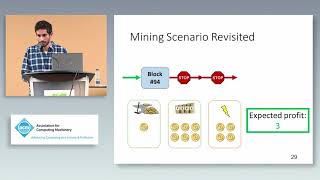
The Gap Game
Analyze cryptocurrency security through the "gap game", exploring mining incentives, block creation, and centralization risks using symbolic and numeric analysis tools.
Kolmogorov Complexity for DNA Sequences Analysis in Python
Learn to analyze DNA sequence complexity using Kolmogorov Complexity and Python. Covers theoretical background, Lempel-Ziv algorithm, and practical implementation with code walkthrough and visualization.
The Azure Machine Learning Service - Introduction
Explore Azure ML Service's features for scaling, automating, and deploying machine learning pipelines. Learn how it enhances the data science process and addresses key challenges.

Post Install Optimization for User Acquisition - Unite Now 2020
Discover machine learning techniques for post-install optimization in user acquisition. Learn about neural networks, dynamic CPC, and strategies to identify high-value users and improve UA efforts.

Symmetric Key Cryptography
Explore symmetric key cryptography, focusing on Even Monsoon tweaking, nonlinear mixing, and tight security analysis for cryptographic schemes.
TCGA Biomarkers Identification Using Machine Learning - Complete Walkthrough
Comprehensive walkthrough on using machine learning to identify TCGA biomarkers, covering data preparation, neural network construction, and gene set enrichment analysis.

Clustering and Markers Identification for ScRNA-Seq - Seurat Package Tutorial
Learn to analyze single-cell RNA-seq data using Seurat package, covering data import, QC, normalization, clustering, and marker identification. Gain insights into cell interactions and create visualizations.
No Substitute for Functionalism
Explores types of variations in consciousness models, proving broad functionalist theories immune to substitution arguments. Discusses implications for consciousness science and functionalism.
Automata-Theoretic Approach to Modelling Consciousness Within Mental Monism
Automata-theoretic approach to modeling consciousness in mental monism, exploring constraints and implications for substrate-free models of the mind's structure and dynamics.
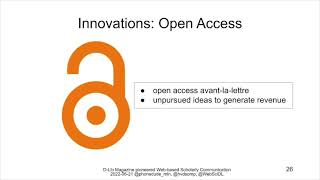
Michael Nelson - D-Lib Magazine Pioneered Web-Based Scholarly Communication - Invited Talk
Explore the pioneering role of D-Lib Magazine in web-based scholarly communication, its innovations, and impact on digital libraries and academic publishing.

Visual Data Analysis - How, When, and Why
Explore visual data analysis with experts, discussing its benefits, applications, and effective interface design for complex decision-making in various fields.
Cost-Effective Updating of Distributed Reordered Indexes
Explores cost-effective methods for maintaining and updating distributed reordered indexes in growing document collections, focusing on efficiency gains in query execution time and index size reduction.
Data-Centricity - A Challenge and Opportunity for CS Education, by Shriram Krishnamurthi
Exploring data-centric approaches in computing education, emphasizing curricular innovations at university and school levels to adapt to the data-driven landscape of modern computing.