Quantum Simulation of Lattice Gauge Theories with Qudit Systems
Explore quantum simulation of lattice gauge theories using qudit systems, focusing on advanced techniques and applications in quantum computing.

Simple Factorization and Other Properties of D-Dimensional Unitaries
Explore d-dimensional unitaries, their factorization properties, and average characteristics in quantum computing. Gain insights into constructing and analyzing higher-dimensional quantum transformations.

Quantum Error Correction of Bosonic Qudits Beyond Break-even
Explore quantum error correction for qudits, focusing on experimental demonstrations of error-corrected logical qutrits and ququarts using the GKP bosonic code in circuit QED architecture.
Kittens, Cats, Combs and Compasses - Superposing Coherent States
Explore superpositions of coherent states in quantum computing, communication, and sensing. Discover nuclear cat states on nuclear qudits.

Quantum Computation and Simulation with Qudits
Explore multilevel quantum systems using trapped Ca40 ions for enhanced quantum computation and efficient simulation of high-dimensional problems like spin systems and lattice gauge theories.

Hardware and Software Development Tools for Qudit Experiments
Explore hardware and software tools for qudit experiments, enhancing your understanding of quantum technology development.
Exact Synthesis of Qutrit Toffoli+Hadamard and Clifford+T
Explore qudit ZH-calculus, Toffoli+Hadamard gate sets, and their applications in quantum computation for odd prime qudit dimensions.
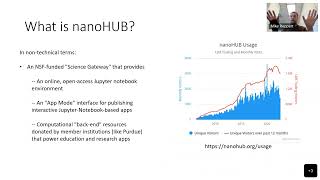
Hands-on Teaching with Jupyter Notebooks on nanoHUB
Explore hands-on teaching using Jupyter Notebooks on nanoHUB for chemistry courses. Learn to create interactive simulations, visualizations, and programming projects for enhanced student engagement and learning.
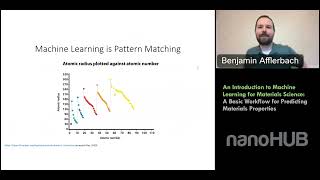
Introduction to a Basic Machine Learning Workflow for Predicting Materials Properties
Learn a basic machine learning workflow for predicting material properties, covering data cleaning, feature engineering, model training, and optimization using decision trees to forecast material bandgaps from compositions.
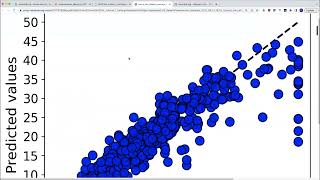
The Materials Simulation Toolkit for Machine Learning (MAST-ML): Automating Development and Evaluation of Machine Learning Models for Materials Property Prediction
Automate machine learning model development for materials property prediction using MAST-ML. Learn data import, feature engineering, model evaluation, and uncertainty quantification through hands-on activities.
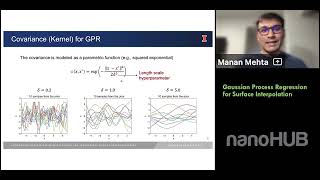
Gaussian Process Regression for Surface Interpolation
Explore Gaussian Process Regression for surface interpolation in manufacturing. Learn fundamentals, applications, and the innovative filtered kriging technique for improved performance in nanomanufacturing contexts.
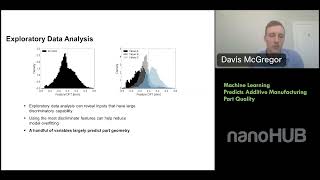
Machine Learning for Predicting Additive Manufacturing Part Quality - Tutorial on Support Vector Regression
Learn to predict additive manufacturing part quality using support vector regression. Explore data analysis, hyperparameter tuning, and cross-validation techniques for machine learning in 3D printing applications.
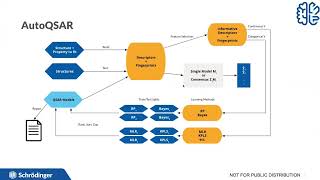
Machine Learning Models for Ionic Conductivity with Schrödinger's AutoQSAR - Hands-On Workshop
Explore machine learning for ionic conductivity prediction using Schrödinger's AutoQSAR tool. Gain hands-on experience with MS Maestro interface to create and implement models for materials science applications.
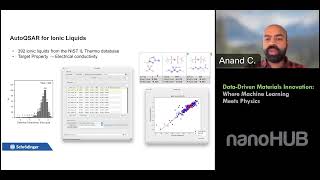
Data-Driven Materials Innovation: Where Machine Learning Meets Physics
Explore how machine learning and physics-based methods synergize to revolutionize materials science, addressing challenges in data-driven design across various technology fields with Schrödinger's innovative tools.
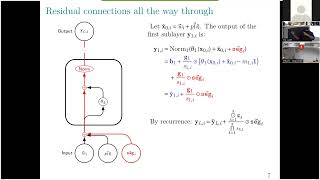
Linear Structures in Transformer Embedding Spaces
Explore linear structures in Transformer embedding spaces, examining anisotropy, BERT's next sentence prediction, layer behavior, and multi-head attention modules.
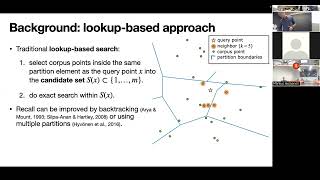
Multilabel Classification Framework for Approximate Nearest Neighbor Search
Explore multilabel classification for approximate nearest neighbor search, enhancing space partitioning trees and enabling supervised classifiers as index structures for ANN search.
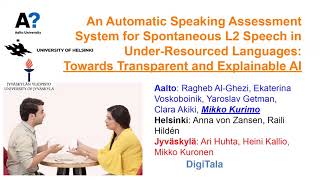
Automatic Speaking Assessment Systems for Second Language Learner's Spontaneous Speech in Under-Resourced Languages
Explore automatic speaking assessment for under-resourced languages, focusing on Finnish and Finland Swedish. Learn about system components, evaluation methods, and personalized feedback for language learners.
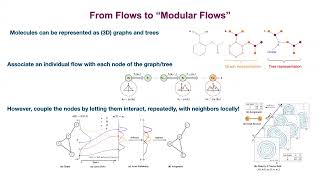
New Frontiers for AI-assisted Design and Discovery in Molecular Generation
Explore AI-assisted design for generating molecules with desired properties. Learn about overcoming challenges in combinatorial search, modeling interactions, and segregating representations for improved drug and material discovery.
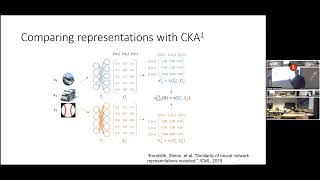
Comparing Representations Learned by Neural Networks - Deconfounded Similarity Measures
Explore improved methods for comparing neural network representations, addressing data structure confounding and enhancing functional similarity identification in transfer learning and out-of-distribution scenarios.
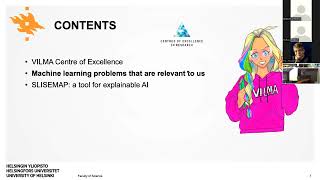
Explainable and Robust AI for VILMA Virtual Laboratory
Explore explainable AI and uncertainty quantification in atmospheric research. Learn about SLISEMAP, a supervised manifold visualization method for local explanations and dimensionality reduction.
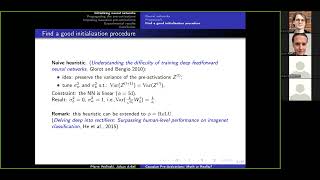
Gaussian Pre-Activations in Neural Networks: Myth or Reality?
Explore Gaussian pre-activations in neural networks, challenging common assumptions and proposing new initialization methods for improved information propagation in deep, narrow architectures.