
Quantum Computing for Finance and Beyond
Explore quantum computing applications in finance and other industries with insights from a leading expert in financial engineering.

LinkDoor - A Hidden Attack Surface in the Android Netlink Kernel Modules
Explore Netlink vulnerabilities in Android kernel modules, uncovering security threats and exploitation techniques. Learn to analyze and mitigate risks in this overlooked attack surface.

The Cryptography Packages in Julia: What is Missing?
Explore Julia's cryptography ecosystem, comparing it to other languages and identifying areas for improvement to enhance adoption beyond scientific computing.
ITensorNetworks.jl - Introduction to Tensor Network Algorithms in Julia
Explore tensor network algorithms and their implementation in Julia using ITensorNetworks.jl for efficient quantum many-body simulations.
FastIce.jl: A Massively Parallel Ice Flow Model Running on GPUs
Explore FastIce.jl, a Julia-based ice flow model for GPUs. Learn about its modular architecture, performance on supercomputers, and applications in efficient large-scale ice sheet modeling.

Pinecone Vector Database - Build Knowledgeable AI
Discover vector databases' advantages, explore Pinecone's innovative features, and watch a live demo on getting started with its powerful search capabilities.

Reviewing the JDK 23 Release Notes
Explore JDK 23's release notes, covering new features, changes, and updates in Java development. Gain insights into performance improvements, security enhancements, and tooling modifications.
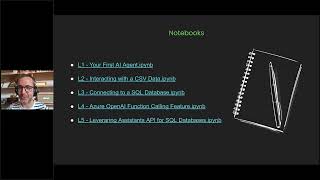
Advanced RAG Scenarios: Building Your Own Database Agents - Developing AI Agents for Natural Language Database Interaction
Develop AI agents for natural language database interactions, enabling efficient data querying and analysis without advanced SQL knowledge.
How Flow Works in Software Engineering - Insights from Complexity Science
Explore how information theory and complexity science illuminate software engineering practices, optimizing value flow and challenging conventional approaches to development.
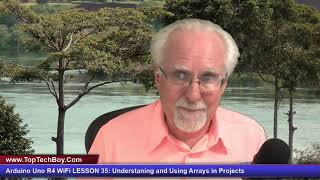
Arduino Uno R4 WiFi - Understanding and Using Arrays in Projects - Lesson 35
Learn to implement arrays in Arduino projects, enhancing data management and organization for more efficient programming.

Non-commutative Optimal Transport - Spring 2025
Explore non-commutative optimal transport's applications in AI, quantum physics, and electronic structure theory. Delve into evolution equations, Wasserstein distances, and computational algorithms for density operators.
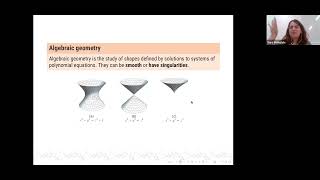
Machine Learning Detects Terminal Singularities in Q-Fano Varieties
Explore machine learning applications in algebraic geometry, focusing on Q-Fano varieties and terminal singularities detection. Gain insights into new combinatorial criteria and high-dimensional Q-Fano landscapes.
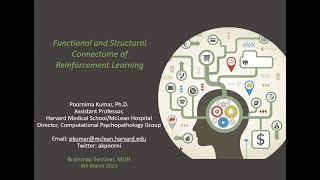
Functional and Structural Connectome of Reinforcement Learning
Explore functional and structural connectomes of reinforcement learning, focusing on neural substrates, computational models, and applications in depression research.
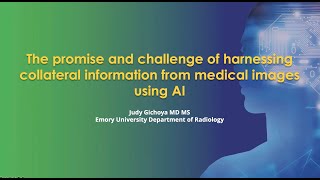
The Promise and Challenge of Harnessing Collateral Information from Medical Images Using AI
Explore AI's potential in extracting collateral information from medical images, discussing promises and challenges in this field.
Mapping Brain Dynamics and Trajectories with Geometric and Topological Machine Learning
Explore geometric and topological machine learning techniques for mapping brain dynamics and trajectories, enhancing understanding of neural processes.

Validation of AI Techniques in MRI for Clinical Studies
Explore AI validation techniques for MRI in clinical studies, focusing on enhancing accuracy and reliability in medical imaging analysis.
Beyond Truth and Falsehood - Logic as a Calculus of Events in AI
Explore logic's evolving role in AI, from truth calculus to event calculus, enabling advancements in probabilistic reasoning, machine learning, and explainable AI systems.
Noise Limits in Atomic Qubit Control for Quantum Computing
Explore the impact of laser noise on trapped ion qubit control and learn about new techniques to improve quantum computing performance to fundamental limits.
New Platforms for Two-Dimensional Electron Gases in Quantum Computing - Quantum Today
Explore new platforms for two-dimensional electron gases in quantum computing, focusing on Indium Antimonide's potential for topological quantum computing applications.
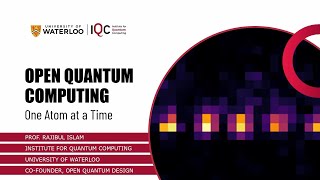
Open Quantum Computing - One Atom at a Time
Explore ion-trap quantum computing: build qubits from atoms, simulate complex systems, and discover open-access hardware advancing research in this cutting-edge field.
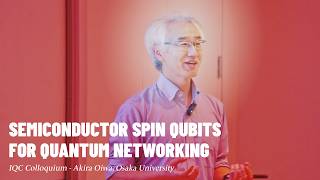
Semiconductor Spin Qubits for Quantum Networking
Explore semiconductor spin qubits for quantum networking, focusing on state conversion between photons and electron spins in quantum dots, and their potential for quantum repeaters and global quantum networks.