Machine Learning - Testing and Error Metrics
Explore machine learning model evaluation, including metrics, error types, cross-validation, and optimization techniques for improved performance and decision-making.

A Friendly Introduction to Deep Learning and Neural Networks
Explore neural networks and deep learning concepts, from gradient descent to activation functions, in this friendly introduction to AI fundamentals.

A Friendly Introduction to Machine Learning
Explore key machine learning algorithms through clear examples, from linear regression to neural networks and clustering techniques, in this beginner-friendly introduction.
MIT 6.S191 - Automatic Speech Recognition
Explore automatic speech recognition with Rev.com experts, covering data selection, speech input processing, and advanced ASR techniques like attention-based models and language modeling.

MIT: Reinforcement Learning
Explore deep reinforcement learning concepts, algorithms, and real-world applications in this comprehensive lecture from MIT's Introduction to Deep Learning course.

Deep Generative Modeling
Explore deep generative modeling, including autoencoders, VAEs, and GANs. Learn about latent variables, representation learning, and applications in debiasing and image synthesis.

Convolutional Neural Networks
Explore convolutional neural networks for computer vision, covering feature extraction, convolution operations, and applications in autonomous navigation and medical imaging.
Recurrent Neural Networks and Transformers
Comprehensive exploration of recurrent neural networks, LSTMs, and attention mechanisms in deep learning, covering theory, implementation, and applications for sequence modeling tasks.
MIT Introduction to Deep Learning
Comprehensive introduction to deep learning fundamentals, covering perceptrons, neural networks, loss functions, gradient descent, backpropagation, and regularization techniques for building effective models.
AI in Healthcare
Explore AI applications in healthcare, from cancer screening to genomics, addressing challenges like bias and model limitations for improved patient care and equitable outcomes.
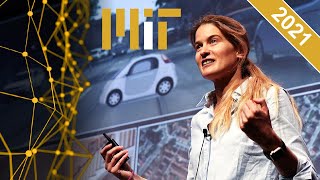
Towards AI for 3D Content Creation
Explore AI-driven 3D content creation, from synthesizing worlds to neural simulation. Learn cutting-edge techniques for generating, composing, and rendering 3D objects and scenes using deep learning.

Taming Dataset Bias via Domain Adaptation
Explore techniques to address dataset bias in deep learning, including adversarial domain alignment, pixel space alignment, and consistency enforcement for improved model generalization.
Deep CPCFG for Information Extraction
Explore deep learning techniques for information extraction using Conditional Probabilistic Context-Free Grammars. Learn about document parsing, schema representation, and handling noisy data in this advanced lecture.
AI Bias and Fairness
Comprehensive exploration of AI bias and fairness, covering types, sources, and mitigation strategies. Examines interpretation-driven and data-driven biases, feature bias, and advanced debiasing techniques for ethical AI development.

Evidential Deep Learning and Uncertainty
Explore evidential deep learning and uncertainty estimation in neural networks, covering probabilistic learning, types of uncertainty, Bayesian methods, and practical applications.
Deep Learning New Frontiers
Explore deep learning limitations and new frontiers, including expressivity, generalization, failure modes, uncertainty, adversarial attacks, and emerging areas like graph learning and AutoML.
Reinforcement Learning
Comprehensive exploration of deep reinforcement learning, covering Q-functions, policy gradients, and real-world applications like AlphaGo. Ideal for understanding RL fundamentals and advanced concepts.

Convolutional Neural Networks
Explore convolutional neural networks for computer vision, covering feature extraction, convolution operations, and applications like object detection and self-driving cars.
Introduction to Deep Learning
Comprehensive introduction to deep learning fundamentals, covering perceptrons, neural networks, loss functions, gradient descent, backpropagation, and regularization techniques for building effective models.
Machine Learning for Scent
Explore machine learning applications in digitizing scent, from understanding olfactory processes to predicting odor descriptors using graph neural networks and interpreting molecular fragrance data.
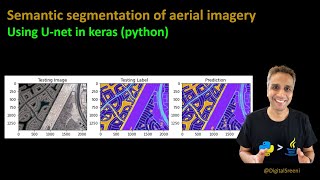
Semantic Segmentation of Aerial Imagery Using U-Net
Learn to preprocess aerial imagery, train U-net for semantic segmentation, and make predictions using Python, focusing on data preparation and model implementation for satellite image analysis.