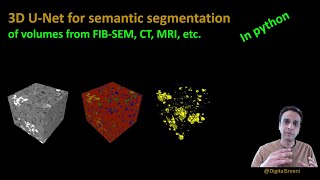
3D U-Net for Semantic Segmentation
Learn to implement 3D U-Net for semantic segmentation on volumetric data like FIB-SEM, CT, and MRI. Covers data preparation, model architecture, training, and multichannel image processing using Python libraries.
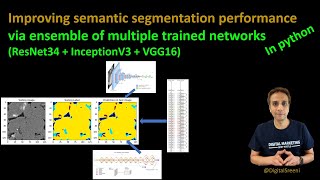
Improving Semantic Segmentation - U-Net Performance via Ensemble of Multiple Trained Networks
Enhance U-Net performance for semantic segmentation using ensemble methods with ResNet34, Inception V3, and VGG16 networks. Includes code, dataset, and practical implementation tips.
MIT: Neural Rendering
Explore neural rendering techniques, from forward and inverse rendering to 3D data representations, with insights on RenderNet, neural point-based graphics, and HoloGAN in this comprehensive lecture.
Generalizable Autonomy for Robot Manipulation
Explore generalizable autonomy in robot manipulation through imitation learning, visuo-motor policies, and reinforcement learning techniques. Discover innovative approaches for achieving adaptable and efficient robotic systems.

Neurosymbolic AI
Explore neurosymbolic AI, combining deep learning and symbolic reasoning to address limitations in current AI systems. Learn about out-of-distribution performance, adversarial examples, and advantages of hybrid approaches.
Deep Learning New Frontiers
Explore deep learning limitations and new frontiers, including expressivity, generalization, adversarial attacks, uncertainty, and AutoML. Gain insights into cutting-edge developments in neural networks.

Reinforcement Learning
Explore deep reinforcement learning concepts, from Q-functions to policy gradients, with applications in Atari games, real-world scenarios, and groundbreaking AI like AlphaGo.

Multi-Class Language Classification With BERT in TensorFlow
Learn to build a multi-class language classification model using BERT and TensorFlow. Covers data preprocessing, model architecture, training, and prediction with transformers for NLP tasks.
CCNP ENCOR - Switch Stacking - VSS-StackWise-StackWise Virtual - ENCOR Complete Course
Comprehensive guide to switch stacking technologies including VSS, StackWise, and StackWise Virtual. Covers interface numbering, design examples, and includes quizzes for knowledge reinforcement.
Reliability
Explore reliability in complex tech ecosystems, focusing on user satisfaction, SLIs, SLOs, and SLAs. Learn strategies for setting targets, managing costs, and implementing effective error budget policies.
Scaling Reliability Engineering with Tools
Explore strategies for scaling reliability engineering, including tool development, decision-making processes, and real-world examples of automated failover and chaos engineering implementations.

Share Pie - The DDD Treasure Hidden in Plain Sight
Exploring Domain-Driven Design's hidden insights and their relevance to modern software development, emphasizing the importance of models and modeling breakthroughs.
Build and Deploy Production Ready PyTorch Models
Explore Azure Machine Learning for PyTorch model lifecycle management, from data handling to deployment on Kubernetes, emphasizing scalability and production readiness.
Securing SPAs and Blazor Applications Using the BFF - Backend for Frontend - Pattern
Explore secure authentication patterns for modern web apps, focusing on the Backend for Frontend (BFF) approach for robust token-based security in SPAs and Blazor applications.
Design & Development Considerations for Dual Screen Devices
Explore design and development strategies for dual-screen devices, including new CSS and JavaScript APIs, layout challenges, and opportunities for enhanced user experiences on foldable devices.
GraphQL Observability with Elastic and OpenTelemetry
Explore implementing comprehensive observability for federated GraphQL APIs using OpenTelemetry and Elastic, enabling proactive performance management and error detection.
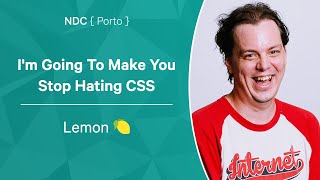
I'm Going to Make You Stop Hating CSS
Discover modern CSS techniques to create confident layouts. Learn strategies to avoid common pitfalls and leverage new specs for straightforward, hack-free web design.
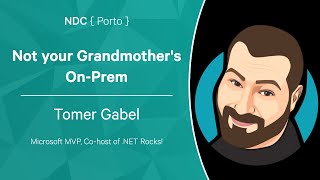
Not Your Grandmother's On-Prem
Explore modern on-premise deployment strategies leveraging Docker, Kubernetes, and cloud technologies. Learn to overcome challenges and transform the experience for customers and vendors in regulated industries.
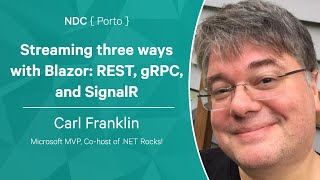
Streaming Three Ways with Blazor - REST, gRPC, and SignalR
Explore server-to-client data streaming in Blazor using REST, gRPC, and SignalR to enhance performance and scalability. Learn implementation techniques for each transport method.

Event Sourcing - What Could Possibly Go Wrong?
Explore challenges and solutions in Event Sourcing implementation, covering storage, schema evolution, scalability, and consistency. Learn from real-world experiences to optimize your ES architecture.
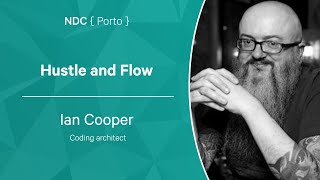
Hustle and Flow
Explore Flow-Based Programming as a tool for modeling event-driven architectures, learning its basics, applications, and insights for asynchronous communication in microservices.