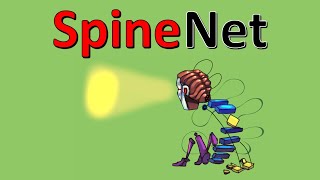
SpineNet - Learning Scale-Permuted Backbone for Recognition and Localization
Explores SpineNet, a novel CNN architecture using scale-permuted features and cross-scale connections, outperforming traditional models in object detection and classification tasks.
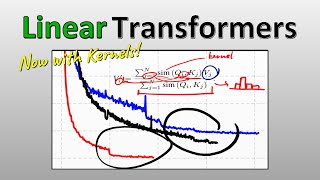
Transformers Are RNNs- Fast Autoregressive Transformers With Linear Attention
Explore a novel approach to transformers using linear attention, reducing computational complexity and revealing connections to RNNs. Gain insights into faster, more efficient deep learning models for long sequences.
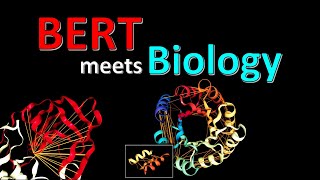
BERTology Meets Biology - Interpreting Attention in Protein Language Models
Explores how BERT models trained on protein sequences learn biological properties, revealing insights into protein structure, binding sites, and biophysical characteristics through attention mechanism analysis.
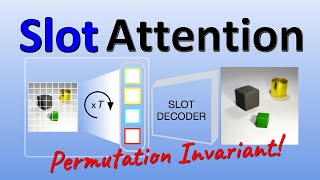
Object-Centric Learning with Slot Attention
Explanation of a novel deep learning module for object-centric visual scene understanding. Covers architecture, algorithm, experiments, and implications of Slot Attention for improved object recognition and reasoning.
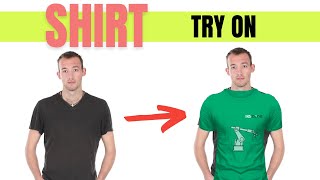
Shirt Try On Using Computer Vision
Learn to create a virtual shirt try-on system using computer vision techniques. Explore pose detection, image manipulation, and interactive features for a realistic digital fitting experience.
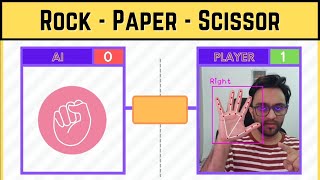
Rock Paper Scissor Using Computer Vision - OpenCV Python
Learn to build a Rock Paper Scissors game using OpenCV and Python, covering webcam integration, hand detection, AI opponent moves, and scoring system implementation.
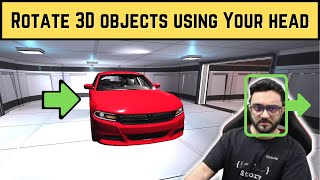
3D Head Tracking with Car Movement - Computer Vision
Learn 3D head tracking and car movement in computer vision, integrating face detection with Unity for interactive camera control and smooth motion simulation.

3D Hand Tracking in Virtual Environment - Computer Vision
Learn to implement 3D hand tracking in virtual environments using Python, OpenCV, and Unity. Gain practical skills in computer vision and real-time data transfer for interactive applications.
PNG Overlay and Image Rotation Using OpenCV - CVZone
Learn to overlay PNG images and logos on images and webcams using OpenCV, plus create rotating gear mechanisms with image rotation techniques in this hands-on computer vision tutorial.
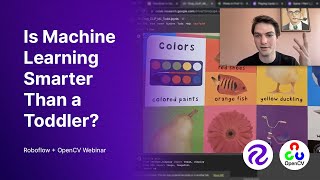
Is Machine Learning Smarter Than a Toddler? - Roboflow + OpenCV Webinar
Explore how AI and ML compare to toddlers in object recognition, drawing, and writing. Gain insights into the current capabilities and limitations of machine learning technology.
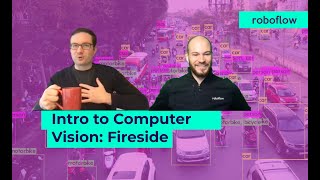
Intro to Computer Vision - Fireside
Explore computer vision fundamentals, from basic concepts to problem-solving approaches, model building, and ethical considerations in this comprehensive introduction.
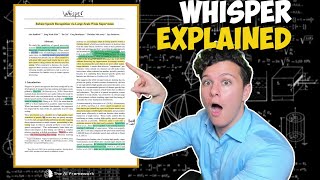
Whisper Paper Explained - Robust Speech Recognition via Large-Scale Weak Supervision
Detailed explanation of OpenAI's Whisper model for speech recognition, covering dataset collection, model architecture, experiments, and scaling considerations.
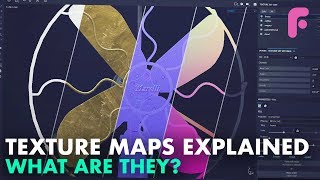
Texture Maps Explained - Essential for All Texture Artists
Comprehensive guide to texture maps for 3D artists, covering albedo, roughness, displacement, normal, and more. Explains each map type and its application in creating realistic textures.

What Is Quantum Machine Learning?
Friendly introduction to quantum computing and machine learning, covering qubits, quantum gates, entanglement, and their applications in generative modeling and optimization.
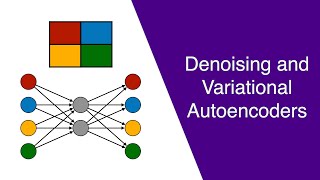
Denoising and Variational Autoencoders
Explore autoencoders, powerful generative models for dimensionality reduction and data generation. Learn about denoising and variational autoencoders, their applications, and training techniques.
A Friendly Introduction to Deep Reinforcement Learning, Q-Networks and Policy Gradients
Friendly exploration of deep reinforcement learning concepts, including Markov decision processes, Q-networks, and policy gradients, using examples and visuals to explain complex ideas.
Restricted Boltzmann Machines - A Friendly Introduction
Friendly introduction to Restricted Boltzmann Machines using real-life examples. Covers key concepts like probabilities, training, contrastive divergence, and Gibbs sampling for machine learning enthusiasts.

Support Vector Machines - A Friendly Introduction
Explore Support Vector Machines through visual explanations, covering key concepts like data separation, perceptron algorithm, classification errors, and the C parameter for optimal model performance.
Logistic Regression and the Perceptron Algorithm - A Friendly Introduction
Friendly introduction to logistic regression and perceptron algorithm, covering key concepts like data classification, gradient descent, and neural networks with minimal math and visual explanations.

How Does Netflix Recommend Movies? Matrix Factorization
Explore matrix factorization in recommender systems, focusing on Netflix's movie recommendation algorithm. Learn about dependencies, error functions, and predicting user ratings.

A Friendly Introduction to Convolutional Neural Networks and Image Recognition
Friendly explanation of image recognition using Convolutional Neural Networks, covering basics to advanced concepts. Suitable for beginners, with minimal math required.