
Democratizing Tech - The Power in Reversing Generational Limitations
Inspiring talk on democratizing tech, empowering underserved communities, and overcoming barriers as a black woman in the industry. Highlights resilience and the impact of accessible tech education.

Embracing WebGPU and WebXR with Three.js
Explore WebGPU and WebXR with Three.js for enhanced 3D graphics and immersive web experiences. Learn to leverage these technologies for stunning visuals and interactive VR/AR content directly in browsers.

Web Apps of the Future With Web AI
Explore cutting-edge Web AI with Google's Jason Mayes. Learn to integrate machine learning models in browsers for privacy, low latency, and offline solutions, enhancing your web development toolkit.
Building High Performance Real-time Stream Processing Microservices - GeeCON 2023
Discover best practices for real-time stream processing, addressing challenges and optimizing projects for scalability, performance, failover, reliability, and data recovery using the Hazelcast platform.
Open-world Segmentation and Tracking in 3D
Discover cutting-edge techniques for 3D data detection and segmentation using pseudo-labels, with insights into Lidar applications and Segment Anything technology from NVIDIA expert Laura Leal-Taixé.

Large Scale Multi-Microscope Datasets and Their Challenges in Medical AI
Explore groundbreaking research on multi-microscope datasets for malaria and leukemia detection, featuring innovative domain adaptation techniques and object detection methods to enhance early disease diagnosis.
Analyzing and Exposing Vulnerabilities in Language Models - Session 131
Delve into advanced research on language model vulnerabilities, exploring novel adversarial attack methods and gender bias analysis while discovering practical approaches to enhance AI trustworthiness and fairness.

Set Distribution Networks - A Generative Model for Sets of Images
Explores a novel framework for generating and encoding sets of images, introducing Set Distribution Networks that can create new object/identity sets while preserving key attributes.
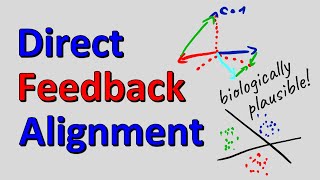
Direct Feedback Alignment Scales to Modern Deep Learning Tasks and Architectures
Explores Direct Feedback Alignment as a biologically plausible alternative to backpropagation, demonstrating its effectiveness in training modern deep learning architectures for various challenging tasks.
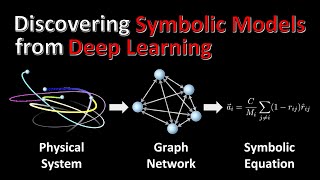
Discovering Symbolic Models from Deep Learning with Inductive Biases
Exploring how Graph Neural Networks and symbolic regression can derive accurate symbolic equations from observational data, combining deep learning with physics-inspired inductive biases.
How I Read a Paper- Facebook's DETR
Explore the process of understanding Facebook AI's DETR paper through a step-by-step analysis, from title to conclusions, with insights on interpreting research effectively.
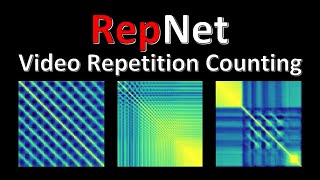
RepNet - Counting Out Time - Class Agnostic Video Repetition Counting in the Wild
Explore RepNet's innovative approach to video repetition counting using temporal self-similarity matrices, synthetic data, and a constrained model for class-agnostic period prediction in real-world videos.
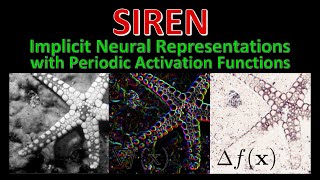
SIREN - Implicit Neural Representations with Periodic Activation Functions
Explore SIREN neural networks for representing complex signals like images and 3D shapes. Learn about their unique periodic activation functions, initialization, and applications in solving differential equations.
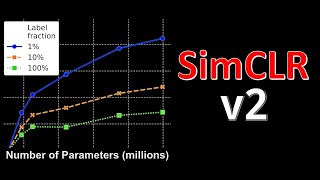
Big Self-Supervised Models Are Strong Semi-Supervised Learners
Explore SimCLRv2, a powerful semi-supervised learning approach combining self-supervised pre-training, fine-tuning, and distillation to achieve state-of-the-art results with minimal labeled data.
On the Measure of Intelligence by François Chollet - Human Priors - Paper Explained
Explores the relationship between intelligence, generality, and prior knowledge, focusing on human priors as a basis for comparing human and AI intelligence. Discusses optimizing for generality and the role of experience in skill acquisition.

Bootstrap Your Own Latent: A New Approach to Self-Supervised Learning - Paper Explained
Explore BYOL, a novel self-supervised learning approach that outperforms baselines without negative samples. Learn about its innovative use of online and target networks for image representation.
SynFlow - Pruning Neural Networks Without Any Data by Iteratively Conserving Synaptic Flow
Explores SynFlow, a novel data-agnostic algorithm for pruning neural networks at initialization, avoiding layer collapse and achieving maximum compression capacity without training or data.

VirTex- Learning Visual Representations from Textual Annotations
Explore VirTex, a novel approach to visual representation learning using high-quality image captions, outperforming traditional methods with fewer images for various computer vision tasks.
Linformer - Self-Attention with Linear Complexity
Detailed explanation of the Linformer model, which reduces self-attention complexity in transformers from O(n²) to O(n), improving efficiency while maintaining performance in NLP tasks.
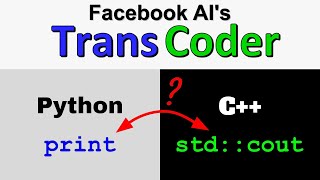
TransCoder - Unsupervised Translation of Programming Languages
Explore unsupervised neural machine translation for code migration between Python, C++, and Java. Learn about shared embeddings, objectives, evaluation, and results of this innovative approach.
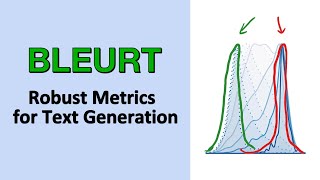
BLEURT - Learning Robust Metrics for Text Generation
Explora BLEURT, una métrica de evaluación basada en BERT para generación de texto, su preentrenamiento con datos sintéticos y su capacidad de modelar juicios humanos con pocos ejemplos.