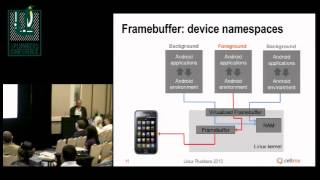
Device Namespace
Device namespaces: Lightweight virtualization for Linux-based devices, enabling multiple OS instances to run in isolated containers with virtual exclusive access to drivers. Seamless switching between active and background namespaces.
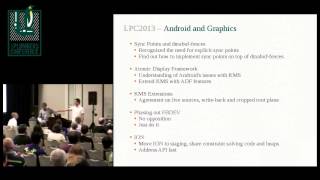
Closing Plenary
Recap of Linux Plumbers Conference 2013, covering microconferences on LLVM, Secure Boot, Graphics, Android, Containers, Virtualization, Scaling, ACPI/PCI, File Systems, Automotive, Boot, and Network topics.
Integrating NICs with Embedded Switches in a Linux Ecosystem
Explore embedded switch features in NICs and their management within Linux environments, focusing on current capabilities and future developments.
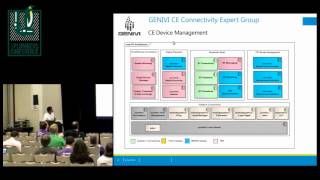
Device Management in Automotive Infotainment
Explore challenges and solutions for device management in automotive infotainment systems, focusing on efficient alternatives to udev tailored for in-vehicle environments.
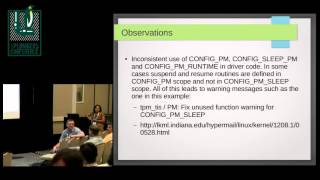
Power Management - Converting Legacy PM to Dev PM Ops
Explore Linux kernel power management evolution, focusing on converting legacy_pm to dev_pm_ops for improved driver support and extensibility.
All Your Control Groups Are Belong To Us
Exploring systemd's new control over cgroups hierarchy, discussing concepts, APIs, reasons for the change, and future implications for Linux system management.
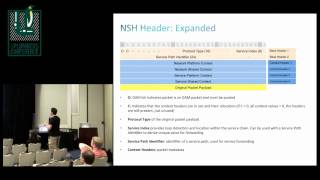
LISP and NSH in Linux and Open vSwitch
Explore Network Service Headers and LISP implementation in Linux and Open vSwitch, focusing on service chaining, architecture, and data plane components.
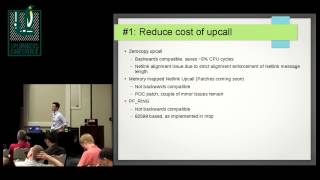
Open vSwitch - Hardware Assisted Filtering
Explore hardware-assisted packet filtering in modern networking, optimizing performance through offloading and innovative techniques like memory-mapped netlink and PFRing.

State of CRIU and Integration with LXC
Explore CRIU's process state-dump and restoration capabilities, its integration with LXC, and potential applications in live-migration and fast kernel updates.
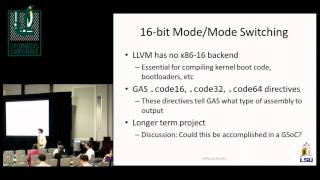
Using the Clang Integrated Assembler to Compile the Linux Kernel
Learn about Clang's Integrated Assembler for Linux Kernel compilation, exploring its benefits, challenges, and potential solutions for ARM and x86 architectures.
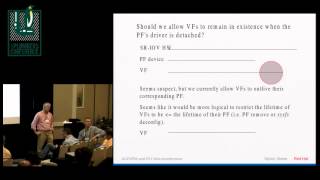
SR-IOV Virtual Function Lifetimes
Explores challenges and potential solutions for managing SR-IOV Virtual Function lifecycles, focusing on removal processes and interactions with Physical Functions in Linux systems.
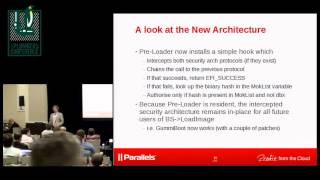
Unifying Secure Boot Code and Getting Additions into UEFI
Explore unification of UEFI loaders, security protocol overrides, and manual loading approaches for secure boot, discussing potential UEFI standard revisions and improvements.
Media Decode and Composition - Bridging the Gap
Exploring dedicated hardware for media decoding and 2D composition in non-desktop devices, discussing current limitations and potential improvements for zerocopy media pipelines.
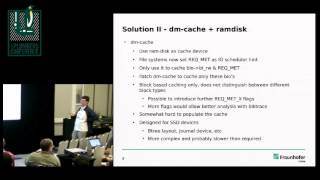
A Dedicated Cache for Metadata
Exploring the need for a dedicated metadata cache in file systems to optimize performance, especially for distributed systems like FhGFS, Lustre, and Cephfs.
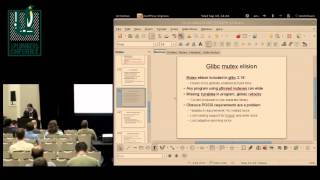
Current Status of Lock Elision in Linux
Explore Intel TSX implementation for lock elision in Linux, covering kernel, glibc, and other components to address lock scaling challenges in multi-CPU systems.
Unified in-Kernel IPC - KDBUS/Binder
Exploring the potential consolidation of KDBUS and Binder for unified in-kernel IPC, discussing Android compatibility and upstream integration challenges.
ACPI vs DT
Comparison of ACPI and Device Tree firmware approaches for hardware enumeration and configuration, discussing challenges and potential solutions for Linux kernel development.
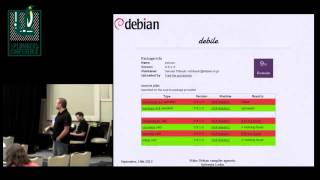
Rebuilding Debian with LLVM - Clang
Explore the challenges and progress of rebuilding Debian using LLVM/Clang compiler, discussing issues faced, future steps, and potential collaboration among distributions to improve software compatibility.
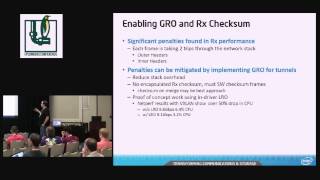
Improving Overlay Network Performance on Existing Hardware
Explore performance improvements for VXLAN and NVGRE tunnel protocols, including checksum offload and GRO optimizations, to enhance overlay network efficiency on existing hardware.
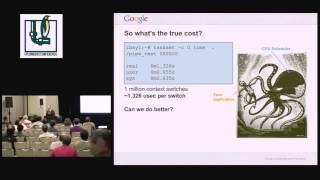
User-Level Threads with Threads
Explore efficient multi-threaded programming using user-level threads, covering new kernel interfaces and primitives for cooperative threading with sub-200ns context-switch times across various languages.
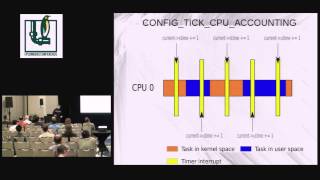
Full Dynticks Status
Explore full dynticks capability in Linux kernel: current status, improvements since 3.10 merge, and future development plans for enhanced power management and performance.