
Grand National 2021 - Managing Extreme Online Demand at William Hill
Strategies for managing unprecedented online demand during a major sporting event, focusing on SRE preparation, lambda@edge logic, and queueing systems to handle traffic spikes.
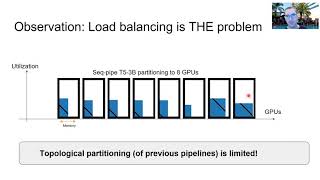
Fine-Tuning Giant Neural Networks on Commodity Hardware with Automatic Pipeline Model Parallelism
Explore fine-tuning giant neural networks on commodity hardware using FTPipe, a system enabling multi-GPU execution through innovative model partitioning and task allocation techniques.

NrOS - Effective Replication and Sharing in an Operating System
Explores NrOS, a novel OS kernel using node replication for improved scalability and simplified development, outperforming Linux while maintaining sequential kernel simplicity.
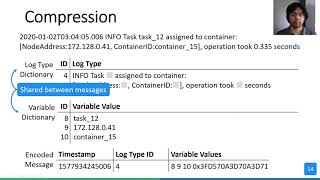
CLP - Efficient and Scalable Search on Compressed Text Logs
Innovative tool for lossless log compression with fast search capabilities, outperforming existing solutions in compression ratio, search speed, and ingestion performance for petabyte-scale log management.
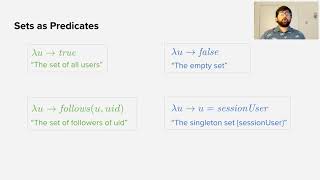
STORM - Refinement Types for Secure Web Applications
STORM: A web framework for building MVC applications with compile-time enforcement of security policies, reducing trusted code to under 1% and providing static security enforcement with minimal overhead.

Distance-Bounding Protocols - Verification without Time and Location
Explore a novel approach to verifying distance-bounding protocols using causality-based characterization, enabling automated security analysis without relying on time and location concepts.

Blue Note - How Intentional Acoustic Interference Damages Availability and Integrity in Hard Disk Drives and Operating Systems
Explores how acoustic interference can damage hard drives, causing data corruption and system failures. Presents findings on vulnerabilities and proposes mitigation strategies for legacy systems.
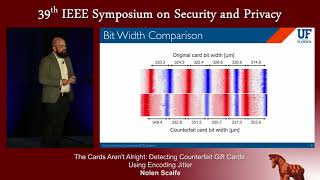
The Cards Aren't Alright - Detecting Counterfeit Gift Cards Using Encoding Jitter
Innovative technique for detecting counterfeit gift cards using magnetic stripe encoding jitter, offering a cost-effective solution to reduce fraud and financial losses in the gift card industry.
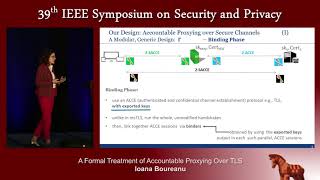
A Formal Treatment of Accountable Proxying over TLS
Formal analysis of accountable proxying over TLS, revealing vulnerabilities in mcTLS and proposing a secure alternative with provable security and practical implementation.
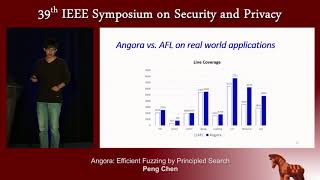
Angora - Efficient Fuzzing by Principled Search
Innovative fuzzing technique combining mutation-based speed with high-quality input generation, outperforming existing fuzzers in bug detection and branch coverage through advanced constraint-solving methods.
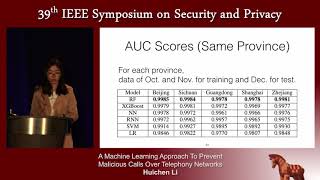
A Machine Learning Approach to Prevent Malicious Calls Over Telephony Networks
Innovative machine learning solution to combat telephony spam and scams, using user-tagged call logs to design effective features for predicting and blocking malicious calls with high accuracy.
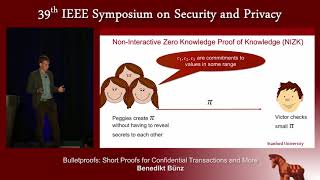
Bulletproofs - Short Proofs for Confidential Transactions and More
Efficient zero-knowledge protocol for range proofs and arithmetic circuits, with logarithmic-sized proofs and no trusted setup. Ideal for confidential transactions in cryptocurrencies.
Implementing Conjunction Obfuscation under Entropic Ring LWE
Explore secure program obfuscation implementation for conjunction programs, addressing practicality challenges and achieving significant performance improvements in obfuscation and evaluation runtimes.
FuturesMEX - Secure, Distributed Futures Market Exchange
Explore a secure, distributed futures market exchange protocol with key operations, security properties, and economic viability considerations for low-frequency trading environments.
Writing Parsers Like It Is 2017
Explore safe parsing techniques using Rust and parser combinators to address memory violations in low-level programming, with practical examples and implementation strategies.
Eliminating Input-Based Attacks by Deriving Automated Encoders and Decoders from Context-Free Grammars
Learn to derive automated encoders and decoders from context-free grammars to eliminate input-based attacks, enhancing security in complex language communication systems.
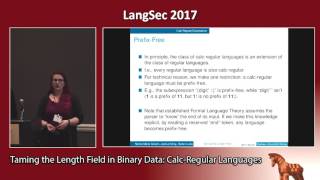
Taming the Length Field in Binary Data - Calc-Regular Languages
Explores calc-regular languages as an extension of regular languages to handle length fields in binary data serialization, improving security and parsing efficiency for length-prefix formats.
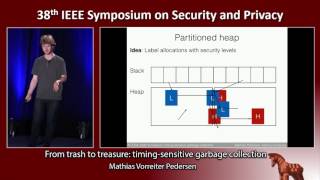
From Trash to Treasure - Timing-Sensitive Garbage Collection
Explores timing-sensitive information leaks via garbage collection, demonstrating attacks and proposing a secure automatic memory management design to prevent such vulnerabilities.
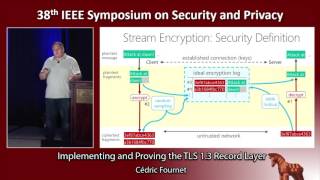
Implementing and Proving the TLS 1.3 Record Layer
Explore the implementation and security proofs of TLS 1.3's record layer, focusing on authenticated encryption, cryptographic algorithms, and formal verification using F* language.

Scalable Bias-Resistant Distributed Randomness
Explore scalable protocols for generating unbiased public randomness in distributed systems, focusing on RandHound and RandHerd's innovative approaches to ensure integrity and efficiency.
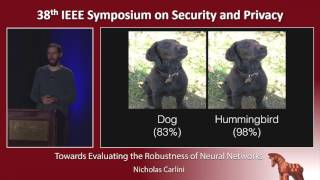
Towards Evaluating the Robustness of Neural Networks
Explores new attack algorithms to assess and challenge the robustness of neural networks against adversarial examples, highlighting vulnerabilities in defensive distillation techniques.