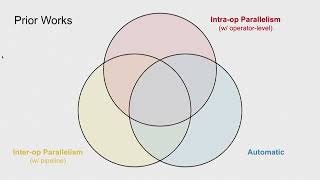
Alpa - Automating Inter- and Intra-Operator Parallelism for Distributed Deep Learning
Automating model-parallel training for large deep learning models through a hierarchical approach, unifying data, operator, and pipeline parallelism for efficient distributed execution.
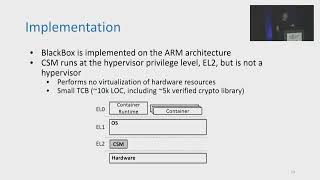
BlackBox - A Container Security Monitor for Protecting Containers on Untrusted Operating Systems
Innovative container security architecture using a trusted monitor to protect data confidentiality and integrity from untrusted operating systems, with minimal performance impact.
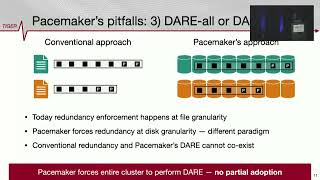
Tiger - Disk-Adaptive Redundancy Without Placement Restrictions
Innovative storage system that tailors redundancy to disk failure rates, offering space savings and improved robustness without placement constraints. Introduces eclectic striping for efficient data management.
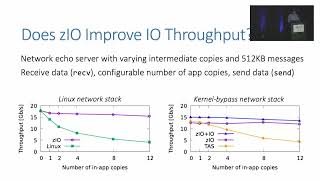
zIO - Accelerating IO-Intensive Applications with Transparent Zero-Copy IO
Explore zIO, a transparent zero-copy IO mechanism that enhances performance of IO-intensive applications by eliminating unnecessary data copies and optimizing data consistency management.
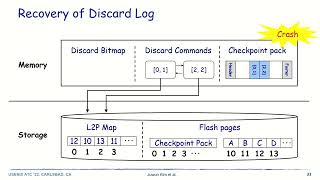
IPLFS - Log-Structured File System without Garbage Collection
Explore an innovative log-structured file system that eliminates garbage collection, improving performance and efficiency in storage management through infinite partitions and interval mapping.
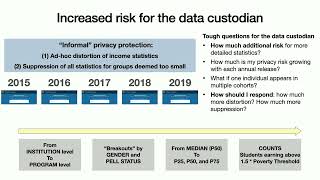
Negotiating Privacy - Utility Trade-Offs under Differential Privacy
Explore privacy/utility trade-offs in differential privacy through a real IRS-DOE case study, examining challenges faced by data custodians when establishing data release standards.
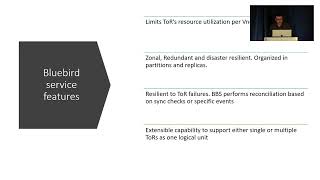
Bluebird - High-performance SDN for Bare-metal Cloud Services
Explore Bluebird, Azure's high-performance network virtualization system for bare-metal cloud services, offering insights into its design, implementation, and real-world performance.
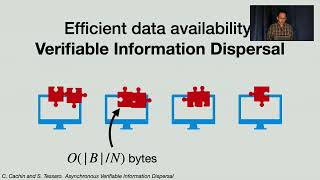
DispersedLedger - High-Throughput Byzantine Consensus on Variable Bandwidth Networks
Explores a novel Byzantine fault tolerant protocol for high-throughput consensus on variable bandwidth networks, optimizing blockchain performance in wide area deployments.
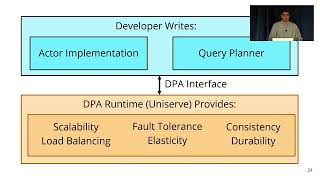
Data-Parallel Actors - A Programming Model for Scalable Query Serving Systems
Explore data-parallel actors, a programming model for building scalable query serving systems, offering simplified development and enhanced functionality for distributed data processing.
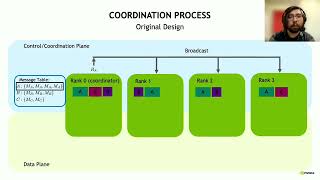
Accelerating Collective Communication in Data Parallel Training across Deep Learning Frameworks
Techniques to improve Horovod's communication efficiency in data parallel training, enhancing performance and scalability for deep learning frameworks on supercomputers.
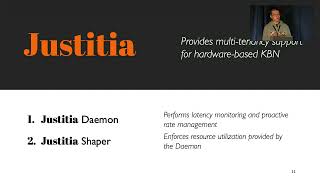
Justitia - Software Multi-Tenancy in Hardware Kernel-Bypass Networks
Explore software multi-tenancy in hardware kernel-bypass networks, addressing challenges in network sharing policies while preserving low latency and CPU efficiency in modern datacenters.
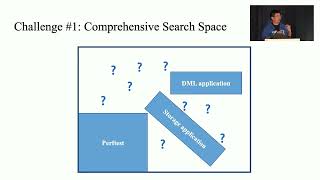
Collie - Finding Performance Anomalies in RDMA Subsystems
Discover a tool for uncovering performance anomalies in RDMA subsystems, exploring its design, implementation, and effectiveness in finding and addressing hardware-related issues.
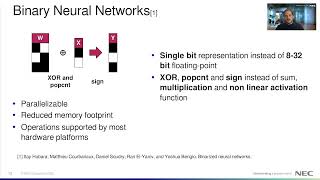
Re-architecting Traffic Analysis with Neural Network Interface Cards
Innovative approach to enhance network traffic analysis using binary neural networks on SmartNICs, offering improved scalability, lower latency, and higher throughput compared to traditional software-based systems.
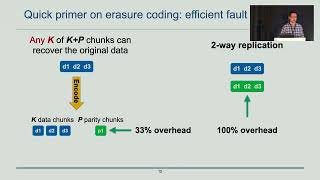
C2DN - How to Harness Erasure Codes at the Edge for Efficient Content Delivery
Explore innovative CDN design using erasure coding for improved performance, efficiency, and load balancing in content delivery networks.
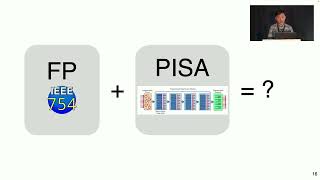
Unlocking the Power of Inline Floating-Point Operations on Programmable Switches
Explore FPISA, a novel floating-point representation for programmable switches, enabling efficient acceleration of machine learning and query processing applications in network hardware.
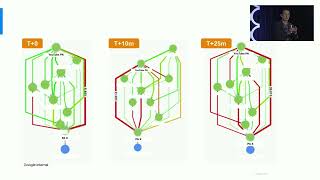
Beyond Distributed Tracing
Innovative method for aggregated end-to-end observability in microservices, enhancing root-cause analysis and outage prevention through Critical User Interaction attribution.
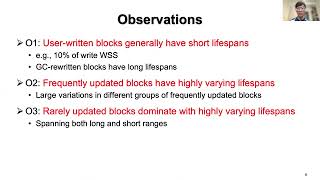
Separating Data via Block Invalidation Time Inference for Write Amplification Reduction in Log-Structured Storage
Innovative data placement algorithm for log-structured storage that reduces write amplification by inferring block invalidation times, improving I/O throughput and storage efficiency.
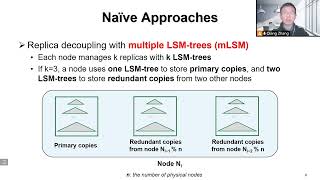
DEPART - Replica Decoupling for Distributed Key-Value Storage
Innovative approach to distributed key-value storage using replica decoupling, enhancing I/O efficiency and performance. Implements two-layer log for tunable ordering, outperforming Cassandra in various scenarios.
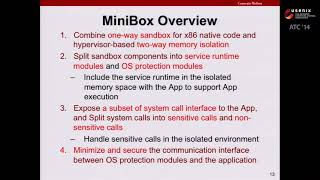
MiniBox - A Two-Way Sandbox for x86 Native Code
Explore MiniBox, a groundbreaking two-way sandbox for x86 native code, offering mutual protection between applications and operating systems in cloud computing environments.
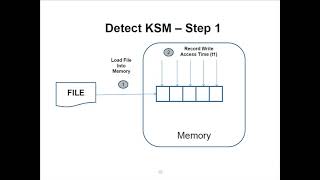
Hyperprobe - Towards Virtual Machine Extrospection
Explores a novel framework for detecting host OS kernel versions from within guest operating systems, leveraging hypervisor features and bugs to enable virtual machine extrospection.
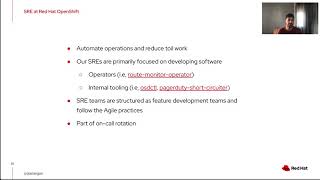
Lessons Learned Using the Operator Pattern to Build a Kubernetes Platform
Explore the Operator pattern in Kubernetes for automating SRE tasks, with insights from Red Hat's OpenShift development and guidance on when to implement custom Operators.