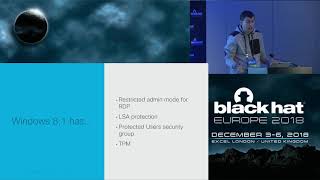
Where 2 Worlds Collide - Bringing Mimikatz et al to UNIX
Explore techniques for attacking Active Directory forests from UNIX systems integrated with AD, examining tools and procedures that bridge these two worlds in cybersecurity.

Container Attack Surface Reduction Beyond Name Space Isolation
Explore techniques to reduce container vulnerabilities by analyzing and removing unnecessary dependencies, binaries, and permissions, enhancing security beyond namespace isolation.
DeepPhish - Simulating Malicious AI
Explore AI-driven phishing simulation techniques, including neural networks and URL prediction, to enhance cybersecurity defenses against sophisticated email-based attacks.

In Search of CurveSwap - Measuring Elliptic Curve Implementations in the Wild
Comprehensive survey of elliptic curve implementations in TLS, SSH, and IPsec protocols, analyzing support and behaviors across internet-wide scans and passive measurements.

When Machines Can't Talk
Security analysis of MQTT & CoAP protocols, revealing design flaws, vulnerable implementations, and widespread unsecured deployments in machine-to-machine communication.

DeepLocker - Concealing Targeted Attacks with AI Locksmithing
DeepLocker: AI-powered targeted attacks using deep neural networks for evasive malware. Explores mechanisms, implications, and defenses against AI-weaponized cybercrime.
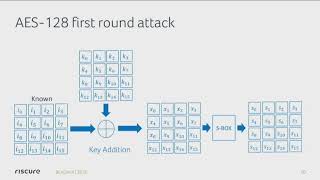
Lowering the Bar - Deep Learning for Side Channel Analysis
Explore deep learning's potential to automate power side channel analysis, enhancing cryptanalytic techniques and signal processing for improved security assessments.
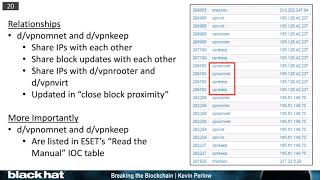
Beating the Blockchain by Mapping Out Decentralized Namecoin and Emercoin Infrastructure
Explore decentralized domain infrastructure using Namecoin and Emercoin blockchains, focusing on unofficial TLDs and alternate DNS resolution for takedown-resistant domains.
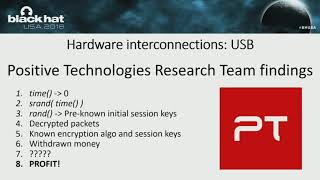
Black Box is Dead - Long Live Black Box!
Explore the evolution of ATM security against logic attacks, focusing on black box devices and encryption measures implemented to protect cash dispensers.
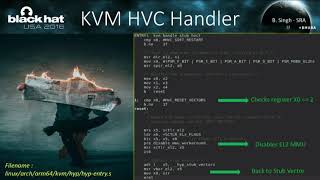
Back to the Future - A Radical Insecure Design of KVM on ARM
Explore ARM architecture vulnerabilities in KVM, focusing on privilege escalation through exception-generating instructions and hypervisor calls. Learn about potential security risks in virtualization.
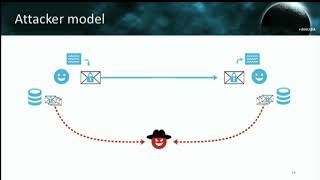
Efail - Breaking S-MIME and OpenPGP Email Encryption Using Exfiltration Channels
Explore vulnerabilities in S/MIME and OpenPGP email encryption standards, focusing on outdated cryptographic primitives and potential attack vectors using exfiltration channels.

Money-rity Report - Using Intelligence to Predict the Next Payment Card Fraud Victims
Explore predictive methods for identifying potential credit card fraud victims before transactions occur, shifting from reactive to proactive fraud prevention strategies.
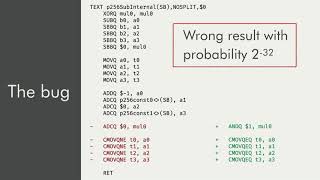
Squeezing a Key through a Carry Bit
Explore a practical key recovery attack on Go's P-256 elliptic curve implementation, targeting JSON Web Encryption through a subtle carry bit bug.
Your Voice is My Passport
Explore machine learning's impact on voice authentication security, including synthetic audio generation and potential vulnerabilities in financial and home automation systems.
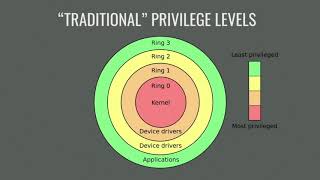
Why so Spurious? Achieving Local Privilege Escalation on Operating Systems
Explore a critical x86 architecture vulnerability exploitable for local privilege escalation across Windows, macOS, and Linux. Learn about this widespread security issue and its implications.
The Cost of Complexity - Different Vulnerabilities While Implementing the Same RFC
Exploring security vulnerabilities in DNS implementations due to complexity and ambiguity in RFC 1035, focusing on message compression and its impact on TCP/IP stacks.

Racing the Dark - A New TOCTTOU Story From Apple's Core
Unveils macOS kernel vulnerabilities, highlighting memory mapping issues and race conditions that bypass security updates. Emphasizes the need to reevaluate macOS/iOS memory mapping mechanisms.

Alarm.DISARM - Remotely Exploiting & Disarming Popular Physical Security System from Public Internet
Explore remote code execution vulnerabilities in physical security systems, learning to exploit and disarm alarms through reverse engineering and network protocol analysis.
Circumventing the Guardians - How the Security Features in State-of-the-Art TLS Inspection Solutions Can Be Exploited for Covert Data Exfiltration
Unveiling a stealthy data exfiltration method that bypasses TLS inspection security solutions. Learn about SNIcat and how it circumvents perimeter defenses, with insights on mitigation and detection strategies.

Jack-in-the-Cache - A New Code Injection Technique through Modifying X86-to-ARM Translation Cache
Explores a novel code injection technique for Windows 10 on ARM, exploiting vulnerabilities in x86-to-ARM translation cache to compromise system security on ARM-based laptops.
Graph Convolutional Network-Based Suspicious Communication Pair Estimation for Industrial Control Systems
Explore graph convolutional networks for detecting suspicious communication pairs in industrial control systems, enhancing security monitoring beyond traditional whitelisting methods.