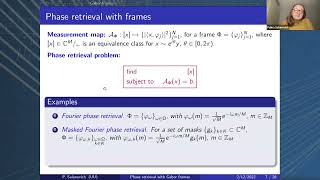
STFT Phase Retrieval - Robustness and Generative Priors - IPAM at UCLA
Explore STFT phase retrieval, focusing on robustness and generative priors. Learn about stable reconstruction techniques, application of generative models, and reducing required measurements in imaging and acoustics applications.
The Role of Data and Models for Deep-Learning Based Image Reconstruction
Explores deep learning in image reconstruction, focusing on model scaling, data requirements, and robustness. Discusses performance under distribution shifts and strategies for improvement.

Splitting the Difference Between Deep and Shallow Solutions of Inverse Problems
Explores balancing compressed sensing and deep learning in computational imaging, showcasing Plenoxels for efficient photorealistic view synthesis without neural networks.
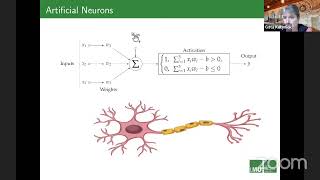
The Mathematics of Artificial Intelligence
Explore the mathematical foundations of AI, its impact on problem-solving in mathematics, and the challenges in developing reliable AI systems. Gain insights into generalization, explainability, and AI applications in inverse problems and PDEs.
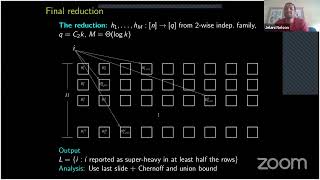
Jelani Nelson- Forty Years of Frequent Items
Explore forty years of frequent items algorithms, from classic approaches to modern techniques, including turnstile streaming, heavy hitters, and local differential privacy.
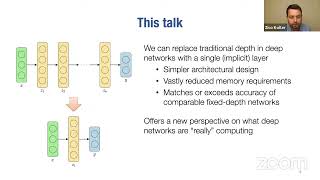
Deep Neural Networks via Monotone Operators
Explore deep equilibrium models, their theoretical foundations, and applications in machine learning, including guaranteed convergence and robustness in neural networks.
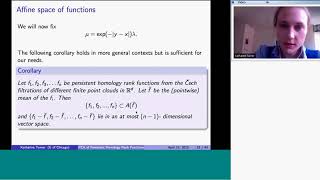
Katharine Turner - PCA of Persistent Homology Rank Functions with Case Studies
Explore persistent homology rank functions through PCA, featuring case studies and insights into topological data analysis techniques.
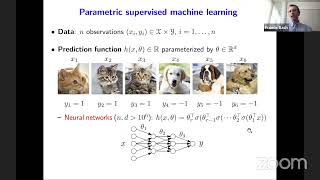
Gradient Descent on Infinitely Wide Neural Networks - Global Convergence and
Explore gradient descent on infinitely wide neural networks, examining global convergence and optimization techniques for non-convex problems in machine learning.
The Arithmetic of Quadratic Twists of Elliptic Curves
Explore quadratic twists of elliptic curves, Selmer groups, and L-values. Delve into the congruent number problem and progress on the BSD conjecture. Gain insights into advanced number theory concepts.
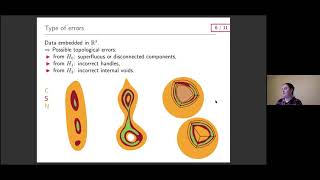
Topological Simplification of Voxelized Data
Explore topological simplification of voxelized data, focusing on homological methods to enhance graphical data analysis in scientific fields like medicine and biology.
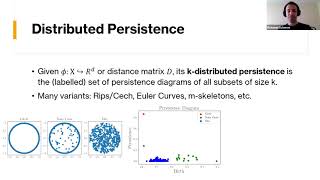
Dimensionality Reduction via Distributed Persistence - DIPOLE
Explore dimensionality reduction with DIPOLE, a novel approach combining local metric and global topological preservation for improved data visualization and analysis.
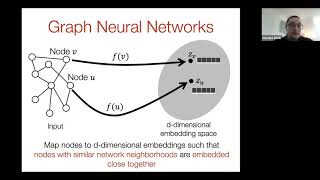
Graph Representation Learning and Its Applications to Biomedicine
Graph representation learning techniques for biomedical applications, focusing on SubGNN for disentangled subgraph embeddings and their use in predicting disease treatments and safe drug combinations.
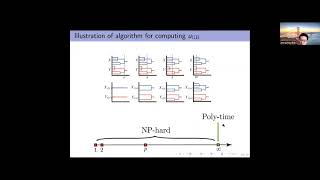
Computing Gromov-Hausdorff Distances Between Ultrametric Spaces
Explore efficient algorithms for computing Gromov-Hausdorff distances between ultrametric spaces, including complexity analysis and dynamic programming approaches.
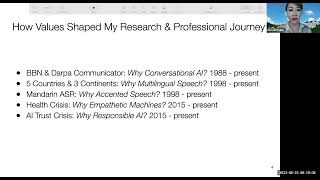
Who Is Responsible for Responsible AI?
Explore ethical considerations and accountability in AI development with Prof. Pascale Fung, addressing crucial questions about responsibility in the field of artificial intelligence.
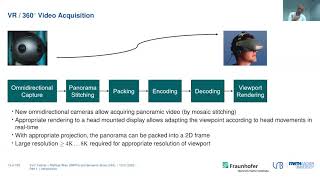
Versatile Video Coding - Algorithms and Specification
Explore advanced algorithms and specifications for Versatile Video Coding, the latest video compression standard, presented by experts in the field.
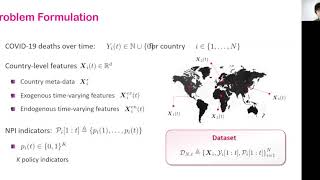
A Nationally-Implemented AI Solution for COVID-19
Explore a groundbreaking AI solution for COVID-19 implemented nationwide, presented by Mihaela van der Schaar at the 2020 IEEE International Conference on Multimedia and Expo.
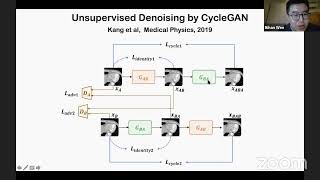
Computational Imaging - Deep Learning Approaches
Explore advanced computational imaging techniques with Jong Chul Ye from KAIST, covering innovative approaches in signal processing and image reconstruction.

GI Motility of the Small Intestine
Explore small intestine motility, including segmentation, peristalsis, and the ileocecal valve. Learn about crucial digestive processes and their impact on nutrient absorption and waste elimination.
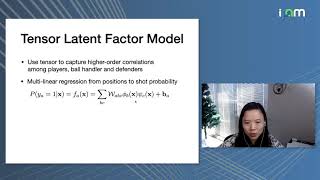
Multiresolution Tensor Learning for Efficient and Interpretable Spatial Analysis
Explore efficient and interpretable spatial analysis using multiresolution tensor learning, with applications in geology, sports, and climate science. Discover improved methods for handling complex spatial data.
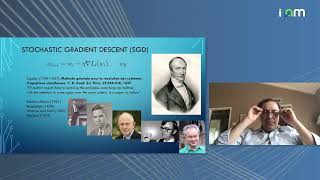
Implicit and Explicit Regularization in Deep Neural Networks
Explores implicit and explicit regularization in deep neural networks, connecting learning algorithms to H-infinity control and explaining convergence behavior in over-parametrized models, offering insights into generalization abilities.

Understanding, Interpreting and Designing Neural Network Models Through Tensor Representations
Explore tensor representations for neural networks, enhancing interpretability, expressive power, generalization, and robustness in deep learning models through spectral methods and innovative architecture design.