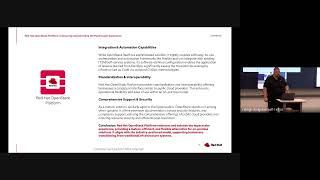
Strategic IT Transformation: SLOs, DevOps, and Software-Defined Datacenter for Cloud Efficiency
Discover how to transform traditional IT into a software-defined datacenter using CI/CD pipelines, cloud-native approaches, and SLOs. Learn strategic frameworks and tools like OpenStack and Ansible for enhanced efficiency.
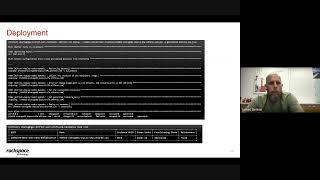
Remote Baremetal Deployments Using Bifrost
Master remote operating system deployment using Bifrost's minimal footprint and PXE over IPSec VPN, enabling quick and efficient baremetal infrastructure setup in remote environments.

NVMe/FC and NVMe/TCP: An In-depth Packet and Flow Level Comparison
Dive into a comprehensive comparison of NVMe/FC and NVMe/TCP protocols, exploring packet-level details, network configurations, and practical implementation strategies for optimal datacenter fabric design.

Optimal Performance Parameters for NVMe SSDs - Understanding Configuration and Host Usage
Delve into optimal performance parameters for NVMe SSDs, covering NAND attributes, controller settings, and host software optimization techniques for enhanced storage performance.

Accessing Files Remotely with Linux - Recent Progress with SMB3.1.1 Client and Servers
Explore recent advancements in Linux's SMB3.1.1 protocol implementation, including improved performance, security features, and enhanced remote file access capabilities across various server platforms.
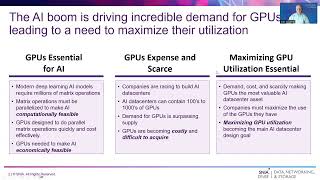
Storage Requirements for AI Infrastructure - From Data Preparation to Inference
Delve into the crucial role of storage systems across the AI lifecycle, from data preparation to inference, exploring performance requirements and infrastructure considerations for optimal GPU utilization.
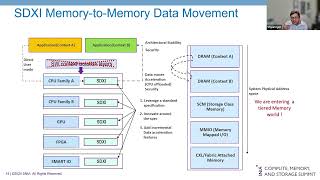
Smart Data Accelerator Interface - Use Cases, Futures and Proof Points
Discover the latest developments in memory-to-memory data movement and acceleration through SNIA's SDXI standard, exploring use cases in AI and emerging technologies for enhanced data processing capabilities.
Designing a Modern Object Store Server for Lustre File System
Dive into modern object store server design for Lustre file systems, exploring architectural improvements, storage innovations, and solutions for high-performance computing environments.
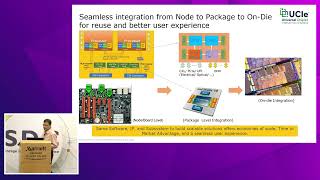
Universal Chiplet Interconnect Express (UCIe): Accelerating the Future of Semiconductor Innovations
Explore the Universal Chiplet Interconnect Express (UCIe) specification and its role in enabling modular semiconductor design through standardized chiplet connectivity and integration for next-gen computing systems.
Power of Chaos: Long-term Security for Post-quantum Era
Explore chaotic encryption systems and their role in post-quantum security, including logic locking-based mechanisms for protecting data against future quantum computing threats.

SPDK Accelerator Framework: Evolution from Copy Framework to Modern Hardware Acceleration
Explore the evolution of SPDK's Accelerator Framework, from basic IOAT support to a robust system with 8 operations and 7 accelerators, including the new Intel® Data Streaming Accelerator.
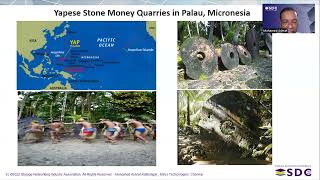
AI and Blockchain: The Emerging Duets in Data Storage and Processing
Explore how federated learning and blockchain technologies combine to solve AI data sharing challenges, enhance security, and optimize decentralized storage systems across industries.
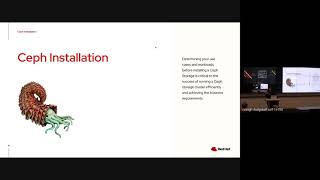
Deploying Stand-alone Ceph and Integrating with K8s/OpenShift and OpenStack
Master the deployment and integration of standalone Ceph storage clusters with OpenStack and Kubernetes/OpenShift, covering components, networking, security, and data protection for efficient multi-platform storage solutions.
Data as the Programming Interface - The Future of AI Development
Explore how data-centric approaches revolutionize AI development, focusing on specialized evaluation, fine-grained analysis, and scalable solutions for capturing human feedback in enterprise systems.
From Data Lakes to Data Mesh - The Evolution of Redmesh
Explore Bosch Digital's journey from data lakes to data mesh through redmesh, a self-service platform revolutionizing enterprise data management and analytics for faster, more efficient data-driven decision making.
From Psychohistory to Curious Machines - AI-Powered Strategic Foresight
Explore how AI-powered foresight and strategic prediction evolve from Asimov's psychohistory concept to modern applications in trend forecasting and early adopter identification through Nextatlas.
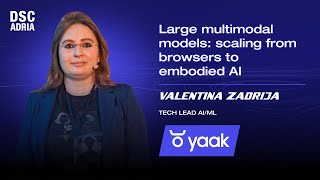
Large Multimodal Models: From Browsers to Embodied AI
Explore the evolution of large multimodal AI models and their transition from text prediction to real-world applications, emphasizing safety alignment and human-centric design principles for autonomous systems.
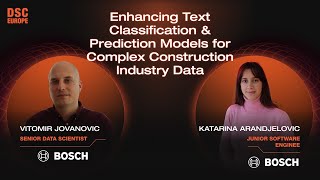
Optimizing Text Classification in Construction Data Using FastText and BERT Models
Discover how to optimize text classification for construction tenders using fasttext models and BERT, achieving improved accuracy through category merging and probability thresholds for product and supplier predictions.
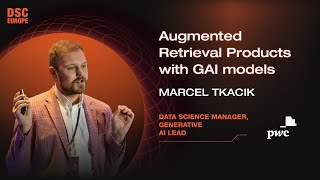
Augmented Retrieval Products with Generative AI Models
Discover how to develop and implement augmented retrieval products using Generative AI, from requirements engineering to deployment on Azure, focusing on smart search optimization and feedback integration.

Responsible AI: Rewriting or Repeating History?
Explore historical parallels and timeless lessons from various industries to gain crucial insights into developing responsible AI practices and avoiding past mistakes in technological advancement.
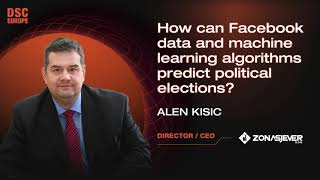
Facebook Data and Machine Learning for Election Prediction
Explore how machine learning and Facebook data analysis can predict election outcomes, examining privacy concerns, algorithmic bias, and the impact on voter behavior.