Tinkerer by Night - Exploring CSS Possibilities Through Experimentation
Explore CSS possibilities through live-coding experiments. Discover elegant, joyful ways to design and code the web, embracing both successes and failures as valuable learning experiences.
Filter Effects and Blend Modes in CSS - CSS Day 2013
Explore advanced CSS techniques like filter effects and blend modes, learning their syntax, applications, and browser compatibility to enhance web design and create visually striking effects.
Perspective in 3D - Vector Math and Ray Tracing for Financial Data Analysis
Explore vector math, ray tracing, and creative engineering as Perspective's expression language is repurposed for 3D graphics, blending financial analysis with game engine concepts.

Coding Adventure: Simulating Fluids
Explore particle-based fluid simulation techniques, from basic physics to advanced concepts like smoothed particles, density calculation, and pressure forces, with practical coding examples and optimizations.
Artificial Intelligence for Geometry Processing
Explores deep learning techniques for processing irregular 3D geometric data, addressing challenges in surface reconstruction and geometric modeling. Highlights potential applications and future research directions.
Learning 3D Perception from Single Images - Unifying Learning and Geometry
Exploring unified learning approaches for single image 3D understanding, combining 2D perception with 3D world modeling to enable more comprehensive computer vision systems.
Shading Languages and the Emergence of Programmable Graphics Systems
Explore the evolution of shading languages and GPUs, from movie rendering to data-parallel computing, with insights on their impact on graphics, games, and high-performance applications.
The Open Graphics Stack
Explore the open graphics stack for embedded systems, covering Linux, Vulkan, and Mesa compilers, with insights on application, engine, driver, and kernel components.
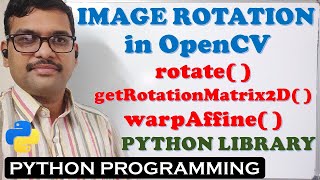
Image Rotation in OpenCV - Python Library
Learn image rotation techniques in OpenCV using Python, including rotate(), getRotationMatrix2D(), and warpAffine() functions for precise control over image transformations.
Cloth Simulator Tutorial in Blender
Learn the basics of cloth simulation in Blender, covering essential techniques to create realistic fabric movements and interactions in your 3D projects.
Fluid Simulations in Blender - Basic Tutorial
Learn to create realistic fluid simulations in Blender, covering basic techniques and practical applications. Master this powerful feature to enhance your 3D projects with dynamic liquid effects.
Tight Bounds for Volumetric Spanners in All Norms
Explores optimal bounds for volumetric spanners across all norms, discussing applications in optimization and matrix approximation. Presents a local search method for construction and its implications for coresets in MVEE problems.

Optimizing a Ray Tracer by Building a Bounding Volume Hierarchy (BVH)
Optimize ray tracing performance by building a Bounding Volume Hierarchy (BVH). Learn techniques like GPU-friendly data structures, iterative traversal, and surface area heuristics to render complex scenes efficiently.
Allen School Colloquium - GRAIL Research Lab Presentations
Explore cutting-edge research in computer graphics, vision, and robotics. Topics include CAD debugging, virtual try-on, spatial audio, and AR-based robot learning, showcasing innovative solutions to complex challenges.

Introduction to Computer Graphics - Course Overview
Explore key concepts and definitions in computer graphics, laying the foundation for understanding this dynamic field and its applications in visual computing and digital media.
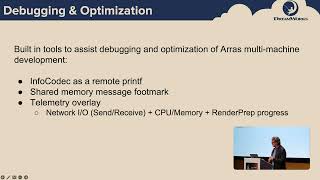
Arras - MoonRay's Distributed Computational Framework for Ray-Trace Rendering
Explore Arras, a scalable framework enabling distributed computations for ray-trace rendering. Learn how it enhances MoonRay's capabilities, allowing for unlimited computational power and accelerating processor-intensive operations in film production.

Run SDXL Locally with ComfyUI - 2024 Stable Diffusion Guide
Step-by-step guide to install and run Stable Diffusion locally using ComfyUI and SDXL, covering system requirements, installation, dashboard navigation, add-ons, and advanced features.
Path Tracer in C++ OpenGL - Code Review
Explore an impressive OpenGL path tracer created by a 15-year-old, featuring code review, problem-solving, and advanced graphics techniques like environment maps and bloom effects.

The Creative Coding Journey- Exploring Challenging Digital Experiences in 3D Spaces
Explore creative coding in 3D spaces, blending technical expertise with artistic vision. Dive into the interplay of absence and presence, reimagining digital creativity through unseen elements and enigmatic dimensions.
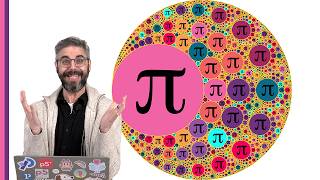
Apollonian Gasket Coding Challenge - Creating Fractal Circle Patterns
Learn to create an Apollonian Gasket using Descartes Circle Theorem and complex numbers. Explore circle packing, curvature, and recursive algorithms in this coding challenge celebrating Pi Day.
ShiffBot and Gemini API Integration with Node.js and p5.js - Coding Train Livestream
Explore ShiffBot, showcase reviews, and create a Node.js and p5.js example for the Gemini API. Learn about AI-powered tools and practical coding applications in this interactive session.