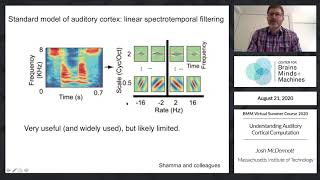
Understanding Auditory Cortical Computation
Explore auditory processing through computational models, comparing AI and human performance in speech recognition, sound localization, and pitch perception.
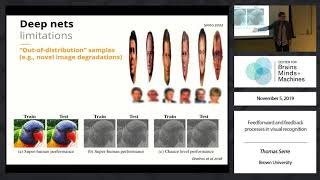
Feedforward and Feedback Processes in Visual Recognition
Explore visual recognition processes, comparing deep learning models with neuroscience-inspired approaches. Gain insights into complex visual reasoning and potential advancements in AI through computational neuroscience.
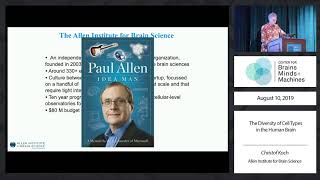
The Diversity of Cell Types in the Human Brain
Explore the diverse cell types in the human brain, their classification, and implications for neuroscience and consciousness, with insights from cutting-edge research techniques.
How Fast Is a Neural "Winner-Take-All" When Deciding Between Many Noisy Options?
Explore neural decision-making mechanisms, focusing on the speed and efficiency of "winner-take-all" processes in noisy environments. Gain insights into parallel strategies and canonical circuits.
Biophysics of Computation I
Explore the biophysics of neural computation, focusing on dendritic spikes and their role in information processing within the brain's complex structures.
Allen Institute Large-Scale Datasets and Modeling Tools
Explore large-scale datasets and modeling tools for brain research, covering transcriptomics, connectome mapping, visual coding, and human neuron studies to advance our understanding of brain function.

Dendrites: Why Biological Neurons Are Deep Neural Networks
Explore how individual neurons function like deep neural networks, examining their complex information processing capabilities and the physiological mechanisms behind their computational complexity.

Theta Rhythm - A Memory Clock
Explore the theta rhythm's role in memory encoding and retrieval. Learn about its generation, functions, and impact on brain activity, including integrated representations and sequential organization.

A Unifying Framework for Memory and Abstraction
Explore the Tolman-Eichenbaum Machine, a computational model unifying memory and spatial navigation in the hippocampus. Learn about its architecture, performance, and implications for neuroscience.
The Sparse Manifold Transform
Explore computational theories of the brain through the Sparse Manifold Transform, examining its applications in understanding neural processing and information representation in the visual system.
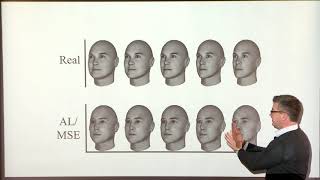
Predictive Coding Models of Perception
Explore cutting-edge theories on how the brain processes sensory information, focusing on predictive coding models and their implications for understanding perception.
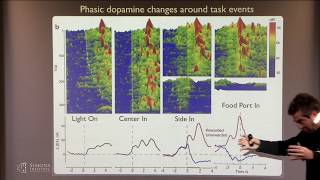
Basal Ganglia Architecture for Reinforcement Learning
Explore the neural circuitry of basal ganglia and its role in reinforcement learning, focusing on representation, coding, and computation in neural networks.
Place-Cell Sequences in the Hippocampus
Explore hippocampal place-cell sequences and their role in neural circuits, focusing on representation, coding, and computation in the brain's spatial navigation system.
Mapping Neural Connections and Their Development II
Explore neural connectivity mapping and developmental processes in the brain, focusing on advanced techniques and recent findings in neuroscience research.
Computational Principles of Sensorimotor Control - Lecture 1
Explore computational principles of sensorimotor control, including optimal feedback control, state estimation, motor learning, and Bayesian decision theory in human movement and robotics.
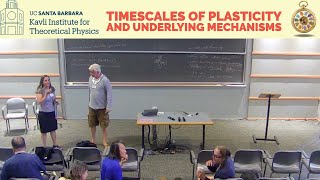
Data Needed to Drive Conceptual Advances About Learning
Exploring data needs for advancing learning theories, bridging timescales from milliseconds to weeks in neurobiology. Discusses mechanisms of synaptic plasticity and associative learning across molecular, cellular, and circuit levels.
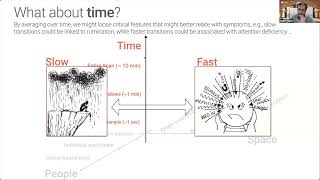
Precision Dynamical Mapping to Characterize Brain Activity Fluctuations
Exploring Topological Data Analysis to map brain activity fluctuations in psychiatric disorders, overcoming neuroimaging limitations and enhancing understanding of neurobiological underpinnings.
Our Quest to Understand the Brain - History and Modern Approaches
Explore the brain's complexity through history, from mechanical analogies to modern AI. Discover how scientific understanding has evolved and what current research reveals about memory and cognition.
The Science of Movement - Computational Principles of Sensorimotor Learning
Explore computational principles behind learning sensorimotor repertoires, focusing on contextual inference in memory creation, updating, and expression for diverse motor skills.
Using Dynamics to Constrain Connectivity of Neuronal Population in Respiratory Brainstem
Explores models of neuronal connectivity in respiratory brainstem, focusing on synchronized bursting activity and network architecture insights using multi-state bootstrap percolation.
Connectome-Based Modeling in the Fly
Explore connectome-based modeling in flies, revolutionizing neural circuit understanding and its link to behavior, presented by Larry Abbott at UCLA's IPAM workshop.