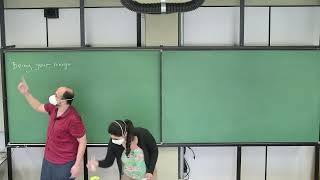
Computational Methods for Simulating and Analyzing Ecological Systems - Class 1
Explore computational methods for simulating and analyzing ecological systems, focusing on practical applications in quantitative ecology.

Deciphering Cancer's Code Through Computational Biology
Computational biology approach to decoding cancer growth and mutation patterns, offering innovative insights into understanding and combating the disease.
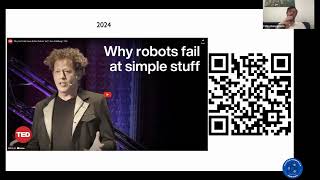
Towards Physical AI - Bridging the Gap Between Artificial and Natural Intelligence
Explore the future of AI and robotics, comparing artificial agents to natural intelligence and discussing potential paradigm shifts for more adaptive and efficient systems.
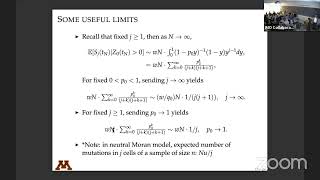
Computational Methods for Inferring Tumor Evolution and Heterogeneity
Explore computational techniques for analyzing tumor evolution and heterogeneity, enhancing understanding of cancer progression and treatment strategies.
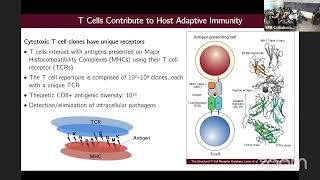
Biophysical Modeling of Tumor-Immune Interactions for Optimizing T-Cell Immunotherapy
Explore biophysical modeling techniques for tumor-immune interactions to enhance T-cell immunotherapy effectiveness and optimize treatment strategies.
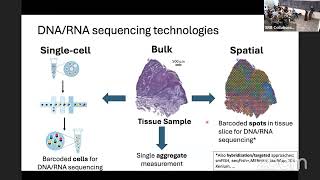
Quantifying Tumor Heterogeneity Across Space and Time
Explore advanced techniques for analyzing tumor heterogeneity spatially and temporally with Dr. Ben Raphael's in-depth presentation on cutting-edge mathematical oncology approaches.
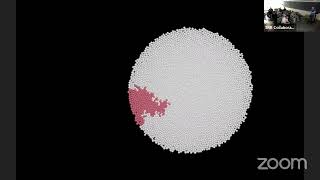
A Top-Down-Bottom-Up Approach to Evolution-Based Therapies in Compact Populations
Explore evolution-based therapies in compact populations through a top-down-bottom-up approach with Dr. Jona Kayser's seminar on mathematical oncology.
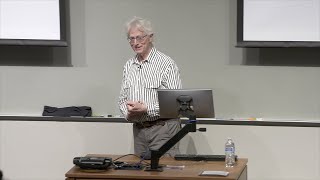
Valedictory - Who Am I? Exploring Life Beyond Computer Science
Martin Tompa explores his identity beyond computer science, focusing on his passion for genealogy and family history. He shares personal stories and family secrets in this engaging valedictory lecture.
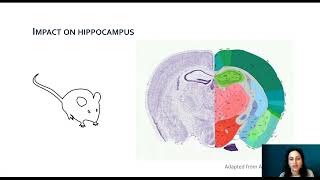
Cell Type-Specific Vulnerability to Traumatic Brain Injury
Explore cell type-specific vulnerability in traumatic brain injury, focusing on hippocampal damage and its impact on neural stem cells and cognitive impairment.
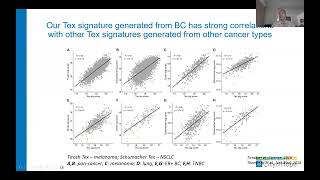
What Makes Tumors Hot? Insights from Experimental-Computational Integration
Explore experimental-computational integration to understand tumor characteristics and their impact on treatment effectiveness.
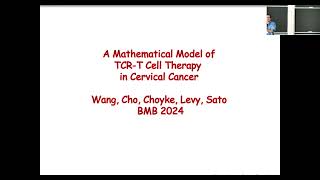
A Mathematical Model of TCR-T Cell Therapy for Cervical Cancer
Explore a mathematical model for TCR-T cell therapy in cervical cancer treatment, focusing on its applications and implications in oncology research.
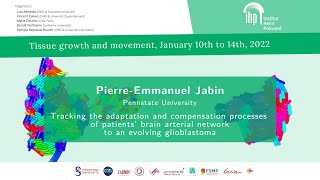
Tracking the Adaptation and Compensation Processes of Patient's Brain Arterial Network to Evolving Glioblastoma
Explore automated methods for analyzing brain arterial networks and blood flow dynamics in glioblastoma patients using MR imaging, revealing disease progression and compensatory mechanisms.
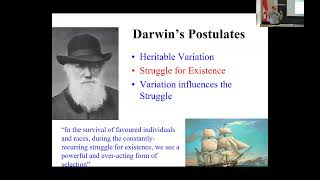
Evolutionary Therapies: Beating Cancer at Its Own Game
Explore revolutionary cancer therapies that outsmart tumor evolution, leveraging mathematical modeling to optimize treatment strategies and overcome resistance.
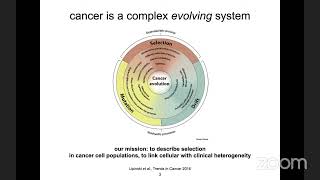
How Diversity Indices Help Understand Cancer Ecology and Evolution
Explore diversity indices and entropy to gain insights into cancer ecology and evolution, enhancing understanding of tumor dynamics and progression.
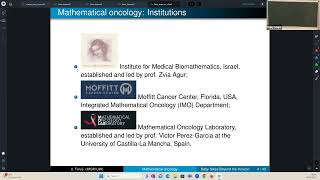
Mathematical Oncology: Insights into Cancer Treatment from a Mathematical Perspective
Explore mathematical models for cancer treatment, gaining insights into tumor growth, drug delivery, and therapeutic strategies from a quantitative perspective.
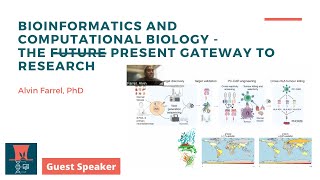
Bioinformatics and Computational Biology - The Present Gateway to Research
Comprehensive overview of bioinformatics and computational biology, covering research fields, career paths, applications, job prospects, and educational opportunities for aspiring professionals in this cutting-edge domain.
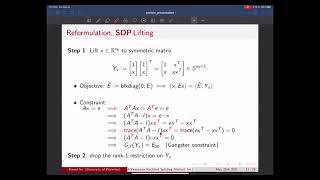
A Peaceman-Rachford Splitting Method for the Protein Side-Chain Positioning Problem
Explore protein side-chain positioning through doubly nonnegative relaxation and Peaceman-Rachford splitting method, with insights on facial reduction and numerical experiments for optimal solutions.
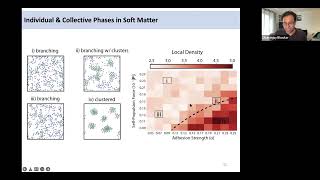
Data-Driven Modeling & TDA of Self-Organized Multicellular Architectures
Explore data-driven modeling and topological data analysis for classifying multicellular structures in cancer and embryonic development, focusing on cell motility and adhesion patterns.
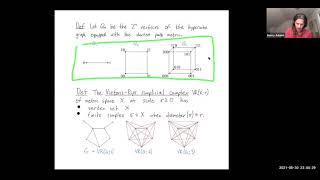
Henry Adams - Vietoris-Rips Complexes of Hypercube Graphs
Explore Vietoris-Rips complexes of hypercube graphs, their homotopy types, and applications in genetic recombination and persistent homology. Discover formulas, open questions, and conjectures in this fascinating area of applied algebraic topology.
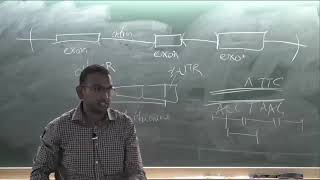
Sequence Alignment - Hidden Markov Models, Category Theory and All That Jazz by Soumyashant Nayak
Explore sequence alignment methods, from traditional algorithms to modern pseudo-alignment techniques, with insights on hidden Markov models and applications in RNA-Seq data analysis and evolutionary genetics.
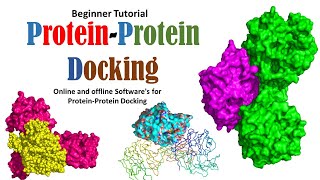
Protein-Protein Docking Tutorial for Beginners Using ClusPro, PatchDock, and Hex
Learn to perform protein-protein docking using validated tools like ClusPro, PatchDock, and Hex. Gain hands-on experience with step-by-step demonstrations and access to relevant literature.