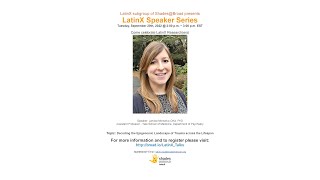
Decoding the Epigenomic Landscape of Trauma across the Lifespan
Explore the epigenomic landscape of trauma across the lifespan with Dr. Janitza Montalvo-Ortiz. Gain insights into computational approaches for studying genomics and epigenomics of neuropsychiatric disorders, focusing on trauma and substance use.
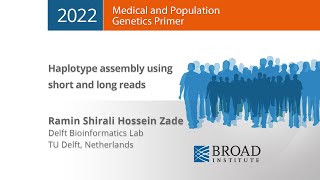
Haplotype Assembly Using Short and Long Reads - 2022
Dive into haplotype assembly techniques using short and long reads. Explore advanced bioinformatics methods for genetic analysis with insights from Ramin Shirali's research at TU Delft.
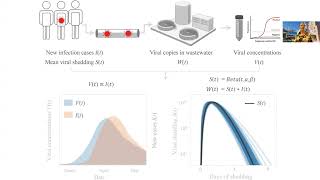
DNA Language Models and Convolution - Lecture 12
Dive into DNA language models and convolution techniques, exploring advanced computational approaches for analyzing genetic sequences and structures.
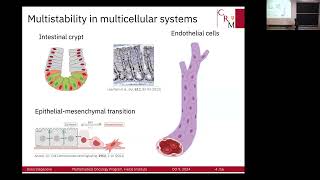
A Method to Coarse-Grain Multi-Agent Stochastic Systems with Regions of Multistability
Dive into a mathematical oncology seminar exploring coarse-graining techniques for multi-agent stochastic systems, focusing on regions of multistability in cancer modeling.
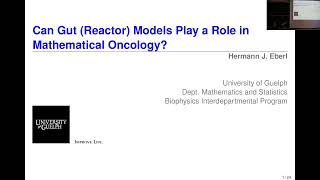
Can Gut Reactor Models Play a Role in Mathematical Oncology?
Explore the potential role of gut reactor models in mathematical oncology through Hermann Eberl's seminar on innovative approaches to cancer research.
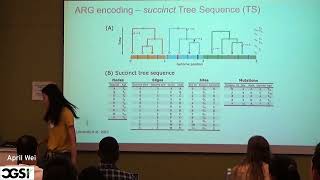
Genotype Representation Graph: Enabling Efficient Analysis of Biobank-Scale Data
Dive into efficient analysis of biobank-scale data using Genotype Representation Graphs. Explore innovative methods for estimating coalescence times and inferring whole-genome histories in large population datasets.
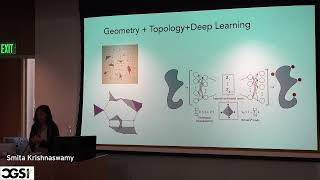
Uncovering Cellular Dynamics and Metabolism with Geometric Deep Learning and Optimal Transport
Explore geometric deep learning and optimal transport techniques for uncovering cellular dynamics and metabolism in this insightful computational genomics presentation.
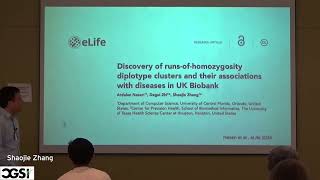
PBWT-based Algorithms for Large Cohort Genetics - CGSI 2024
Explore PBWT-based algorithms for large cohort genetics, covering efficient haplotype matching, IBD detection, and innovative approaches like d-PBWT and Syllable-PBWT for genomic data analysis.
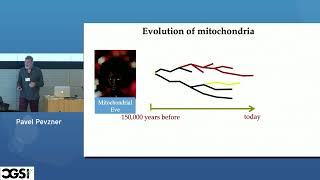
Uni-alignment: A Parameter-free Framework for Fast and Accurate Sequence Alignment
Explore a parameter-free framework for fast and accurate sequence alignment, focusing on UniAligner's innovative approach to genomic data analysis and its implications for computational biology.
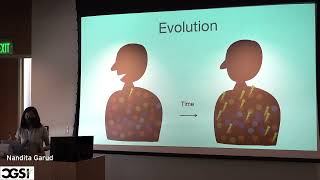
Inference of Selective Effects and Demographic Histories of Human Gut Commensals - CGSI 2024
Explore the evolutionary dynamics of human gut microbiomes through selective sweeps, rapid evolution, and strain turnover. Gain insights into bacterial adaptation within and across hosts.
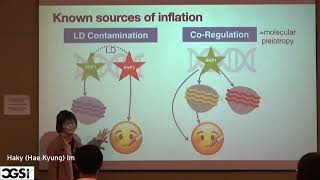
On the Problem of Inflation in TWAS and Other xWAS - CGSI 2024
Dive into the challenges of inflation in transcriptome-wide association studies and explore potential solutions in this insightful genomics lecture.
Rosalind Problems
Learn bioinformatics through hands-on problem-solving, covering DNA analysis, Python basics, transcription, data processing, and biological modeling.
Bioinformatics 101
Learn Python-based bioinformatics techniques for DNA analysis, sequence alignment, and protein visualization. Explore NCBI databases, BLAST searches, and COVID-19 genome analysis using Biopython.
Julia for Biologists - A Perspective on Speed, Abstraction, and Metaprogramming
Explore Julia's potential in biology: speed, abstraction, and metaprogramming for data analysis, modeling, and research. Learn practical examples and discover the Julia ecosystem for biologists.
Towards a Computational Model of the Brain - Tools for Mapping and Perturbing Neural Circuits - Ed Boyden
Explore cutting-edge tools and techniques for mapping and manipulating neural circuits, advancing our understanding of brain structure and function at unprecedented levels of detail.
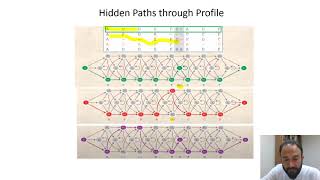
Bioinformatics Lectures
Comprehensive bioinformatics lectures covering algorithms, cancer genomics, phylogenetics, and sequence alignment. Includes practical tutorials and software demonstrations for data analysis in genomics and evolutionary biology.

Mathematics Meets Superbacteria - A New Chapter in Bacterial Coexistence
Esplorazione del ruolo della matematica nella comprensione e gestione della resistenza batterica agli antibiotici, evidenziando un nuovo approccio alla coesistenza tra umani e batteri.
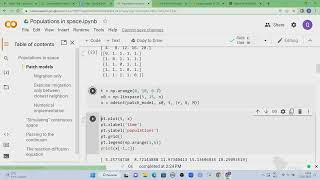
Computational Methods for Simulating and Analyzing Ecological Systems - Class 17
Explore computational methods for simulating and analyzing ecological systems, focusing on practical applications in quantitative ecology.
Computational Methods for Simulating and Analyzing Ecological Systems - Class 16
Explore computational methods for simulating and analyzing ecological systems, focusing on practical applications in quantitative ecology.
Computational Methods for Simulating and Analyzing Ecological Systems - Class 15
Explore computational methods for simulating and analyzing ecological systems, focusing on practical applications in quantitative ecology.
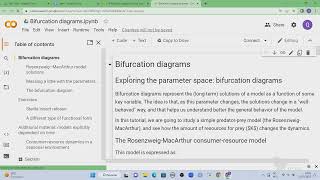
Computational Methods for Simulating and Analyzing Ecological Systems - Class 12
Explore computational methods for simulating and analyzing ecological systems, focusing on practical applications in quantitative ecology research.