Machine Learning-Based Protein Engineering - Insights and Approaches
Explore ML-based protein engineering insights, discussing cutting-edge techniques and potential applications in biotechnology and drug discovery.
Illuminating Protein Space with Generative Models
Explore generative modeling for protein design, focusing on building learning systems that can generalize, scale, and create fit-for-purpose protein complexes on demand.
Defining Network Topologies That Can Achieve Molecular Memory
Explore network topologies for molecular memory in complex systems. Uncover innovative approaches to information storage at the molecular level.
AI and Machine Learning in Drug Discovery and Development
Explore AI's revolutionary impact on drug discovery and healthcare with Daphne Koller. Gain insights into machine learning applications in biology, protein folding, and interdisciplinary collaboration for future medical breakthroughs.
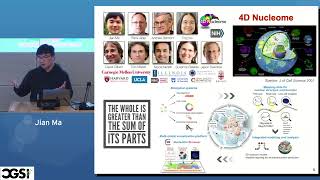
Machine Learning for Single-Cell 3D Epigenomics
Explore machine learning techniques for analyzing single-cell 3D epigenomics, focusing on genome structure and integrative Hi-C analysis methods for advanced biomedical research.
Phenomics in Drug Discovery: Microscopy and Machine Learning - Day 4
Explore phenomics in drug discovery through microscopy and machine learning techniques with expert Anne Carpenter.
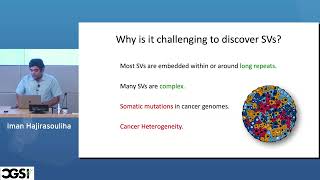
Applications of Deep Learning to Genomics and Digital Pathology
Explore deep learning applications in genomics and digital pathology, focusing on cutting-edge research and practical implementations in healthcare.
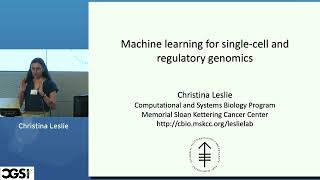
Machine Learning Models for Single Cell and Regulatory Genomics - CGSI 2023
Explore machine learning models for single-cell and regulatory genomics, focusing on recent research and applications in computational biology.
Machine Learning via Graph Signal Processing for Complex Biological Data
Explore machine learning techniques using graph signal processing for analyzing complex biological data, focusing on geometric scattering networks and their applications in computational genomics.
Geometric Deep Learning for Protein Understanding
Explore geometric deep learning techniques for protein analysis and understanding, focusing on advanced computational methods in molecular biology.
Efficiently Exploring Combinatorial Perturbations From High Dimensional Observation
Explore efficient methods for analyzing combinatorial perturbations in high-dimensional data, focusing on innovative approaches and practical applications.
Introducing Bioptic - Machine Learning for Drug Discovery
Explore Bioptic's architecture, training, and scaling for machine learning in drug discovery with Vlad Vinograv.
Contextual AI Models for Single-cell Protein Biology
Explore PINNACLE, a geometric deep learning approach generating context-aware protein representations for enhanced understanding of protein function and interactions across biological contexts.
Learning Representations on Biological Data with Weakly Supervised Learning
Explore weakly supervised learning for biological data representations. Discover PeML method for improved similarity metrics in perturbational experiments, enhancing mechanism of action identification and downstream analysis tasks.
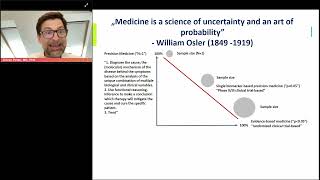
AI in Precision Oncology: Personalized Treatment Ranking Based on Molecular Information
Explore AI-driven personalized cancer treatment ranking using comprehensive molecular data. Learn about innovative computational methods for precision oncology and targeted therapy selection.
New Machine Learning Models for Single-cell and Regulatory Genomics
Explore cutting-edge machine learning models for single-cell and regulatory genomics, focusing on enhancer identification, chromatin accessibility analysis, and 3D genome structure prediction.
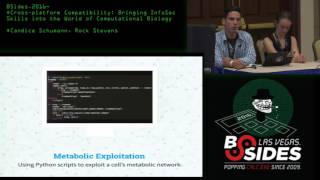
Cross-platform Compatibility - Bringing InfoSec Skills into the World of Computational Biology
Explore how information security skills can be applied to computational biology, bridging two diverse fields for innovative problem-solving and research advancements.

Computation in the Brain Tutorial - Part 2
Explore neural computation models, focusing on assembly calculus and its applications in language processing, with insights from leading researchers in computational neuroscience.

The Cell as a Computer - Turing Complete and Massively Parallel
Explore biological computing: cells as Turing-complete devices, biocomputers, and parallels between cellular processes and computer components. Gain insights into nature's 4-billion-year-old computing paradigm.
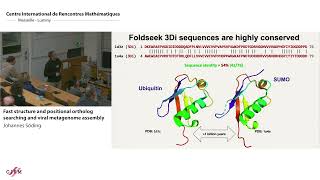
Fast Structure and Positional Ortholog Searching and Viral Metagenome Assembly
Explore fast structure searching, positional ortholog identification, and viral metagenome assembly techniques in bioinformatics and genomics research.
ML-Enabled Genetic Association Studies of High-Content Phenotypes
Explore cutting-edge machine learning applications in genetic association studies, focusing on high-content phenotypes and innovative frameworks like HistoGWAS for analyzing tissue phenotypes in histology cohorts.