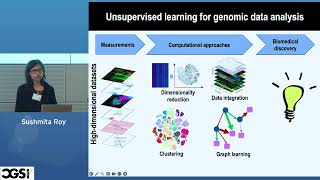
Matrix Factorization and Applications to Bulk and Single Cell Omic Datasets
Explore matrix factorization techniques for analyzing bulk and single-cell omic datasets, with applications in computational genomics and bioinformatics.
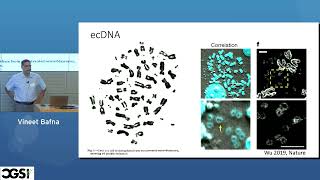
ecDNA and Breakage Fusion Bridge: Two Facets of Oncogene Amplification in Cancer
Explore oncogene amplification in cancer through ecDNA and Breakage Fusion Bridge mechanisms. Gain insights into cutting-edge research on extrachromosomal DNA and its role in cancerous transformations.
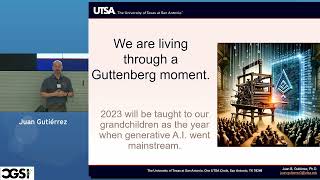
The Flaws of Others: Large Language Models in Biomedical Research
Explore the potential and limitations of large language models in biomedical research, focusing on their application and impact in analyzing complex malaria infection data.
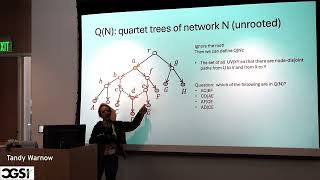
Statistically Consistent Estimation of Level-1 Phylogenetic Networks from SNPs
Explore statistically consistent methods for estimating level-1 phylogenetic networks from SNP data, focusing on rooted and unrooted structures in computational genomics.
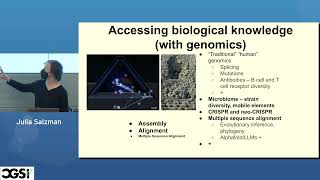
SPLASH: Statistical Signal Extraction for Unified Genomic Discovery
Explore SPLASH, a statistical algorithm for efficient genomic discovery. Learn about its applications in microbial sequencing, transcriptomics, and scientific research.
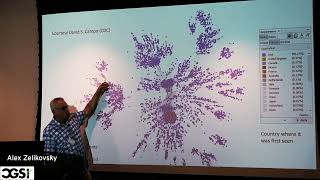
SARS-CoV-2 Saltations and Punctuational Evolution - CGSI 2024
Explore SARS-CoV-2 evolution through saltations and punctuated equilibrium, analyzing community structure of coordinated substitution networks for early variant detection.
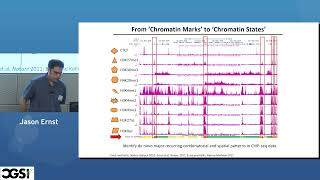
Computational Methods for Modeling and Analyzing Epigenomic Data
Explore computational methods for modeling and analyzing epigenomic data, focusing on chromatin state annotation, gene-based modeling, and cross-species conservation in functional genomics.
Under a Microscope - Exploring Fast and Safe Rust for Biology
Explore how Rust's safety and performance revolutionize computational biology, enabling breakthroughs in protein and virus research. Learn about the field's challenges and opportunities for Rustaceans.
Measuring Gene Expression in Tissues for Autoimmune Disease Detection - Lecture 2
Dive into advanced techniques for measuring gene expression in tissues, focusing on spatial transcriptomics and its application in inflammatory bowel disease diagnosis and cancer detection.
Violet Teaming AI in the Life Sciences
Explore AI's impact on life sciences, balancing opportunities in health and biosecurity risks. Learn about violet teaming to maximize benefits while minimizing downsides in biological engineering.
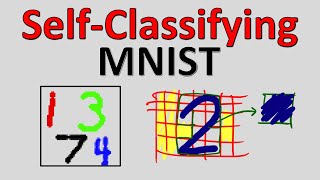
Self-Classifying MNIST Digits - Paper Explained
Explore how neural cellular automata can achieve global consensus through local communication, applied to digit classification. Discover innovative approaches to modeling biological systems and machine learning tasks.
Oral History - Russell Impagliazzo in Conversation with Dick Karp
Explore key developments in theoretical computer science through an engaging conversation between Russell Impagliazzo and Dick Karp, covering topics from NP-completeness to computational biology.
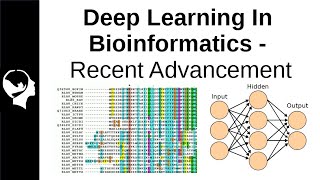
Deep Learning in Bioinformatics - Recent Advancement
Explore recent advancements in deep learning for bioinformatics, covering BTINET, autoencoders, and deep belief networks. Gain insights into cutting-edge applications in genomics, drug discovery, and disease prediction.
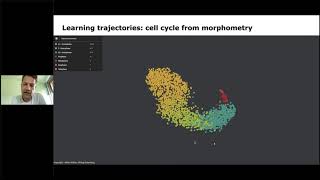
Interpretable Machine Learning to Model Drug Perturbations in Single Cell Genomics
Explore interpretable machine learning for modeling drug effects on single-cell genomics. Learn about deep autoencoders, manifold identification, and predicting novel perturbations in cellular states.
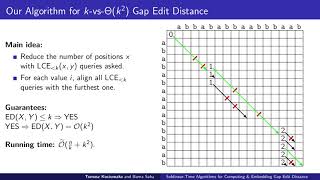
Sublinear-Time Algorithms for Computing and Embedding Gap Edit Distance
Explore efficient algorithms for computing and embedding gap edit distance, focusing on sublinear-time techniques and their applications in string comparison and analysis.
Integrating AI and Machine Learning in Life Sciences - Allen School Colloquia
Exploring AI integration in life sciences, covering explainable AI, COVID-19 detection, cancer precision medicine, and biological discovery through advanced machine learning techniques.
Machine Learning-based Design of Proteins and Small Molecules
Explore machine learning approaches for protein engineering, focusing on data-driven design to create proteins with desired properties and the challenges of extrapolation in predictive modeling.
Learning for Never-before-seen Biomedicine
Exploring machine learning methods for predicting never-before-seen biomedical scenarios, focusing on novel class and cohort situations using ontologies and multiscale knowledge graphs.
Cool Genes - Using Genomics and Big Data for Disease Research with Docker
Explore genomics and big data in medical research using Docker. Learn how TGen leverages containerization for bioinformatics workloads, managing large-scale compute clusters to accelerate disease understanding and treatment discovery.
How AI Is Unlocking the Secrets of Nature and the Universe
Demis Hassabis explores AI's potential to accelerate scientific discovery, from predicting protein shapes to unraveling mysteries of the mind and universe, showcasing its transformative impact on human knowledge.
Neural Networks - Lecture 1
Comprehensive introduction to neural networks, covering fundamental concepts, architectures, and applications in machine learning and artificial intelligence.