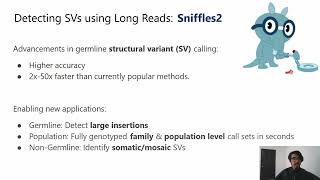
Comprehensive Structural Variant Detection: From Mosaic to Population Level
Explore advanced structural variant detection using Sniffles2, a powerful tool for identifying complex genomic alterations with increased accuracy, speed, and functionality in long-read sequencing data.
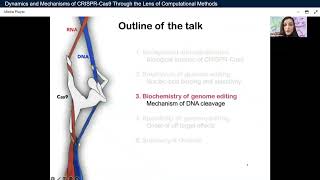
Dynamics and Mechanisms of CRISPR-Cas9 Through the Lens of Computational Methods
Explore computational methods revealing CRISPR-Cas9 dynamics and mechanisms, from RNA binding to large-scale conformational changes, enhancing understanding of this revolutionary genome-editing tool.
Decoding Regulatory Diversity Within DNA Regions
Explore DNA regulatory diversity through advanced genomics, microscopy, and single-cell measurements. Gain insights into chromatin organization and gene regulation principles.
Compaction-Mediated Segregation of Partly Replicated Bacterial Chromosome
Explore compaction-mediated segregation of partially replicated bacterial chromosomes in this insightful talk on chromatin organization and gene regulation.
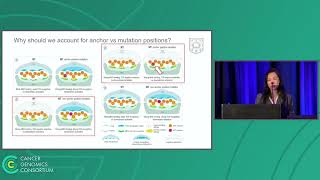
Computational Prediction of MHC Anchor Locations for Neoantigen Identification and Prioritization
Explore computational methods for predicting MHC anchor locations to enhance neoantigen identification and prioritization in cancer genomics, improving patient diagnosis and treatment.
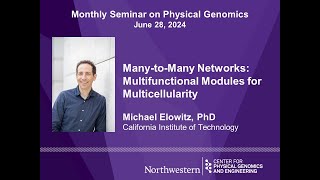
Many-to-Many Networks: Multifunctional Modules for Multicellularity
Explore how many-to-many protein networks function as versatile computational devices in multicellular organisms and their potential applications in synthetic biology for designing complex behaviors.
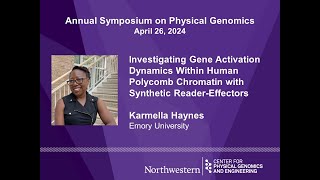
Investigating Gene Activation Dynamics in Human Polycomb Chromatin with Synthetic Reader-Effectors
Explore gene activation dynamics in human polycomb chromatin using synthetic reader-effectors. Gain insights from Dr. Karmella Haynes' research on applying chromatin properties to engineer proteins controlling cell development.
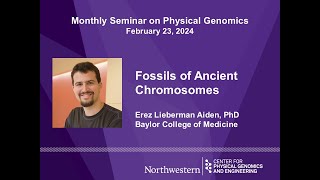
Fossils of Ancient Chromosomes
Explore ancient genome reconstruction using Hi-C technology. Discover how innovative DNA sequencing methods unveil prehistoric chromosomal structures, revolutionizing paleogenomics and evolutionary biology.
Genome-wide Prediction of Disease Variants with a Deep Protein Language Model
Explore genome-wide prediction of disease variants using deep protein language models. Learn cutting-edge techniques for identifying potential genetic causes of diseases.
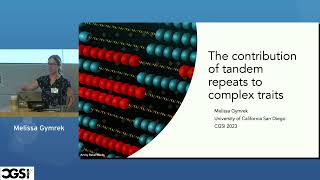
Dissecting the Contribution of the Repeatome to Complex Traits
Explore the impact of repetitive DNA sequences on complex traits through genome-wide association studies, focusing on short tandem repeats and their role in human phenotypes and gene expression.
Predicting the Epigenome from DNA Sequence - Are We There Yet?
Explore predicting epigenomes from DNA sequences using deep learning methods. Discover limitations, data analysis techniques, and latest research in computational genomics.
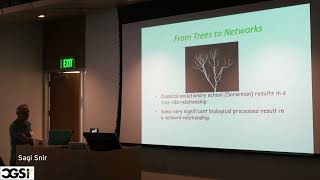
Harnessing Genome Dynamics for Phylogenetic Reconstruction
Explore advanced phylogenetic reconstruction techniques using genome dynamics, including horizontal gene transfer, gene content, and microsynteny-based approaches for prokaryotes and angiosperms.
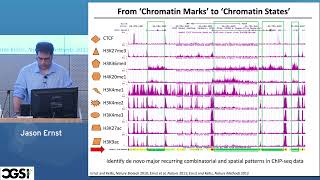
A Tutorial on Computational Methods for Modeling and Analyzing Epigenomic Data
Explore computational methods for modeling and analyzing epigenomic data, covering ChromHMM, multivariate Hidden Markov Models, and integrating multiple chromatin markers across cell types.
Overview of Rare Variant Analysis in Whole Genome Sequencing Association Studies
Explore rare variant analysis techniques for whole genome sequencing studies. Learn statistical methods, study designs, and powerful tools for uncovering genetic associations in large-scale genomic data.
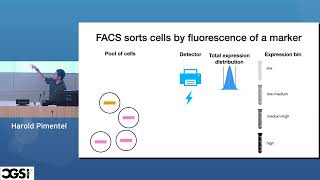
Inference Methods for High-Throughput CRISPR Screens - CGSI 2022
Explore inference methods for high-throughput CRISPR screens, focusing on regulatory gene discovery in human T cells and the architecture of immune networks.
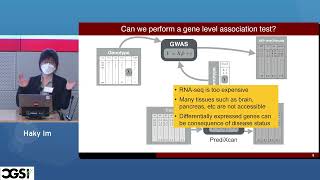
Integrating Multiple Omic Data to Improve Mechanistic Understanding and Prediction
Explore integrating multiple omic data to enhance mechanistic understanding and prediction in genomics. Learn techniques for improving data interpretation and predictive modeling in computational biology.

gRNAde: Geometric Deep Learning for 3D RNA Inverse Design
Explore gRNAde, a geometric deep learning pipeline for 3D RNA inverse design. Learn about its architecture, use cases, and advantages over traditional methods in RNA sequence design.
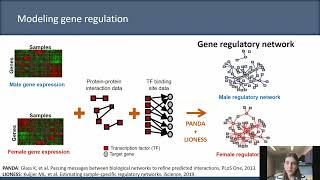
Using Gene Regulatory Networks to Understand Sex Differences
Explore gene regulatory networks and their role in understanding sex differences in health and disease through genomics and systems biology approaches.
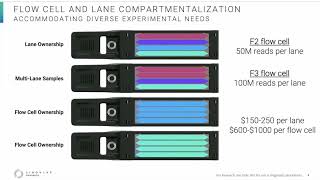
Accelerating Research with Fast, Flexible, and Cost-Efficient Next-Generation Sequencing on the G4 Platform
Explore fast, flexible, and cost-efficient next-generation sequencing on the G4 platform. Learn about core NGS applications and their data from an expert in computational biology and immunology.
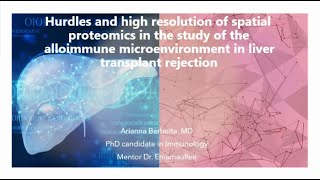
Hurdles and High Resolution of Spatial Proteomics in the Study of the Alloimmune Microenvironment in Liver Transplant Rejection
Explore spatial proteomics in liver transplant rejection, focusing on T-cell mediated rejection and Imaging Mass Cytometry for in-depth immune cell identification and spatial resolution of cell interactions.
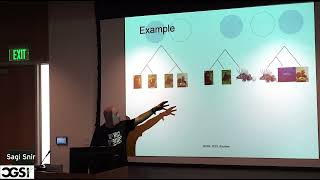
Assembling the Tree of Life in Light of Conflicting Signals
Explore phylogenetic tree assembly techniques, addressing conflicting signals in evolutionary data. Learn about quartet-based methods and weighted approaches for reconstructing the Tree of Life.